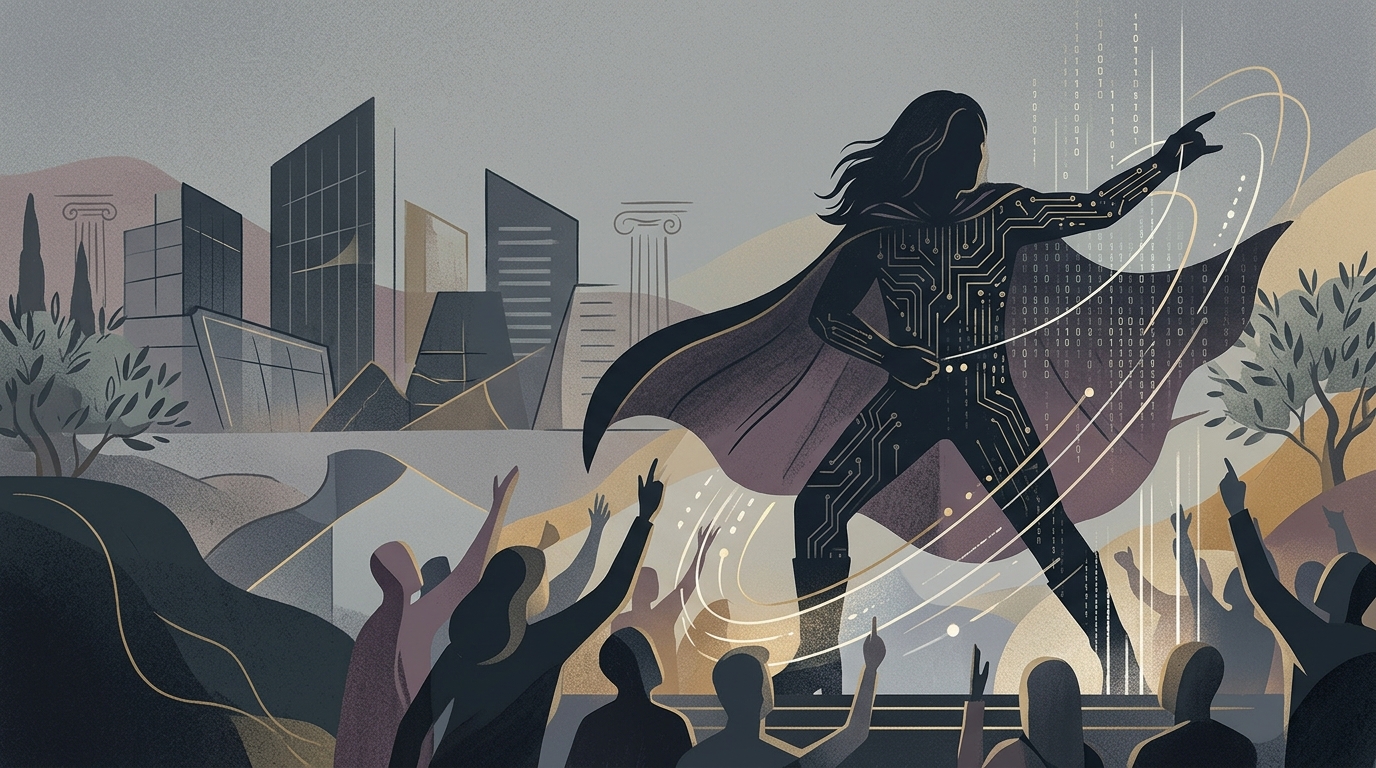
The news that Ozzy Osbourne, the iconic 'Prince of Darkness,' is set to be 'brought back to life' via a hyper-realistic AI avatar is more than just a technical update in a rock star's career. It serves as a symbol of a profound transformation within the global entertainment industry. Following the massive success of ABBA Voyage in London and KISS's announcement that they will continue their legacy exclusively in digital form, Ozzy has chosen his hometown of Birmingham to debut a version of himself that time and illness cannot touch.
A Return to Roots via Bits and Bytes
For Ozzy Osbourne, Birmingham is not just a city; it is the womb of heavy metal. The decision to launch this ambitious project in the city where Black Sabbath was born carries significant weight. Despite severe health issues—including Parkinson’s disease—that forced him to retire from traditional touring, AI offers him a 'second life.' This avatar will not be a simple projection or a 2D video. It is a sophisticated digital entity created using thousands of hours of archival footage, motion capture, and machine learning algorithms that replicate Ozzy’s signature movements, voice, and energy from his prime with startling accuracy.
The Technological Infrastructure of Immortality
Creating such an avatar requires a convergence of technologies that, until a few years ago, belonged to the realm of science fiction. The process begins with 'Volumetric Capture,' where hundreds of cameras record a performer from every possible angle. In Ozzy’s case, where physical performance is limited, high-resolution 'Deepfake' technologies are employed to map the face of a younger Ozzy onto the bodies of professional performers who mimic his stage presence. The AI then 'fills in the gaps,' smoothing movements and ensuring that interaction with stage lighting and the digital environment is seamless. The result is a visual experience that dances on the edge of the 'Uncanny Valley,' but in a way that fascinates rather than repels the audience.
Ethical Dilemmas and the Authenticity of Rock
However, the rise of AI avatars raises serious questions about the nature of art. Can a digital likeness convey the danger, the sweat, and the unpredictable nature of a live rock concert? For many fans, Ozzy is the personification of human fragility and resilience. Replacing him with an algorithm is seen by some as the ultimate commodification of nostalgia. On the other hand, tech proponents argue that this is the natural evolution of recorded music. Just as vinyl once allowed music to live beyond the performance, AI allows the artist's persona to remain active, offering younger generations the chance to 'experience' a show that would otherwise be impossible.
The Future of the Music Industry
Ozzy’s Birmingham project serves as a pilot for what is to come. Record labels and estate managers see AI avatars as a new, inexhaustible revenue stream. An artist can now 'perform' simultaneously in ten different cities without travel expenses, fatigue, or the risk of illness-related cancellations. Furthermore, AI enables the creation of 'new' content: digital artists singing new tracks with the voice they possessed forty years ago. This 'posthumous' or 'post-physical' career is rewriting contract law, with 'digital likeness rights' becoming the most critical part of negotiations in the 21st-century music business.
- The technology relies on generative AI and high-precision motion capture.
- Birmingham was chosen as the first location due to its historical link to the artist.
- The project aims to preserve Ozzy's legacy despite his retirement from physical touring.
- The industry is shifting toward permanent digital residencies to maximize ROI and minimize logistics.