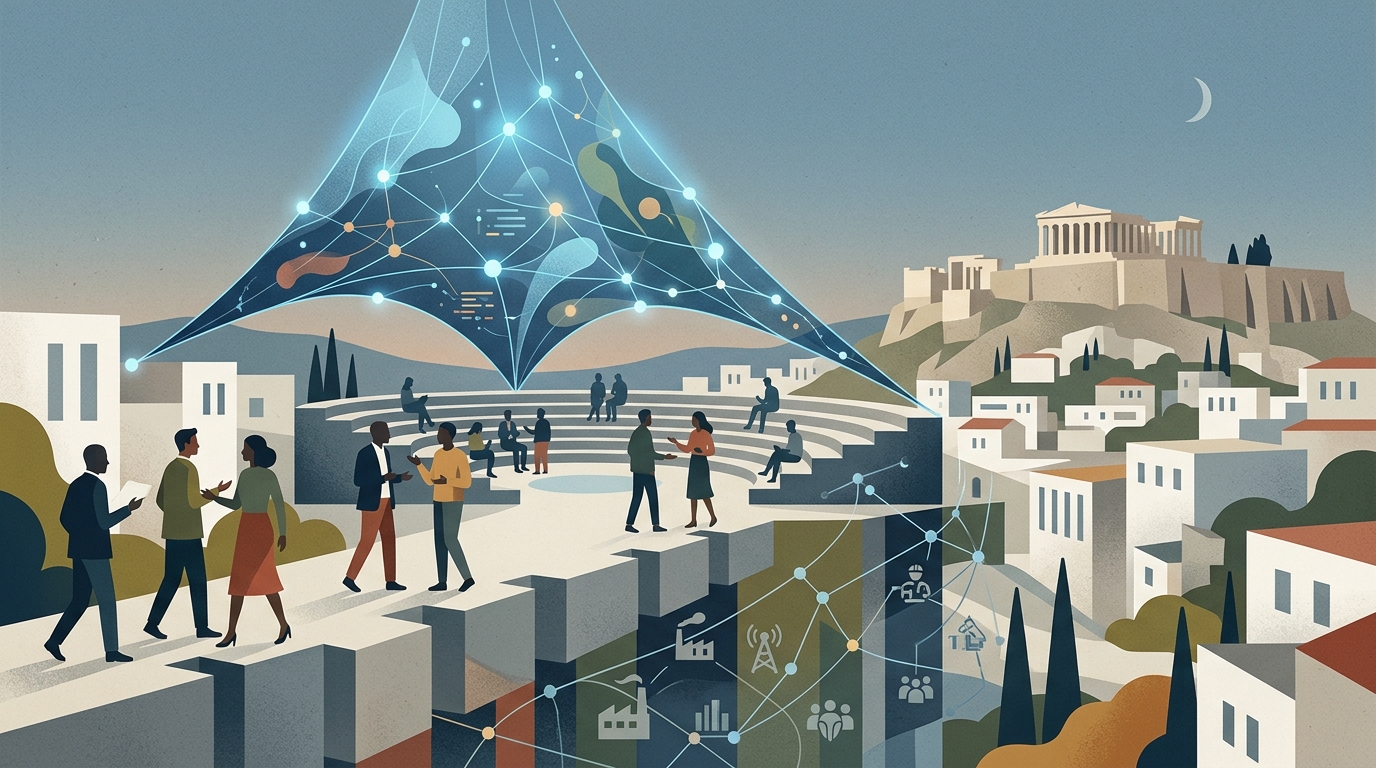
The history of humanity has been marked by periods where technological progress outpaced the ability of social institutions to integrate it smoothly. Today, in June 2026, we stand at the peak of such a transition. Antonis Zairis’s article in "Kathimerini" highlights a truth that many avoid: the traditional social contract, as formed after the Industrial Revolution and reinforced after World War II, has exhausted its limits. Artificial Intelligence (AI) is not just another productivity tool; it is the catalyst redefining the very concepts of labor, value, and political participation.
The Erosion of the Old Paradigm
For decades, the deal was clear: citizens offered their labor and expertise, and in return, the state and the market provided stability, social security, and the promise of upward mobility. However, the advent of Generative AI and autonomous systems has fractured this relationship. As Zairis points out, automation no longer threatens only manual labor but also "white-collar" jobs—the class of intellectuals and administrators who formed the backbone of the middle class.
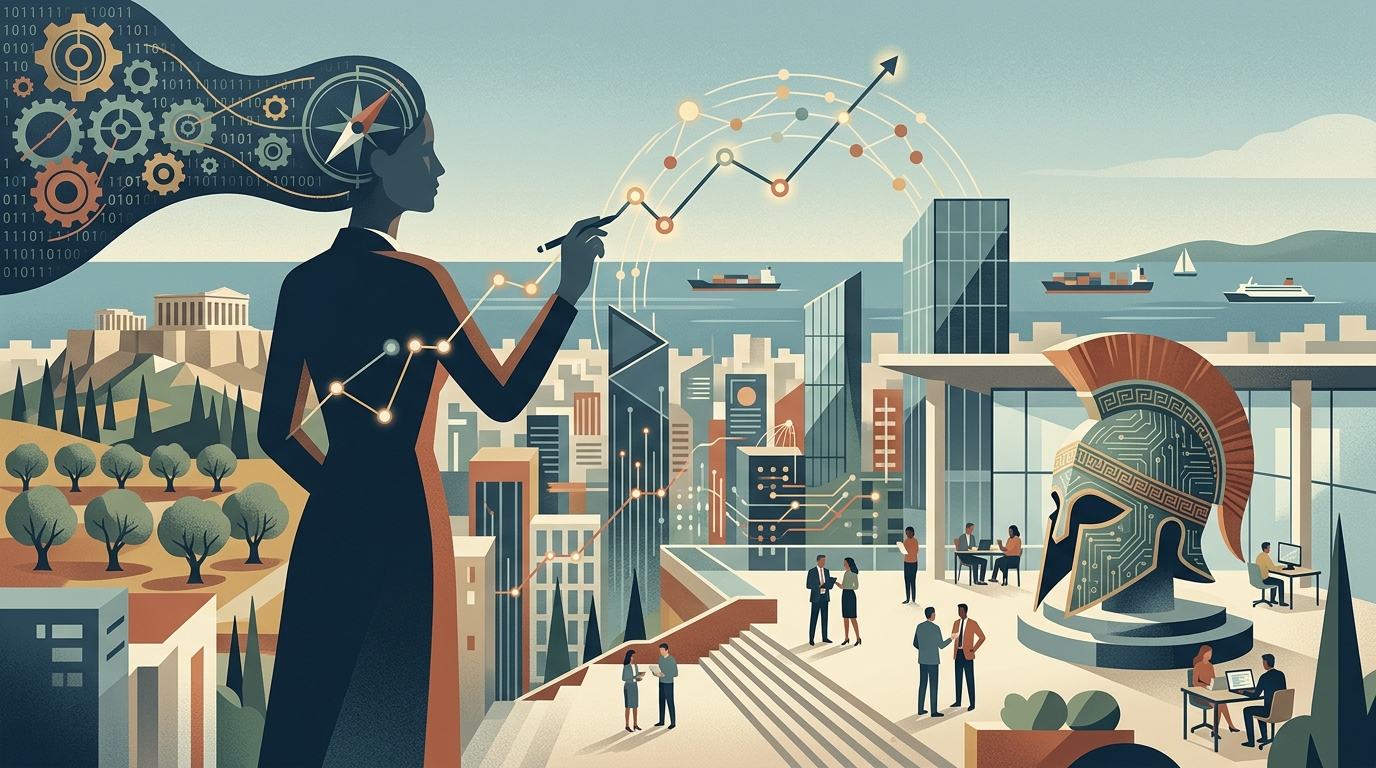
In Greece, an economy heavily reliant on services and small-to-medium enterprises, the risk is particularly visible. The digital transition is often presented as a technical issue, but in reality, it is deeply political. If the added value generated by AI is concentrated exclusively among the owners of the algorithms, then social inequality will reach dimensions that no democracy can sustain. The "new social contract" proposed is not a luxury, but a necessity for the survival of social cohesion.
Labor, Income, and the Reinvention of Education
One of the central pillars of this new proposal is the redefinition of labor. If work ceases to be the sole method of wealth distribution, then new forms of social support must be sought. The debate over Universal Basic Income (UBI) or "Participation Income" is returning to the forefront, not as a socialist utopia, but as a mechanism for stabilizing consumption and social peace. Zairis emphasizes that taxing "robot capital" and redistributing the profits from AI efficiency must become part of government agendas.
Simultaneously, the educational system requires a radical overhaul. Rote learning and narrow specialization are now obsolete in a world where information is ubiquitous and AI can perform technical tasks with absolute precision. The new contract must guarantee lifelong learning not as an individual responsibility, but as a public good. Cultivating critical thinking, emotional intelligence, and ethical judgment are the only skills that remain impenetrable by algorithms—at least for now.
Ethical Governance and the Citizen's Role
The Kathimerini article also raises the issue of ethics. Who controls the algorithms that decide on hiring, credit scores, or even medical care? The transparency and accountability of AI systems must be enshrined as fundamental rights in the new social contract. We cannot allow the creation of an "algorithmic aristocracy" operating beyond the control of democratic institutions.
At the European level, Greece must lead the demand for a framework that protects the human creator. AI should not be treated as a natural disaster to be endured, but as a tool to be tamed. Participatory democracy can be enhanced by technology, provided that citizens have the knowledge and means to intervene. The new social contract is an invitation to a new "Politeia," where technology serves the well-being of the many rather than the profits of the few. The time for this discussion is not the future; it is now, as the decisions made today will determine the shape of our society for decades to come.