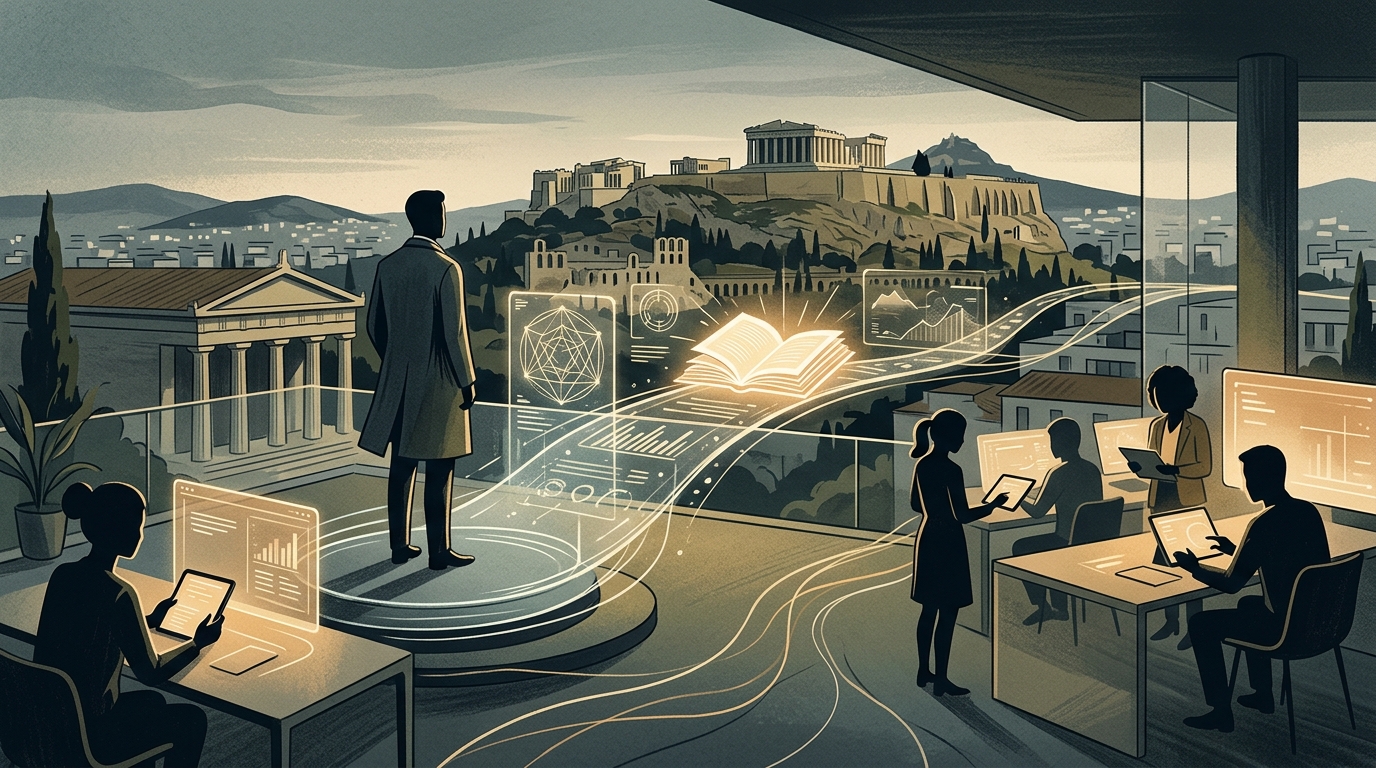
Education in Greece is at the threshold of a historic transition, as Artificial Intelligence (AI) ceases to be a science fiction scenario and becomes an integral part of daily school life. Prime Minister Kyriakos Mitsotakis, in recent statements, emphasized that the integration of AI into the educational process is not merely a technological upgrade, but a profound social and pedagogical challenge that will define the future of coming generations.
According to the Prime Minister, Greece aspires to lead this change, utilizing AI tools to offer more personalized, fair, and effective learning. However, the path toward this "digital transformation" is not without obstacles, as it requires radical changes in infrastructure, mindset, and, most importantly, the training of human resources.
Personalized Learning and the "Digital School"
One of the central pillars of the government's strategy is the use of AI to personalize instruction. In a traditional system, educators are often forced to teach to a median level, leaving behind students who struggle or limiting those with the capacity to advance faster. Artificial Intelligence can function as a "personal tutor" for every student, analyzing their weaknesses in real-time and suggesting exercises and materials tailored to their specific needs.
The "Digital School," an initiative already being implemented, includes the creation of platforms like the "Digital Tutoring Center," which will provide free support to students across the country, particularly in remote areas. Mr. Mitsotakis stressed that AI can bridge the gap of inequality, providing access to high-quality educational material to every child, regardless of their family's economic status or place of residence.
The Role of the Teacher in the New Era
Despite technological progress, the Prime Minister was clear: Artificial Intelligence is not going to replace the teacher. On the contrary, the goal is to liberate them from bureaucratic burdens and repetitive processes, allowing them to focus on their essential pedagogical role. The educator transforms from a simple transmitter of knowledge into a guide and mentor, helping students develop critical thinking regarding the information provided by technology.
However, the training challenge is immense. Training programs have already been launched for thousands of teachers to familiarize them with the new tools. Concerns about "digital fatigue" or the devaluation of the traditional book remain, but the government's position is that technology must function complementarily and not competitively to classical education.
Ethical Dilemmas and Risks
The use of AI in education raises serious ethical issues, which the Prime Minister did not fail to mention. Protecting the personal data of minors, avoiding algorithmic bias, and ensuring that technology does not lead to social isolation are of paramount importance. Greece, aligned with the European Union's AI Act, seeks to set strict operational rules.
Furthermore, there is the risk of "intellectual laziness." With tools like ChatGPT capable of writing essays or solving problems in seconds, the educational system must redefine the method of evaluation. The emphasis must shift from rote memorization to the ability to synthesize, analyze, and creatively use AI tools.
Infrastructure and the Future
To realize this vision, investments in infrastructure are required. The installation of interactive whiteboards in thousands of classrooms and the provision of high-speed internet to all schools are the first steps. Mr. Mitsotakis noted that resources from the Recovery and Resilience Facility (RRF) are crucial for financing these projects.
In conclusion, the challenge of Artificial Intelligence in education is a challenge of democracy and progress. If Greece manages to integrate technology in a human-centric way, it can create an educational system that does not merely follow developments but co-shapes them, preparing citizens ready for the demands of the 21st century.