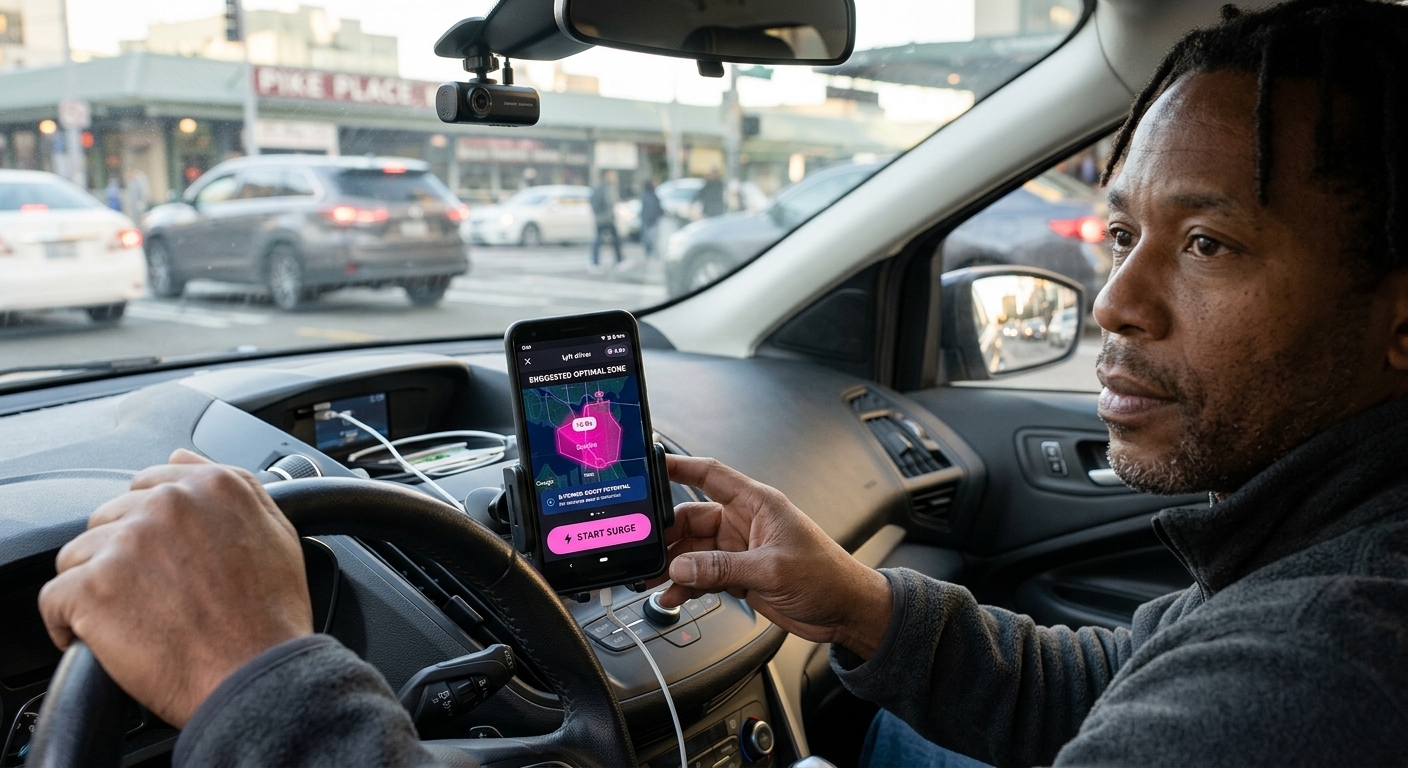
In an era where the ride-hailing industry has reached a point of saturation, Lyft is turning to artificial intelligence not merely as an automation tool, but as a strategic lifeline for its drivers. The company's recent announcement regarding the integration of advanced AI models aimed at boosting driver earnings is not just a technological upgrade; it represents a profound shift in the gig economy's operational model.
The Predictive Power of Data
At the heart of Lyft's new initiative lies the ability of AI to analyze vast amounts of data in real-time. Until now, drivers relied heavily on their intuition or simple heat maps showing where demand was "now." Lyft's new system goes a step further: it uses predictive models to tell the driver where demand *will be* in 15 or 30 minutes.
This transition from reaction to prediction is critical. By analyzing years of historical data, current weather conditions, local events (such as concerts or sports matches), and even flight delays at airports, Lyft's AI creates a personalized plan for every driver. The goal is to minimize "deadheading" – the periods when a driver is cruising without a passenger, consuming fuel and time without profit.
"Artificial intelligence allows us to turn uncertainty into opportunity for our partners," a company executive stated, highlighting the importance of workforce retention in a highly volatile environment.
Personalization and Digital Guidance
One of the most interesting elements of this new approach is personalization. The AI does not give the same instructions to everyone. It takes into account each driver's preferences, their trip history, and the hours they choose to work. If a driver prefers short urban trips over long airport runs, the algorithm adjusts its suggestions to maximize profit within the context of those preferences.
- Route optimization to avoid traffic in real-time.
- Recommendations for breaks at strategic points near future demand hubs.
- Dynamic updates on surge pricing before it fully activates.
This "digital guardianship" naturally raises questions about worker autonomy. While Lyft promotes the tool as a means of empowerment, some analysts warn that over-reliance on AI could turn the driver into a mere executor of algorithmic commands, reducing their critical judgment and sense of control over their work.
Competition with Uber and the Future
Lyft's move does not happen in a vacuum. Uber, its primary competitor, has been investing billions in AI for years. Lyft, attempting to regain market share, is betting that its AI will be more "driver-friendly." While Lyft does not operate directly in Greece, these technological developments are closely monitored by local platforms and taxi drivers, as the model of "algorithmic labor distribution" has become the global standard.
The success of this venture will be judged by the numbers. If drivers indeed see a steady increase of 10-15% in their net earnings, Lyft will have managed to solve its biggest problem: driver retention. In a market where a driver can switch apps with a single click, an AI that "fills the pocket" is the most powerful loyalty tool.
Ethical and Social Implications
In conclusion, we must consider the social cost. Using AI to increase revenue can lead to labor intensification. Drivers, chasing the algorithm's "suggestions," may feel pressured to work longer hours or in more hazardous conditions to avoid missing the "opportunity" indicated on their screens. The balance between technological support and labor exploitation remains the great challenge of the current decade.