In the spring of 2026, our relationship with the mirror is no longer a private affair. It is mediated by complex algorithms that don't just "touch up" a blemish but fundamentally redefine what it means to be attractive. The "looksmaxxing" trend—the obsessive pursuit of maximizing one's physical appearance through data and technology—has evolved from a niche internet subculture into a dominant social force, with Artificial Intelligence (AI) at its core.
The Rise of the Hyper-Real Ideal
The integration of AI into the beauty sphere began with innocent filters on platforms like Instagram and Snapchat. However, the advent of sophisticated Generative AI has rewritten the rules. Today, AI-powered applications don't just apply digital makeup; they restructure facial anatomy, altering bone structure, eye shape, and skin texture in real-time during video calls or live streams. This isn't just a static photo edit; it's a digital mask that moves with the user.
Psychologists warn that the issue isn't the enhancement itself, but the creation of a "hyper-real" standard. When users perceive themselves through an AI lens for hours every day, they develop a form of digital dysmorphia. The physical reflection in the mirror begins to look "defective" compared to the algorithmically perfected version. This phenomenon is driving an unprecedented surge in cosmetic procedures, with patients asking surgeons to replicate their AI-altered avatars—a request that is often biologically impossible and structurally dangerous.
Looksmaxxing: Quantifying the Human Face
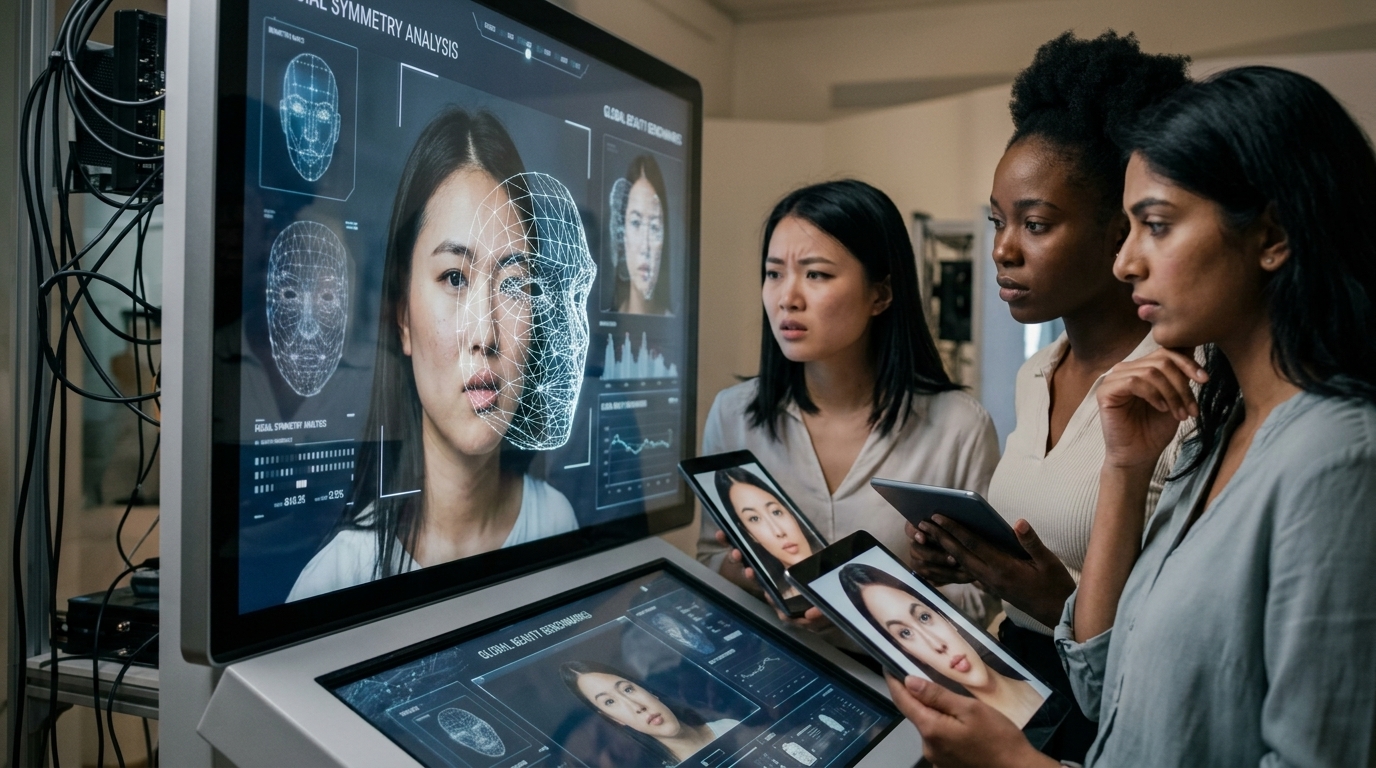
The "looksmaxxing" philosophy treats the human face as a technical problem to be solved. Through AI apps, users receive "scores" based on facial symmetry, jawline angles, and canthal tilt. This quantification of beauty strips away the concept of personal charm or uniqueness, imposing a homogenized aesthetic that resembles a CGI character more than a human being.
In Greece, this trend has taken a particularly sharp turn among younger demographics. Plastic surgeons in Athens and Thessaloniki report that more individuals under 25 are seeking fillers and invasive surgeries to achieve the "Instagram face"—high cheekbones, fox eyes, and poreless skin. This globalized, digitally manufactured model is gradually erasing traditional Mediterranean beauty standards, replacing diverse features with a singular, algorithmic template of perfection.
The Ethics of Algorithmic Beauty
Beyond individual psychology, the rise of AI beauty standards raises profound ethical questions. The algorithms used to "rate" beauty are often trained on datasets rife with racial and cultural biases. This means AI tends to promote specific Western ideals, marginalizing other forms of natural beauty and reinforcing systemic prejudices. Furthermore, the commercialization of this insecurity is a multi-billion dollar industry.
Tech giants and beauty conglomerates use AI to identify "flaws" users didn't even know they had, only to offer targeted solutions. It is a self-perpetuating cycle: technology generates the insecurity by presenting an unattainable ideal, and then monetizes the remedy. The need for a regulatory framework, such as mandatory labeling for AI-generated or heavily filtered content, is becoming essential to protect public mental health from the predatory nature of algorithmic surveillance.
Conclusion: Reclaiming the Human Element
The challenge for the future is not to reject technology, but to foster a critical digital literacy. We must learn to distinguish true beauty from algorithmic perfection. Authenticity and charm often reside in the very asymmetries and "imperfections" that AI seeks to erase. As we move further into the 2020s, reclaiming our natural selves may become the most revolutionary act of resistance against a world made of pixels.