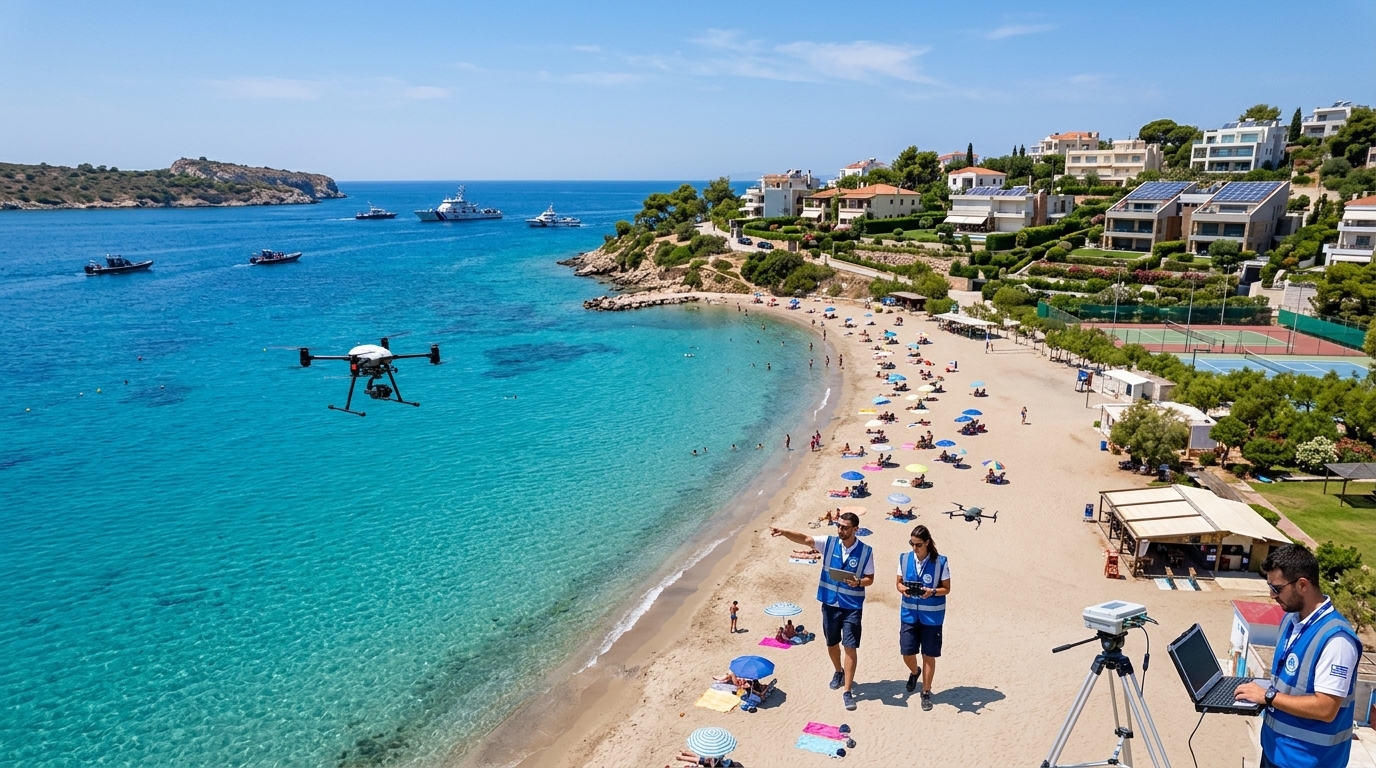
The Greek coastline, stretching over 16,000 kilometers, is not only the country's most potent tourism asset but also a perennial battlefield where public interest, business activities, and environmental conservation collide. In the summer of 2026, Greece finds itself at a critical juncture as technology steps in to play the role of the ultimate guardian of legality. Images of drones hovering over popular beaches in the Cyclades and the Ionian Sea are no longer scenes from a sci-fi movie; they are the daily reality of inspections carried out by the State Land Service.
The Digital Revolution in Coastal Management
The fundamental shift in the new coastal management framework lies in the integration of advanced IT and remote sensing tools. The use of drones allows authorities to have an accurate, real-time view of beach occupancy. Using artificial intelligence algorithms, the system compares aerial photographs with digital concession maps. If a business has leased 100 square meters for sunbeds but has occupied 300, the discrepancy is automatically detected, and an alert is immediately sent to the relevant authorities.
Simultaneously, satellite imagery from the European Union's Copernicus program provides a broader perspective, enabling the detection of illegal permanent structures—such as concrete bases, fences, or unauthorized buildings—in remote areas where physical inspections are difficult. This "digital pincer" aims to eliminate the fragmentation of inspections that previously allowed many to break the law, betting on the understaffing of public services.
MyCoast and the Power of the Citizen
Perhaps the most significant social parameter of this reform is the MyCoast application. This tool effectively turns every citizen into a potential inspector. Through their mobile phones, beachgoers can view a map showing the exact boundaries of the legal concessions on the beach they are visiting. If they find that there is no free space, that sunbeds reach the water's edge, or that the business lacks the required permit, they can file a named or anonymous complaint on the spot.
Citizen participation has acted as a catalyst, especially following the "Towel Movement" that shook public opinion in previous years. The government, recognizing the political pressure, has strengthened the legal framework for inspections, making complaints via the app immediately processable by the Land Services and the Police. Penalties are now draconian, with fines reaching tens of thousands of euros, and provisions for the immediate sealing of the business and the demolition of illegal structures within a few days.
Untrodden Beaches: Protecting Biodiversity
Another major innovation is the establishment of "Untrodden Beaches" (Apatites Paralies). These are 198 areas across the country located within the Natura 2000 network, where all business activities, the placement of sunbeds, and the passage of motor vehicles are strictly prohibited. In these areas, technology serves a deterrent role. Drones monitor these zones to ensure that the ecological balance is not disturbed by illegal canteens or beach bars set up overnight.
This move is an admission that tourism development cannot be unchecked. Preserving natural beauty is, in the final analysis, what ensures the long-term value of the Greek tourism product. Municipalities, for their part, must adapt to a stricter framework, as the responsibility for cleaning and maintaining public spaces remains with them, but with the threat of funding cuts in case of negligence.
Challenges and Bureaucratic Hurdles
Despite technological progress, challenges remain. The demarcation of the shoreline across the entire country has not yet been fully completed, which creates legal loopholes in some instances. Furthermore, the speed of the judicial system in hearing appeals from business owners remains an issue that can delay the enforcement of sanctions.
However, the direction is clear: the digitalization of public property is the only way forward. Using Big Data to analyze trends in coastal occupancy now allows the Ministry of Finance to better design auctions, ensuring that the state receives a fair price for the use of public land while protecting citizens' rights to free access to the sea. The bet for this summer is whether this technological superiority will translate into a permanent cultural shift for both entrepreneurs and citizens alike.