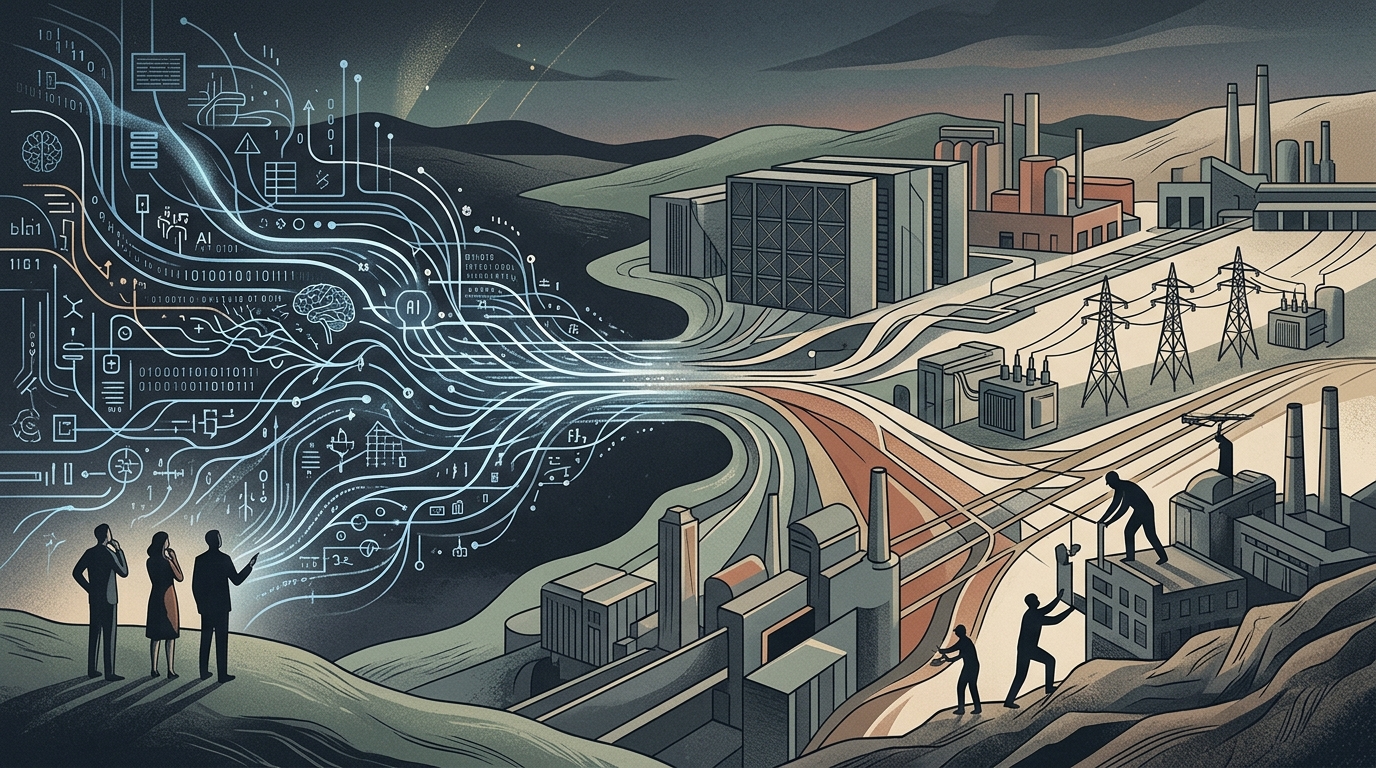
Greece stands at a critical crossroads of digital transformation, where Artificial Intelligence (AI) is no longer a theoretical future scenario but a tangible tool of governance. The Minister of Digital Governance, Dimitris Papastergiou, through recent interventions, has set the framework for the use of AI with an emphasis on image analysis—a technology that promises to revolutionize how the state perceives and interacts with physical space. The transition from simple document digitization to algorithmic oversight represents the next great challenge for the Greek public administration.
The 'Eyes' of the State: Satellite Monitoring and Illegal Construction
One of the most emblematic applications promoted by the Ministry concerns the use of satellite imagery and AI to combat illegal construction and protect the environment. Through the 'Copernicus' program and the use of sophisticated computer vision algorithms, the state gains the ability to compare aerial photographs from different time periods in real-time. This allows for the automatic detection of new structures or extensions that lack the necessary permits, eliminating the need for sampling inspections that often proved ineffective.
Mr. Papastergiou emphasized that this technology does not function punitively, but proactively and fairly. When the state can see everything, the sense of impunity recedes. Furthermore, the same technology is being deployed to monitor beaches and ensure compliance with sunbed concession contracts. Using drones and AI, deviations from legal concession boundaries are identified within minutes, ensuring citizens' free access to public space.
The Evolution of mAIgov: From Chatbot to Digital Life Assistant
The introduction of mAIgov marked the first mass contact of the Greek citizen with Artificial Intelligence. However, future planning includes a transition to a more 'visual' and intuitive interface. The ability for a citizen to 'show' the state a problem via their mobile camera—for instance, a pothole, a burnt-out streetlamp, or damage to public property—and the automatic categorization and routing of the request via AI, is the next step.
This approach radically changes the service model. The citizen does not need to know which agency is responsible; AI takes on the role of the mediator. According to the Minister, the goal is to create a state that 'hears' and 'sees' the needs of citizens even before they are formally stated, drastically reducing bureaucracy and waiting times.
Business and AI: The Challenge of Competitiveness
For the private sector, Mr. Papastergiou's remarks highlight the need for rapid adaptation. Visual AI (Generative AI and Computer Vision) offers vast opportunities in tourism, precision agriculture, and industry. Greek businesses are called upon to invest in tools that automate quality control in production or create personalized visual content for marketing.
However, the challenge remains funding and staff training. The Ministry of Digital Governance, through Recovery Fund programs, aims to support small and medium-sized enterprises (SMEs) to integrate these technologies. 'Digital convergence' is no longer just about high-speed internet, but about a company's ability to manage and analyze image data for strategic decision-making.
Ethics, Transparency, and the European Framework (AI Act)
No discussion about AI in Greece can ignore the issue of personal data protection. Mr. Papastergiou was clear: the use of AI by the public sector will be conducted with full respect for the General Data Protection Regulation (GDPR) and the new European AI Act. The balance between security and privacy is delicate, especially regarding pattern recognition technologies.
The creation of the AI Committee in Greece, with the participation of top scientists, guarantees that the country will not blindly adopt technological developments but will adapt them to the values of democracy and transparency. AI must be a 'teammate' to the citizen, not an invisible overseer. Algorithmic transparency and the accountability of public bodies are the safeguards for building trust in the digital age.