
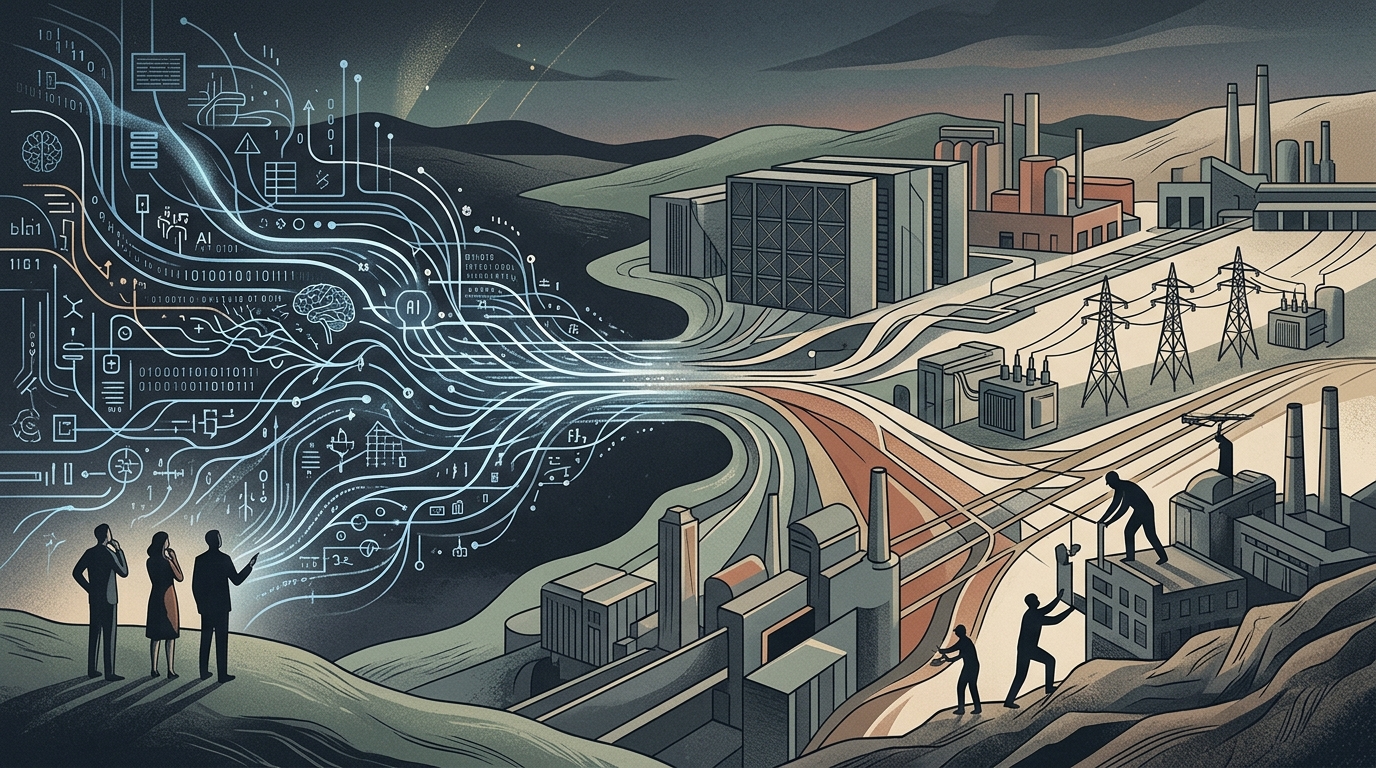
As we cross the midpoint of 2026, the global markets are witnessing a profound structural transformation. The initial euphoria surrounding generative AI software has matured into what I call the 'Great Infrastructure Rotation.' Investors are no longer merely chasing the next large language model; they are chasing the physical backbone required to sustain them. This shift is driven by a stark realization: while Big Tech continues to fund the future, it is the hardware manufacturers and infrastructure providers who are reaping the immediate financial rewards.
The Memory Moat and the $250 Billion Bet
The most significant indicator of this trend is Micron’s massive $250 billion commitment to memory production. In the early days of the AI boom, GPUs were the sole focus. However, as models have grown in complexity, memory bandwidth has become the primary bottleneck. Micron’s strategic positioning confirms that 'Memory is the new Alpha.' This isn't just about speed; it's about the physical capacity to process the data-heavy demands of 2026-era neural networks.
Simultaneously, we are seeing Meta’s 'Silicon Gambit'—a move toward compute sovereignty. By developing in-house chips, Meta is attempting to break the GPU hegemony. This move reflects a broader corporate trend: the desire to control the entire vertical stack to mitigate supply chain risks and inflationary pressures. For the savvy investor, the opportunity has shifted from the 'application layer' to the 'foundational layer'—the companies building the silicon, the cooling systems, and the data centers.
Sovereign AI and the Macroeconomic Reality
The rise of the 'Sovereign AI' doctrine is another market-defining force. Nations are now treating AI compute power as a strategic reserve, much like oil or gold. This geopolitical shift is creating a fragmented but lucrative market for localized infrastructure. The 'Singapore Loophole' and the ongoing 'Data Cold War' between the US and China underscore the premium now placed on secure, sovereign hardware. This is driving massive capital expenditures (CapEx) that are resilient even in the face of 2026’s stubborn inflation.
The market is pivoting from AI hype to AI hardware because you cannot run the economy of tomorrow on the promises of yesterday; you need the silicon of today.
Market Implications for the Greek Landscape
Locally, the Greek market is reflecting these global trends through logistics and regional positioning. The transformation of Algida into a Balkan hub post-Unilever is a prime example of how physical infrastructure and supply chain efficiency are becoming the core focus of Greek business strategy. While the Athens Stock Exchange remains sensitive to global inflation, the shift toward tangible assets and regional hubs provides a defensive buffer for the Greek economy.
In conclusion, the 'Great AI Imbalance' remains: Big Tech provides the capital, but the physical infrastructure providers capture the margin. For the remainder of 2026, the winning strategy lies in identifying the bottlenecks of the physical world rather than the infinite promises of the digital one.