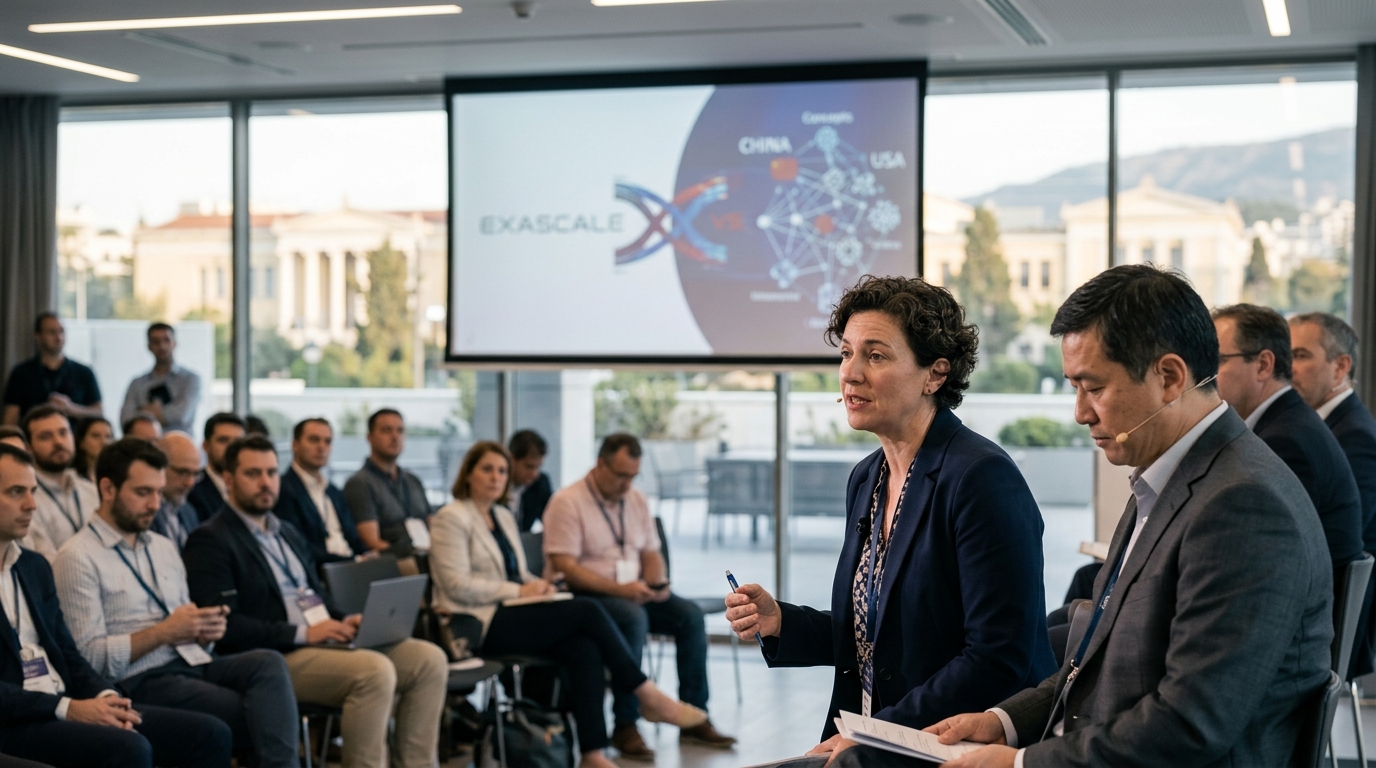
As temperatures rise and the traditional academic year draws to a close, a new phenomenon is taking hold in the halls of Greek universities and research centers: AI Summer Schools. These are no longer simple computer science seminars, but intensive programs attempting to redefine how the new generation of Greeks—from high school students to mid-career professionals—interacts with machine learning and algorithms.
The Strategic Importance of AI Education
Greece, despite the chronic ailments of its educational system, seems to recognize that Artificial Intelligence is not a passing trend but the foundation of the Fourth Industrial Revolution. These 'summer desks,' as Kathimerini aptly describes them, serve as a testing ground for a national strategy aimed at transforming the country into a technological innovation hub in Southeast Europe. These programs, organized by institutions such as the National Technical University of Athens, the University of Athens, and the NCSR 'Demokritos,' offer something missing from the standard curriculum: direct contact with practical application.
Participants aren't just taught how to code. The syllabus ranges from AI ethics and data governance to the application of Large Language Models (LLMs) in medicine, shipping, and tourism—the pillars of the Greek economy. Interdisciplinarity is key. A lawyer attending such a program doesn't learn to program; they learn how AI will change intellectual property law or how algorithms can accelerate the administration of justice.
The Social and Economic Stakes
However, the boom in these programs also brings to the fore serious questions about accessibility and social inequality. While many of these programs are subsidized by EU funds or private donations, access to high-level technological knowledge often remains the privilege of those who already have a strong background or the financial capacity to devote time to intensive learning. The challenge for the Greek state is to ensure that 'summer desks' do not become another mechanism for producing a digital elite, but rather a tool for social mobility.
- Democratization of knowledge through free online platforms accompanying physical classes.
- Linking summer schools with local businesses for immediate graduate absorption.
- Focusing on reskilling workers in sectors threatened by automation.
"Education in Artificial Intelligence is no longer an option; it is a survival necessity for the Greek economy," says one of the program organizers.
Beyond Code: Ethics and Critical Thinking
One of the most interesting elements of these summer schools is the emphasis on the humanities. In an era where ChatGPT and similar tools can generate text, code, and images in seconds, the value of critical thinking is elevated. Students are encouraged to question algorithmic outputs, understand the biases embedded in data, and reflect on the consequences of automation for human dignity.
In conclusion, AI summer desks in Greece are a microcosm of the country's broader effort to adapt to new realities. If this effort continues consistently and succeeds in penetrating all levels of education, then Greece can hope for a future where technology serves humanity and growth, rather than being a source of fear and marginalization. The stakes are high, but the response from young people shows that the thirst for knowledge is our most powerful weapon.