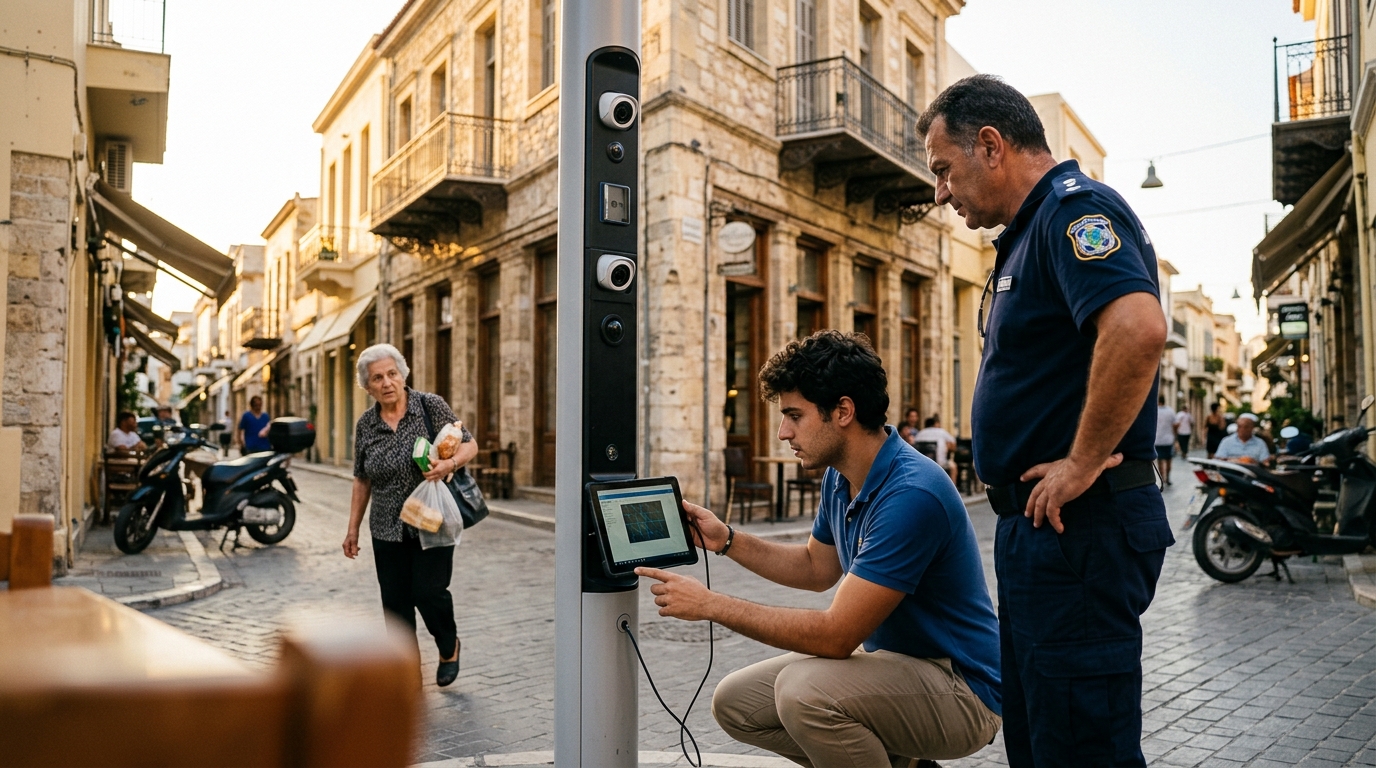
The city of Heraklion, Crete, a region with a long and complex history of unauthorized construction, is currently at the forefront of a digital revolution that is polarizing local society. Recent reports regarding a "frenzy" of complaints filed through Artificial Intelligence (AI) tools at the Heraklion Urban Planning Department are more than just local news; they represent a social experiment highlighting the collision between technological advancement and traditional social bonds.
For decades, urban planning violations in Greece were met with a degree of tolerance, political expediency, and bureaucratic inertia. However, the integration of advanced algorithms and the interconnection of databases are changing the game. Today, filing a complaint no longer requires a citizen's physical presence or a signed letter that might end up in a dusty drawer. AI allows for the instantaneous comparison of satellite imagery, aerial photography, and electronic building permits, making the detection of every new pergola, enclosed balcony, or illegal extension a trivial task.
The Technology Behind the 'Snitching'
The phenomenon observed in Heraklion is based on a new generation of digital tools utilized by authorities and citizens alike. The use of AI for geospatial data analysis enables urban planning services to detect changes in the built environment in real-time. When a neighbor decides to "snitch" on another, the process is now supported by algorithms that verify the validity of the complaint before it even reaches a human inspector.
According to reports, the "frenzy" is due to the ease with which evidence can now be submitted. Applications utilizing image recognition can compare a smartphone photo with official urban planning blueprints. This has led to a deluge of reports, as the anonymity and speed of digital platforms reduce the moral weight of the act for many, transforming a personal dispute into an automated legal process.
Social Implications and the Fear of the Digital Panopticon
The use of AI in urban planning is not merely a technical issue; it is deeply political and social. In Heraklion, a city where neighborhoods still maintain elements of close-knit social cohesion, this new trend threatens to rupture human relationships. The sense that "Big Brother" is not just the state, but also the resident next door equipped with algorithms, creates a climate of suspicion and distrust.
- Erosion of Social Trust: The ease of reporting turns the neighborhood into a surveillance field.
- Automated Justice: There is a risk that AI may not account for specific social or technical circumstances that a human inspector would recognize.
- Selective Enforcement: Often, complaints are used as weapons in personal vendettas, with AI serving as the "executioner" of revenge.
However, the other side of the coin is the enforcement of the rule of law. For years, legality was the victim of impunity. If AI can guarantee that everyone is equal before the law and that the environment is protected from haphazard construction, then perhaps the price of social unrest may be deemed acceptable by the state.
Legal Framework and Future Challenges
Greek legislation is attempting to keep pace with these developments, but a significant gap remains. The use of AI-derived data for imposing fines raises questions regarding personal data protection (GDPR) and the right to a fair hearing. Can an algorithm serve as the sole basis for a fine amounting to thousands of euros?
"Technology is neutral, but its use reflects the pathologies of our society. In Heraklion, we see AI becoming the tool for a new form of social policing," local analysts note.
The future of urban planning in Greece appears to lie in complete digitalization. With the completion of the Land Registry (Ktimatologio) and the full implementation of the Electronic Building Identity Registry, AI will have access to an ocean of data. The case of Heraklion is just the beginning. The remaining question is whether we will use this power to build better cities or if we will become trapped in a perpetual cycle of digital denunciations and social friction.