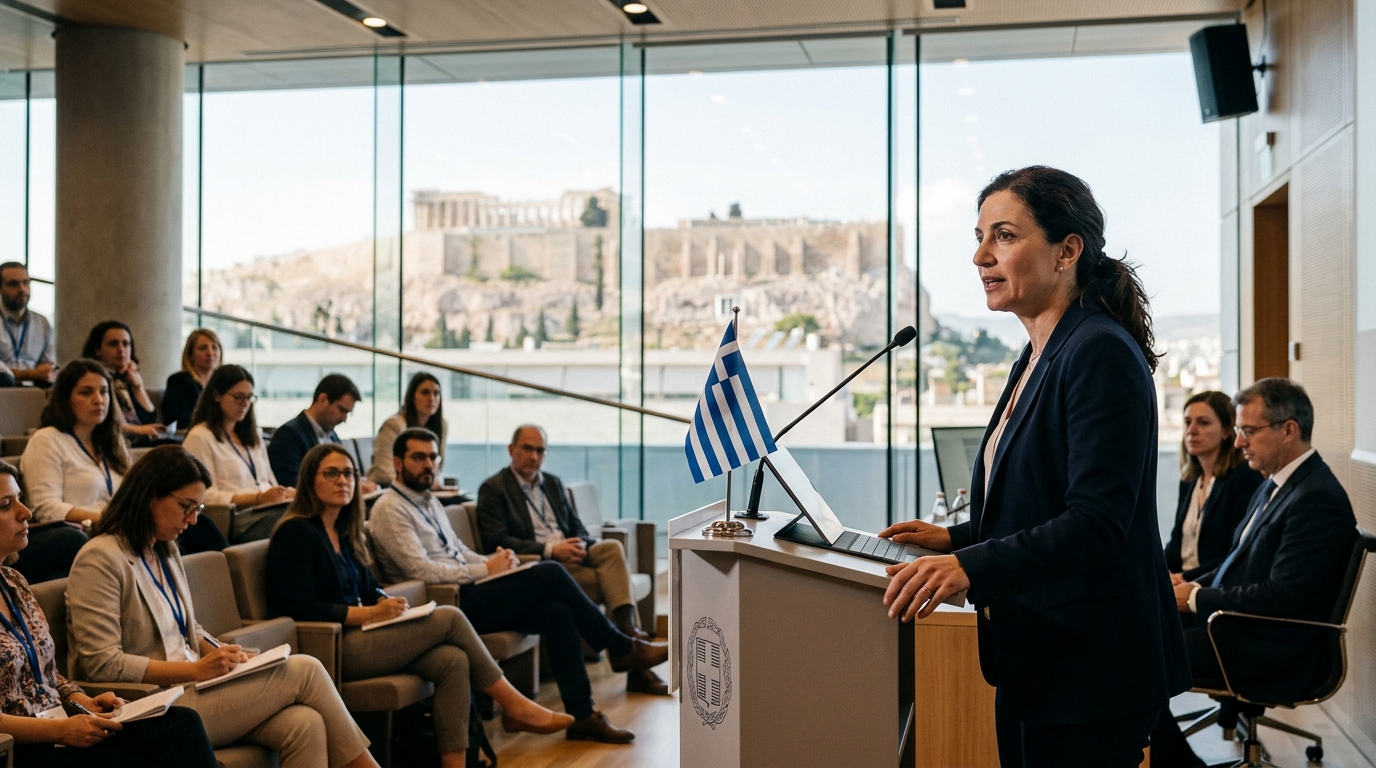
Greece, a country with a deeply rooted political culture and a passion for public debate, is facing an unprecedented challenge. The traditional "election fever," once expressed in coffee shops and town squares, has now migrated to the digital realm, where Artificial Intelligence (AI) is no longer a future threat but a daily reality. The "family" of the political scene—parties, candidates, and consultants—is discovering that the tools of 2026 look nothing like what we knew in the past.
The Digital Transformation of Political Propaganda
The use of AI in elections is no longer limited to simple data analysis. Today, we are in the era of Generative AI, where content creation can occur at a scale and speed that exceeds any human capacity. Parties use algorithms to create personalized messages tailored to the specific fears or hopes of each individual voter. This "micro-targeting" has become so precise that the same political figure can appear with a different face and tone to different social groups.
However, the darkest side of this evolution is deepfakes. The ability to create video and audio clips where political leaders appear to say things they never uttered has shaken public trust. In the Greek reality, where polarization is often high, a well-crafted deepfake released just hours before the polls open can cause irreparable damage before fact-checkers can even begin to debunk it.
The Death of Objective Truth?
The big question is whether our society is ready to distinguish the real from the fabricated. With the rise of AI bots flooding social media, public discourse is often diluted by artificial voices designed to polarize the climate. These bots are no longer the "clumsy" profiles of the past. They possess sophisticated language skills, can argue, and can lure even experienced users into endless digital disputes.
- The "flooding" strategy: A barrage of information that makes verification impossible.
- The use of AI to produce memes and satirical content with political targeting.
- Automated sentiment analysis of voters in real-time.
This situation creates a "fog of war" in political communication. Citizens, bombarded by contradictory information, tend to retreat into their own "echo chambers," where they only hear what confirms their existing beliefs. AI, instead of broadening horizons, risks becoming the ultimate tool of isolation.
Institutional Shielding and the European Response
In the face of this phenomenon, the European Union and the Greek government are attempting to establish rules. The implementation of the AI Act is a first step, mandating the labeling of AI-generated content. However, technology always moves faster than legislation. Platforms like Meta, Google, and TikTok are under pressure to strengthen their moderation mechanisms, especially during election periods.
"Democracy is not threatened by technology, but by our inability to understand and control it," say digital policy analysts.
In Greece, the National Cybersecurity Authority and other relevant bodies are on high alert. Yet, the real defense lies in citizen education. Digital literacy is now as important as the vote itself. If the digital "fever" is not met with composure and critical thinking, the "kinship" of our democracy risks finding itself in a permanent state of confusion, where truth becomes the first casualty of technological progress.