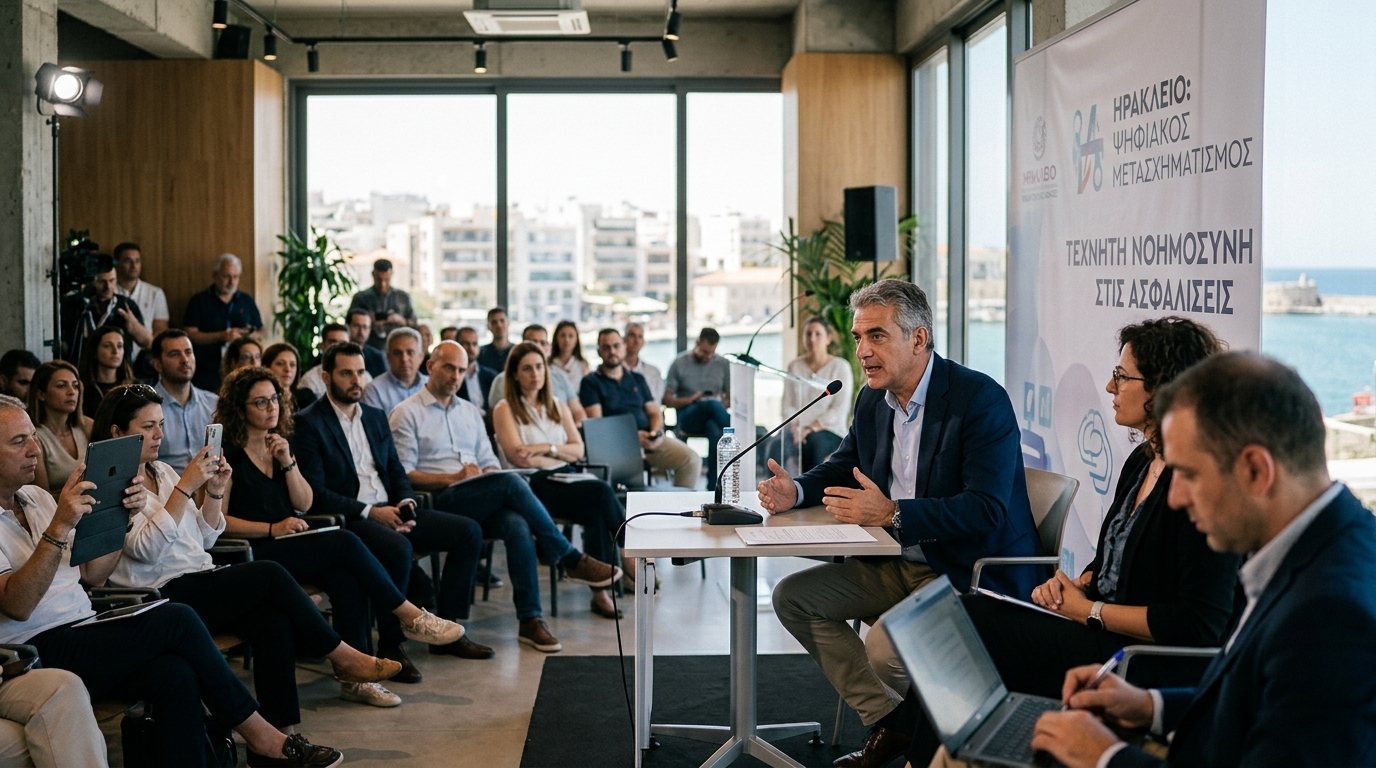
The dawn of the Artificial Intelligence (AI) era finds Greece not merely as a passive observer, but as a nation desperately seeking its own role in the new global distribution of digital power. According to recent analyses and the national strategy, the integration of AI into the Greek economy is no longer a luxury, but an existential necessity for boosting productivity and addressing demographic challenges.
Greece's Competitive Advantages
Despite the structural weaknesses of previous decades, Greece currently holds several strong cards. The most significant is human capital. The "Brain Regain" phenomenon is beginning to bear fruit, as scientists with international experience return or collaborate with Greek institutions. Furthermore, the country's geopolitical position, combined with investments from giants like Microsoft, Google, and Amazon Web Services in data centers, is transforming Greece into a regional data hub in the Eastern Mediterranean.
- High level of training in STEM fields.
- Strategic investments in cloud infrastructure.
- A flexible and growing startup ecosystem.
- A rich cultural and tourism heritage ripe for digital upgrading.
As analysts at "Oikonomikos Tachydromos" point out, AI could add up to 15 billion euros to the Greek GDP by 2030, provided that investments are directed toward productive sectors rather than just technology consumption.
Strategic Challenges and the "Productivity Paradox"
However, the road to the digital summit is fraught with obstacles. The greatest challenge is the digital maturity of Small and Medium Enterprises (SMEs), which form the backbone of the Greek economy. Many lack the resources and expertise to adopt AI tools, risking obsolescence. Additionally, bureaucracy, despite the leaps made by Gov.gr, remains a deterrent for the rapid implementation of complex IT projects.
"Artificial Intelligence is not a magic wand. It requires deep cuts in administrative structures and a culture of continuous learning that is currently lacking in much of the public and private sectors," notes a market executive.
The shortage of specialized data scientists and the need for mass reskilling of the existing workforce are urgent priorities. Without a coordinated effort in education, AI could widen social inequalities instead of reducing them.
The Bet on Vertical Sectors: Shipping and Tourism
To win the bet, Greece must focus on areas where it already holds a leading position. In shipping, using AI to optimize routes and reduce emissions can maintain Greek primacy. In tourism, personalized visitor experiences through algorithms can significantly increase revenue per tourist. Specialization in these "vertical" sectors is the only way to create domestic added value.
Ethics and Governance: The EU Framework
Finally, Greece is called upon to implement the European Union's AI Act, the world's first comprehensive legal framework for AI. The challenge here is twofold: protecting citizens' rights while avoiding over-regulation that could stifle innovation. The establishment of the National Committee for AI is a positive first step, but its effectiveness will be judged by its ability to bridge the gap between academia and the real market.
In conclusion, Artificial Intelligence offers Greece a "second chance" for a digital transformation based on substance rather than impressions. The stakes are high, time is pressing, but the prerequisites for success are present.