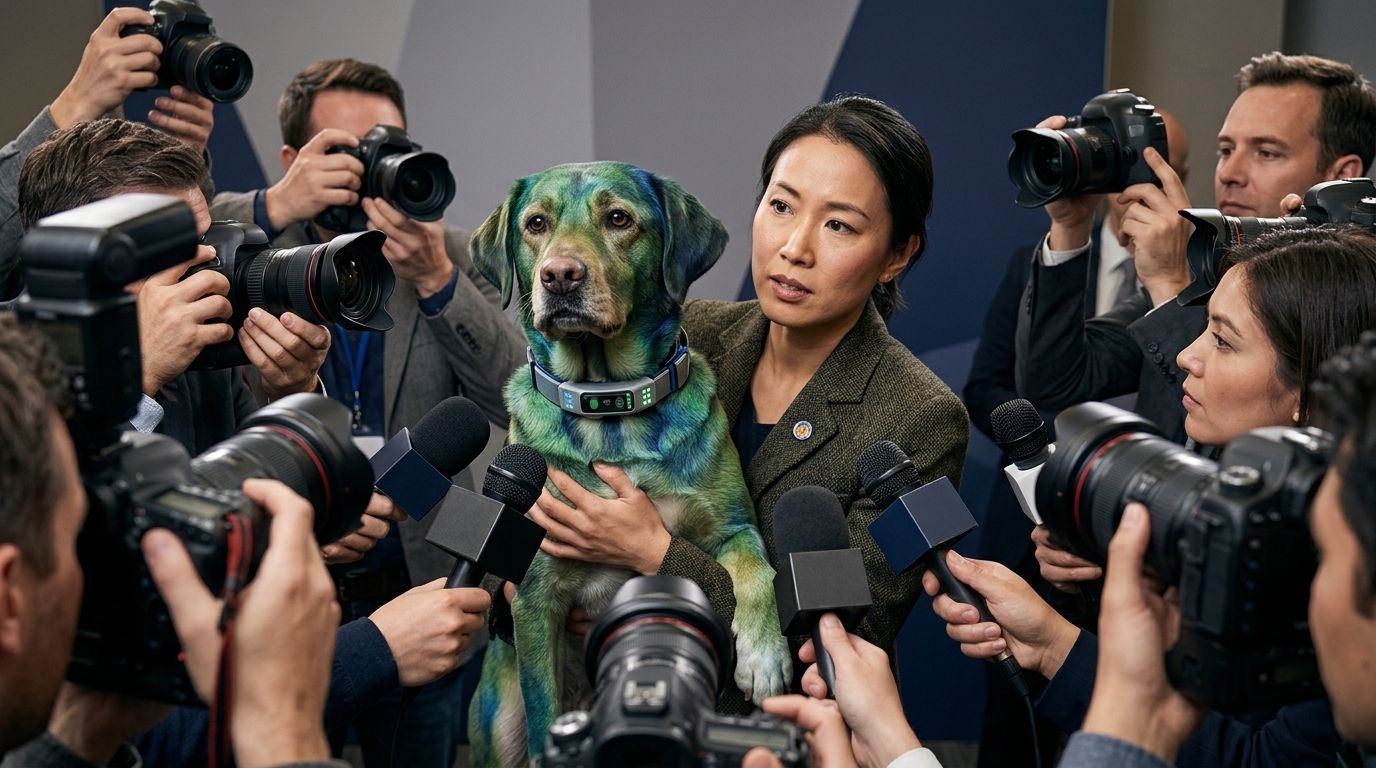
The eternal human desire to communicate with animals, a dream once belonging exclusively to the realm of science fiction and folklore, seems to be approaching a peculiar digital reality. Chinese startup Meng Xiaoyi recently shook the tech market by unveiling PettiChat, an AI-powered collar that promises to 'translate' the sounds of dogs and cats into human language. Priced at approximately €131, the device vows to bridge the interspecies gap, although the scientific community remains deeply skeptical.
The Technology Behind PettiChat
PettiChat is more than just a recording device. According to the manufacturing company, the device relies on sophisticated machine learning algorithms trained on a vast database of hundreds of thousands of vocalization samples from various breeds. Meng Xiaoyi claims the collar can identify emotional states such as hunger, fear, joy, or the need for attention with an accuracy rate of up to 95%.
The operation appears simple: the collar collects acoustic signals, processes them via an integrated AI chip, and sends the 'translation' to an app on the owner's smartphone. Furthermore, the system incorporates body language through motion sensors, attempting to synthesize a complete picture of the animal's psychological state. However, the complexity of animal communication is such that many wonder if such a linear translation is even feasible.
Scientific Skepticism and the Issue of Anthropomorphism
Despite the impressive promises, animal behavior experts warn of the dangers of oversimplification. Pet communication is multimodal. A bark can mean dozens of different things depending on context, intensity, tail position, and even environmental scents. The AI's attempt to assign words to these sounds carries the risk of 'anthropomorphism'—attributing human characteristics and motivations to animals that may not correspond to reality.
"Animals do not think in words, but in images, scents, and emotions. Saying a dog is saying 'I missed you' might be a comforting interpretation for the owner, but it may overlook the animal's actual biological needs," industry analysts note.
Moreover, there is concern that owners might become overly reliant on the app, ignoring obvious signs of distress or illness that the algorithm fails to capture. If the collar translates a cry of pain as 'I want to play,' the health consequences for the pet could be severe.
The Economy of 'Pet Humanization'
The release of PettiChat is no coincidence. It is part of a broader global trend known as 'Pet Humanization.' Consumers, especially younger generations like Millennials and Gen Z, treat their pets as equal family members and are willing to spend significant amounts on their well-being. The pet-tech market is expected to skyrocket in the coming years, with smart feeders, surveillance cameras, and now AI translators flooding the shelves.
In Greece, although the market is smaller, the trend is evident. Demand for gadgets that strengthen the bond with pets is rising despite economic pressures. PettiChat, priced around €131, positions itself as a 'premium' accessory targeting this specific audience. However, its success will depend on whether users view it as a serious tool or an expensive digital toy for social media clout.
The Future of Interspecies Communication
The case of Meng Xiaoyi is just the beginning. Research projects worldwide, such as the Earth Species Project, are using AI to decode the language of whales, elephants, and other wild animals. Technology has the potential to teach us much about nature, provided it is used with respect and scientific validity.
In conclusion, PettiChat represents a bold step, but also a reminder of the limits of technology. Understanding another living being requires empathy, observation, and time—elements that no app, no matter how advanced, can fully replace. Whether the 95% accuracy claim is truth or marketing remains to be seen through daily use and, of course, the reactions of our four-legged friends themselves.