The international community is watching with bated breath as developments in the Persian Gulf reach a fever pitch, with U.S. President Donald Trump approaching a decision that could alter the course of modern history. The phrase "redemption or hell" is not merely a journalistic flourish but a reflection of the stark reality prevailing in the corridors of power in Washington and Tehran. After months of escalating tension, the strategy of "maximum pressure" appears to be entering its final stage, where options are becoming dramatically limited.
The Diplomacy of the Abyss and Trump's Strategy
Donald Trump, remaining true to his "Art of the Deal" tactics, appears to be using the threat of military force as the ultimate bargaining chip. According to White House sources, the coming hours are decisive in determining whether Iran will accept the stringent terms of a new agreement. This deal would cover not only its nuclear program but also its ballistic missile capabilities and regional influence. Tehran, for its part, finds itself in a dire economic position—a result of crippling sanctions—forcing it to balance national pride against the necessity of economic survival.
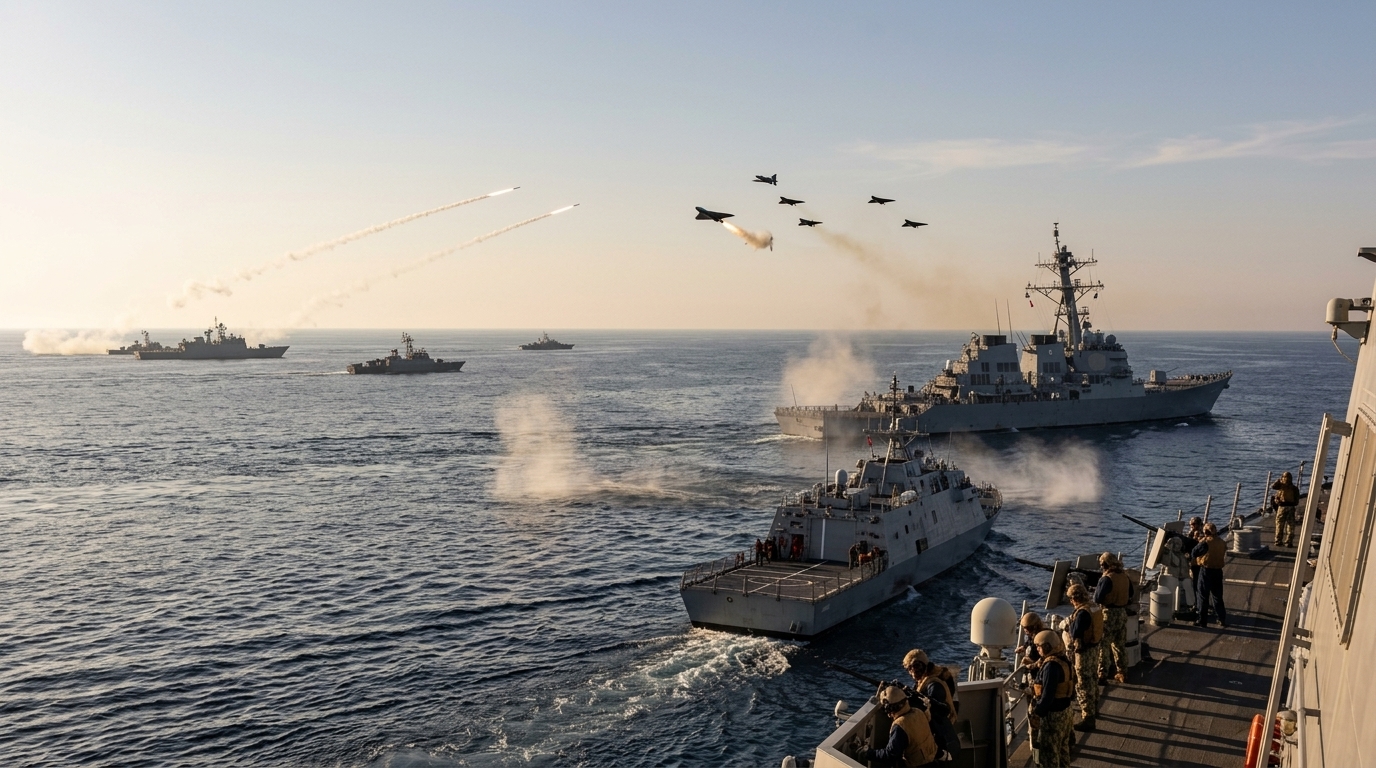
Trump's strategy is built on the belief that Iran will blink at the last moment. However, analysts warn that the risk of an accident or a misinterpretation of intentions is higher than ever. The buildup of American forces in the region, combined with statements from Iranian officials regarding "all-out war" in the event of an attack, creates a backdrop reminiscent of the eves of past major conflicts. The brinkmanship displayed by both sides has left little room for error.
The Nuclear Enigma and the Red Line
At the heart of the friction remains Iran's level of uranium enrichment. Intelligence reports suggest that Tehran is now within reach of acquiring enough material for a nuclear weapon. For Israel and the United States, this represents the ultimate "red line." Trump has made it clear that he will not allow Iran to become a nuclear power during his tenure, even if it means destroying the country's nuclear facilities through surgical airstrikes. This stance has polarized the international community, with some praising the resolve and others fearing the fallout.
The "redemption" the U.S. side refers to involves a comprehensive settlement that would reintegrate Iran into the global economy in exchange for the full demilitarization of its nuclear program. "Hell," conversely, involves a scenario of regional conflagration that could engulf Lebanon, Syria, Yemen, and Iraq, causing an unprecedented humanitarian and economic catastrophe. The choice is binary, yet the complexities within each path are immense.
Regional Implications and the Role of Allies
U.S. allies in the region, primarily Israel and Saudi Arabia, are monitoring the situation with mixed emotions. While they desire the containment of Iranian influence, they fear the retaliation they could face in the event of a full-scale war. Iranian proxies, such as Hezbollah, have already been placed on high alert. A conflict would not be confined to Iran's borders; it would transform the entire Middle East into a battlefield, potentially involving non-state actors with significant strike capabilities.
Furthermore, the stances of China and Russia complicate the landscape. Beijing, as the largest buyer of Iranian oil, has every reason to avoid a war that would send energy prices skyrocketing. Moscow, on the other hand, is using the crisis to bolster its own role as a mediator while simultaneously attempting to undermine American hegemony in the region. Trump's decision, therefore, is not just about bilateral relations but about the global balance of power and the future of international alliances.
The Economic Stakes and Global Markets
Should the coming hours lead to conflict, the impact on the global economy will be instantaneous. The Strait of Hormuz, through which 20% of global oil consumption passes, could be closed, driving crude prices to levels that would trigger a global recession. Markets are already jittery, with investors flocking to safe havens like gold and treasury bonds. The uncertainty is palpable on Wall Street and in financial hubs across Europe and Asia.
Trump is aware that a war could undermine U.S. economic growth, which remains his strongest card in domestic politics. This economic parameter may be the only factor pushing him toward the "redemption" of diplomacy rather than the "hell" of weapons. History has shown that the U.S. President detests "endless wars," but he also does not hesitate to use force if he perceives that American power is being challenged. The world now waits to see which version of the President will emerge in this zero-hour moment.