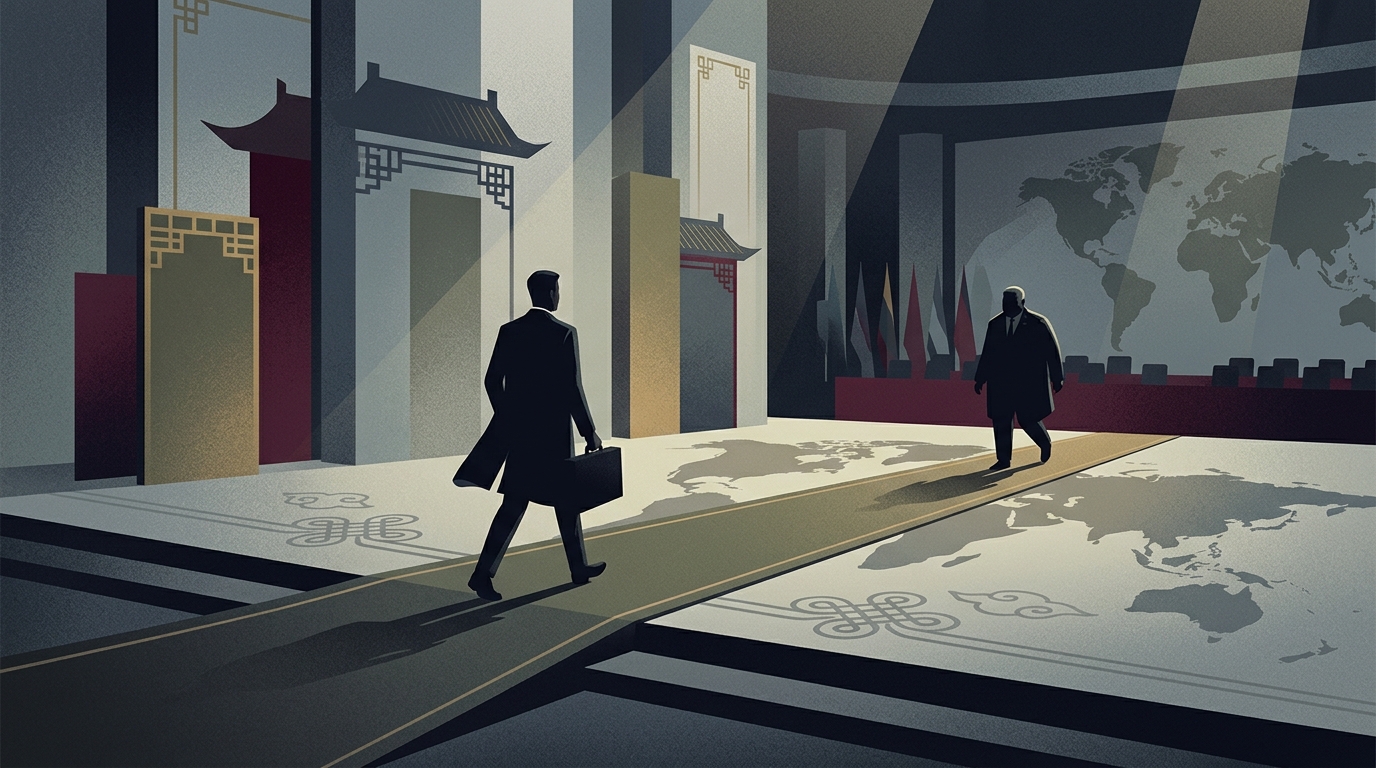
In the world of high-stakes diplomacy, timing is never accidental; it is a language in its own right. As Donald Trump’s Air Force One departed Beijing, the Kremlin’s official announcement of Vladimir Putin’s imminent arrival in the Chinese capital was more than just news—it was a statement of intent. The image of the 'revolving door' in Beijing, where one global leader succeeds another, highlights China’s central role as the new geopolitical arbiter of the 21st century.
The Strategy of the 'Revolving Door'
The timing of Putin's visit is deeply symbolic. By scheduling it immediately after Trump’s departure, China sends a clear message to Washington: regardless of how much the US tries to renegotiate the terms of the global order, Beijing has powerful alternatives. For Putin, this visit is an opportunity to reaffirm the 'no limits' partnership with Xi Jinping, especially at a time when Russia seeks stability in the face of Western pressure.
This sequence of visits allows Xi Jinping to play the role of the ultimate mediator. After hearing the demands and proposals of the Trump administration—likely focused on trade and protectionism—he can now coordinate with Moscow for a unified response. Geopolitical triangulation is in full swing, with China occupying the apex of the triangle.
Energy, Technology, and the End of Dollar Hegemony
At the heart of the Putin-Xi talks lies economic survival and strategic autonomy. Russia, largely cut off from Western capital markets, views China not only as a buyer for its oil and gas but also as a provider of critical technology. The expansion of the 'Power of Siberia 2' pipeline and the increasing use of the Yuan in bilateral trade are direct challenges to the dominance of the US Dollar.
- Energy Security: Russia is becoming the primary energy supplier for Chinese industry, ensuring long-term revenue streams.
- Technological Cooperation: From Artificial Intelligence to advanced weaponry, the exchange of know-how is accelerating.
- De-dollarization: Creating an alternative financial system that bypasses SWIFT is a shared strategic goal.
This economic convergence is not merely a trade agreement; it is the construction of a parallel global economy designed to be immune to Western sanctions.
Challenging the West and the New Multipolarity
The Putin-Xi meeting immediately following Trump serves as a display of strength toward NATO and European powers. The message is simple: the attempt to isolate Russia is destined to fail as long as China stands by its side. At the same time, China uses its relationship with Russia as leverage against the US, reminding Trump that an aggressive trade policy could push Beijing and Moscow into an even tighter military alliance.
"History is written in those corridors where leaders exchange not just handshakes, but the future of entire continents," noted a Beijing-based analyst.
In this environment, Europe risks being sidelined. While Washington focuses on its competition with China and Moscow on its survival through the East, Brussels must decide whether to remain tethered to the American axis or seek its own autonomous role in this new multipolar world.
Conclusion: A New Era of Competition
Putin’s visit is not the end of a process but the beginning of a new phase. Beijing’s 'revolving door' demonstrates that the world is no longer unipolar. China’s ability to host the American president and immediately after his Russian counterpart, while maintaining the initiative, proves that the center of gravity of global power has permanently shifted Eastward. The coming months will reveal whether this Sino-Russian convergence can withstand its internal contradictions or if it will form the foundation of a new 'Iron Curtain,' this time in the Pacific.