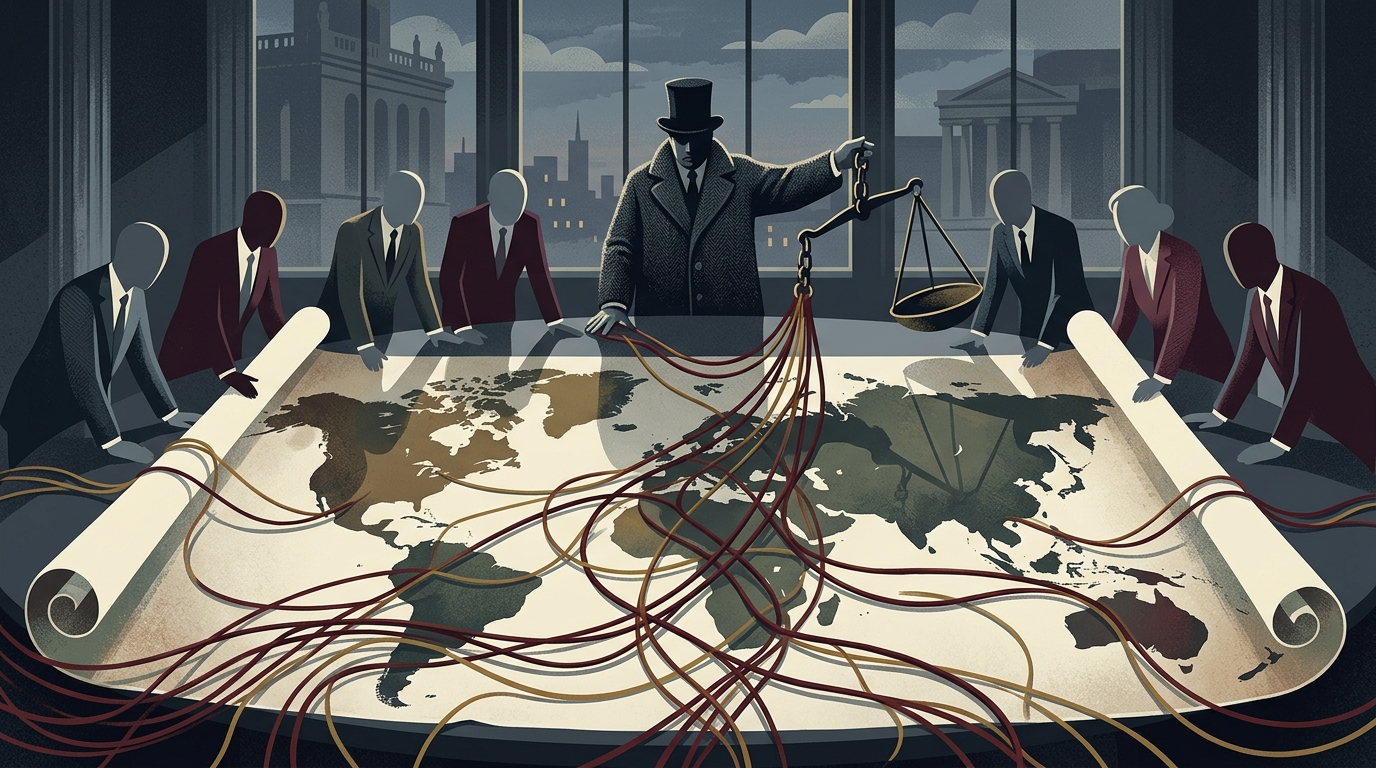
As we navigate the first half of 2026, the global geopolitical landscape is no longer defined solely by borders or oil reserves, but by the trillions of parameters in large language models and access to cutting-edge semiconductors. A recent analysis by the Atlantic Council highlights a stark reality: the battle for Artificial Intelligence (AI) is not just a technological race, but an existential struggle for 21st-century hegemony. The United States, while currently the frontrunner, faces adversaries unencumbered by the same ethical or democratic constraints, creating a perilous asymmetric environment.
Compute as the New Strategic Arsenal
The US "strategy for victory" rests on three central pillars: hardware, data, and talent. However, hardware remains the most critical variable. Dominance in the chip supply chain, centered around Taiwan and ASML in Europe, represents the "chokepoint" that the US is attempting to secure through rigorous export controls. The analysis suggests that for the US to win, it must transform its territory into a "compute fortress," investing heavily in domestic fabrication plants (fabs) and energy infrastructure capable of sustaining power-hungry data centers.
- Strengthening domestic chip production through the CHIPS Act 2.0.
- Forming international consortia for the security of rare earth elements.
- Imposing targeted sanctions on Chinese entities developing military-grade AI.
China, conversely, responds with its "military-civil fusion" policy, where the private sector and the military operate as a single entity. This allows them to bypass the bureaucratic hurdles that often slow AI adoption within the Pentagon. The challenge for Washington is to accelerate its processes without sacrificing transparency or democratic oversight.
The Ideological Divide: Democratic vs. Authoritarian AI
Beyond numbers and benchmarks, there is a profound ideological dimension. The Atlantic Council emphasizes that the way AI models are trained reflects the values of their creators. AI developed in an authoritarian environment is designed for surveillance, social control, and the suppression of dissent. In contrast, the US and its allies must promote a model of "responsible AI" that protects privacy and human rights.
"Winning in AI does not just mean having the fastest algorithm; it means ensuring this technology remains a tool for liberation rather than subjugation," the report states.
This "AI diplomacy" involves creating international standards that technologically isolate regimes using AI for malicious purposes. Establishing a "Digital Alliance" among G7 members and other democratic partners is vital for setting the rules of the road.
Military Integration and the Risk of Escalation
On the battlefield, AI is a force multiplier changing everything from autonomous drone navigation to real-time intelligence analysis. The US is struggling to integrate AI into its traditional military structures, a process often hindered by legacy thinking. The report suggests a radical restructuring of defense procurement, prioritizing software over traditional "heavy metal" assets.
However, the speed at which these systems evolve carries inherent risks. The possibility of an "accidental war" triggered by an algorithm misinterpreting an adversary's move is now a plausible scenario. A winning strategy must therefore include communication channels with adversaries to mitigate risks, similar to the "red lines" of the Cold War era.
Conclusion: The Talent Marathon
Ultimately, the most critical factor remains human capital. The US risks losing its edge if it does not overhaul its visa policies for high-skilled scientists. China is investing billions to repatriate its scientists from the West. For the US to prevail, it must remain the global magnet for the world's brightest minds. Victory in the AI race will not be decided in a single day, but in a society's ability to innovate, adapt, and lead with moral clarity in an uncertain new world.