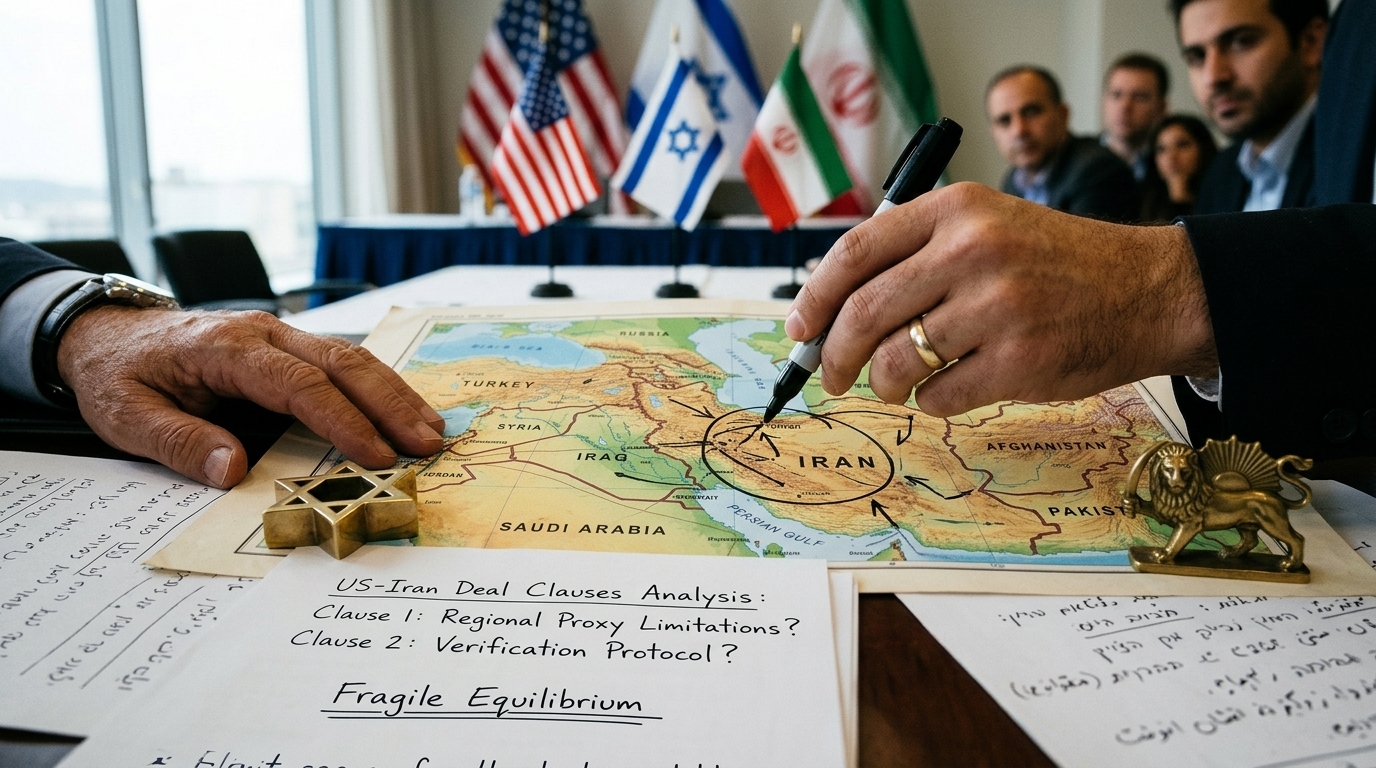
The geopolitical chessboard of the Middle East is once again in a state of flux, as reports of an imminent "informal" understanding between the United States and Iran surface. In Jerusalem, Prime Minister Benjamin Netanyahu convened an emergency security cabinet meeting, sending a clear message to both Washington and the international community: Israel does not consider itself bound by any arrangement that fails to completely dismantle Tehran's nuclear threat.
The Biden administration's strategy appears to have shifted from a full revival of the 2015 Joint Comprehensive Plan of Action (JCPOA) to a more flexible, albeit controversial, "understanding." This new approach aims to de-escalate tensions without the need for a formal treaty that would require U.S. Congressional approval. However, for Israel, this "under-the-radar diplomacy" harbors lethal risks.
The First Clause: The Uranium Enrichment Ceiling
The first and perhaps most critical aspect of the deal causing discomfort in Israel concerns the level of uranium enrichment. According to diplomatic sources, Washington appears to tacitly accept Iran maintaining its enrichment at the 60% level. For Israel, this represents a dangerous concession. While 60% is not the 90% required for a nuclear weapon, the technical gap between the two levels is minimal and could be bridged within a few weeks.
Netanyahu argues that legitimizing this enrichment level effectively turns Iran into a "threshold state." The concern is that Tehran could use this period of calm to perfect its technologies while simultaneously evading sanctions. The Israeli side insists that any deal should require a total return to the 3.67% level stipulated in the original 2015 agreement, or even better, a complete cessation of enrichment activity.
The Second Clause: The Financial Injection and Asset Release
The second clause sparking outrage in Jerusalem is the economic dimension of the agreement. Washington has reportedly agreed to the unfreezing of approximately $6 billion in Iranian funds held in South Korea, in exchange for the release of American detainees. Furthermore, there are reports of similar arrangements involving funds held in Iraq.
Netanyahu's position is that this money, despite Washington's assurances that it will be used exclusively for humanitarian purposes (food and medicine), will ultimately end up financing Iran's terrorist activities in the region. "Money is fungible," Israeli officials argue, implying that if Iran saves $6 billion from its health budget, it can allocate the equivalent amount to Hezbollah, Hamas, or the Houthis in Yemen.
Strategic Isolation and the Doctrine of Autonomy
Israel's stance is not merely a reaction to technical terms but an expression of deeper strategic anxiety. Netanyahu fears that the U.S. is seeking a "quick fix" to pivot its attention toward China and Ukraine, leaving Israel alone against an empowered Tehran. The security cabinet meeting was intended to reaffirm the "Begin Doctrine": Israel will do whatever is necessary to prevent an enemy from acquiring weapons of mass destruction, regardless of the wishes of its allies.
Moreover, the internal political situation in Israel plays its own role. Netanyahu, facing intense domestic pressure, uses the Iranian issue to rally his base and demonstrate that he remains the country's "security guarantor." However, the rift with the Biden administration is palpable. Washington, for its part, believes that an imperfect deal is preferable to an uncontrolled escalation that could lead to a regional war.
Conclusions and Outlook
The situation remains fluid. Iran appears to be playing a game of patience, gaining time and resources, while the U.S. tries to manage multiple global fronts. Israel, on the other hand, finds itself in a difficult position: it must balance the need to maintain its strategic relationship with the U.S. and the need to act as a deterrent against Iran. The coming months will be critical, as the implementation of these "invisible" terms will reveal whether the Middle East is heading toward a period of relative calm or a new, more dangerous phase of confrontation.