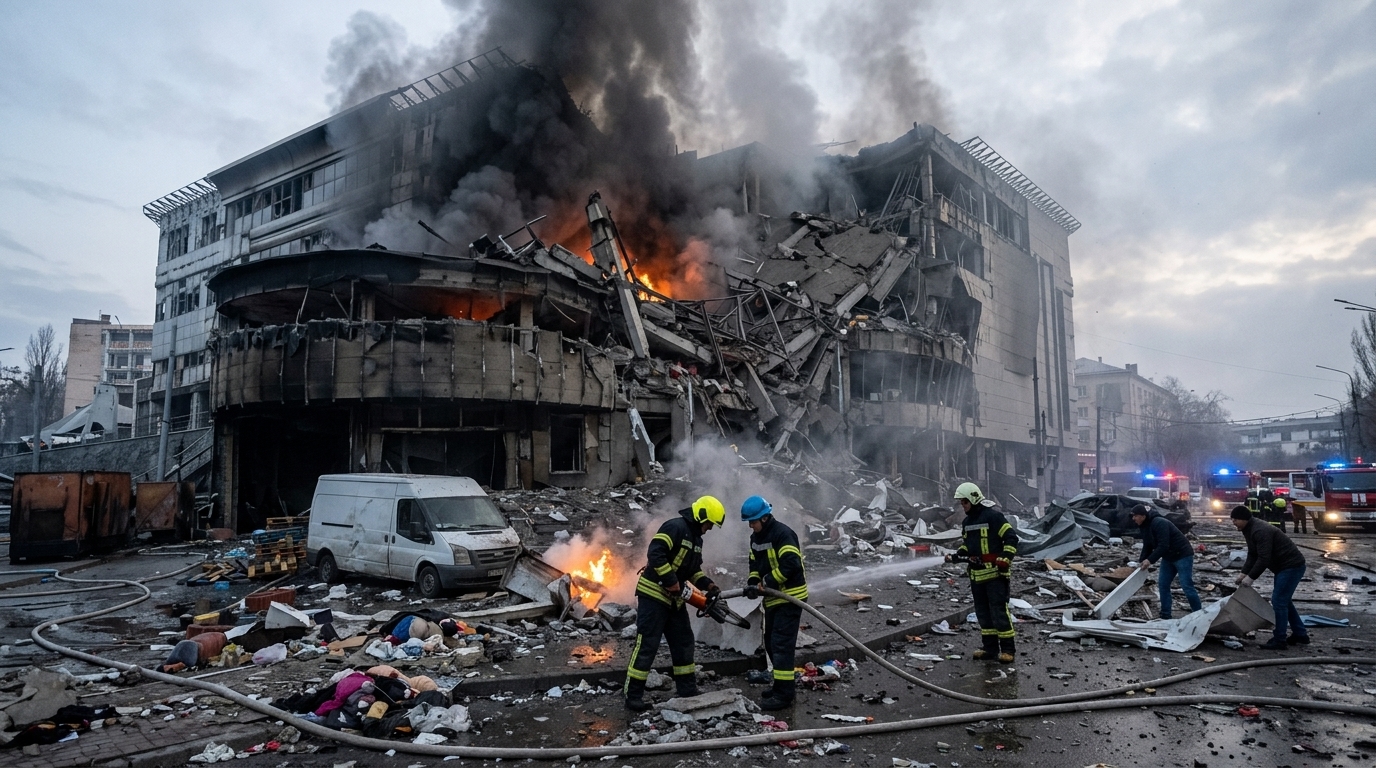
The night that unfolded over Ukraine was not merely another chapter in the ongoing conflict that has ravaged the region since 2022. It was a calculated display of technological prowess and strategic resolve from Moscow, utilizing a cocktail of its most sophisticated weaponry. According to reports, Russian forces launched a coordinated strike employing four distinct missile types: the Oreshnik intermediate-range ballistic missile, the Iskander tactical missile, the Kinzhal hypersonic aero-ballistic missile, and the Zircon naval hypersonic cruise missile. This move, framed by the Kremlin as "retaliation," marks a dangerous escalation, effectively turning the Ukrainian theater into a testing ground for weapons originally designed for global strategic conflict.
Anatomy of the Arsenal: From Iskander to Oreshnik
The deployment of the Oreshnik system is the most alarming element of this new offensive. First revealed in late 2024, the Oreshnik has since become the symbol of Russia's "asymmetric response." It is not a standard ballistic missile; it is a Multiple Independently Targetable Reentry Vehicle (MIRV) system that re-enters the atmosphere at speeds reaching Mach 10. This velocity makes interception by current air defense systems, such as the U.S.-made Patriot, nearly impossible. By choosing to use this weapon in a conventional role, Moscow is sending a clear signal to NATO: Russia possesses the means to strike any target in Europe with minimal warning time.
Simultaneously, the Kinzhal and Zircon missiles represent the cutting edge of hypersonic technology. The Kinzhal, launched from MiG-31 interceptors, and the Zircon, deployed from naval platforms, combine extreme speed with terminal maneuverability. This combination nullifies the logic of traditional missile defense shields, which rely on predicting a fixed ballistic trajectory. The synchronized use of these high-end assets alongside the more common but highly accurate Iskander missiles creates a saturated defense environment where even the West's most advanced systems struggle to cope.
The Policy of 'Deterrence Through Action'
This strike cannot be viewed in isolation from the broader geopolitical context. Moscow maintains that these hits are a direct response to Ukraine's use of Western-supplied long-range missiles against targets within Russian territory. However, the analysis of the targets—which include critical energy infrastructure and military command centers—suggests a more expansive strategy. Vladimir Putin appears to be implementing a policy of "deterrence through action," demonstrating that any further NATO involvement will be met with a technological superiority that the Alliance is not yet fully equipped to counter.
"This is no longer a war of attrition on the ground, but a demonstration of strategic defiance against Western anti-missile technology," noted defense analysts.
Ukraine, for its part, finds itself in an increasingly precarious position. Despite the heroic efforts of its air defense units, the lack of sufficient systems capable of intercepting hypersonic targets creates a critical security gap. Kyiv's pleas for "more and better" systems from the West are met with the reality of limited stockpiles within NATO and the persistent fear of an uncontrolled escalation that could lead to a direct Russia-NATO confrontation.
AI's Role and the Future of Warfare
A less visible but equally significant dimension of these strikes is the role of Artificial Intelligence in mission planning and execution. Modern Russian missiles utilize algorithms for radar evasion and synchronized arrival at the target to ensure maximum saturation. The global defense industry is monitoring these developments closely, as 2026 emerges as the year when "smart" hypersonic technology transitions from theoretical capability to the new battlefield standard.
In conclusion, the recent wave of attacks featuring the Oreshnik and Zircon is more than a military operation; it is a statement of intent. Russia is leveraging technological intimidation to break Ukrainian resistance and force a Western retreat. As missile technology evolves faster than diplomatic peace efforts, the risk of a miscalculation triggering a wider conflagration remains at an all-time high. The international community is now forced to decide whether to continue the policy of incremental escalation or to seek a new security architecture that accounts for the realities of the hypersonic age.