The global AI chessboard is vibrating with a new, strategic move at the heart of Asia. DeepSeek, the Chinese startup that managed to shake Silicon Valley with its impressive model efficiency, is now in the sights of the two most powerful players in Chinese technology: Tencent and Alibaba. Reports that the two giants are seeking to participate in a new funding round, which would catapult DeepSeek's valuation above the $20 billion mark, signal a new phase in the global competition for technological supremacy.
The DeepSeek Phenomenon: Efficiency Over Brute Force
Why has DeepSeek become the 'apple of discord'? The answer lies in the architecture of its models. While OpenAI and Google rely on massive processor clusters and billions of dollars in computing power, DeepSeek has proven that clever engineering can yield similar—if not superior—results at a fraction of the cost. The DeepSeek-V3 model and the recent R1 demonstrated that China can produce cutting-edge technology despite U.S. export restrictions on advanced chips.
DeepSeek, which began as a research lab for High-Flyer Capital Management, a quantitative investment firm, used innovative methods like Multi-head Latent Attention (MLA) and DeepSeekMoE to optimize the use of Nvidia H800 chips—the 'cut-down' versions allowed for import into China. This ability to 'do more with less' is exactly what Tencent and Alibaba need to bolster their own cloud infrastructures and applications against Western pressure.
The Strategy of Giants: Tencent vs. Alibaba
The involvement of Tencent and Alibaba is not merely a financial investment; it is a move for survival and dominance. Alibaba, which already holds a leading position in cloud computing in China, sees DeepSeek as an ally that can provide cheaper and faster AI to its customers. On the other hand, Tencent, the ruler of social networks and gaming, seeks to integrate these capabilities into the WeChat ecosystem and its content services.
"DeepSeek is no longer just a startup. It is the symbol of Chinese resilience in the semiconductor sector," market analysts in Beijing note.
The battle for a stake in DeepSeek also reflects the Chinese government's shift toward supporting companies that can achieve 'self-reliance.' Unlike previous eras where Chinese firms copied Western models, DeepSeek offers original research that is now being studied with awe by engineers at Meta and Microsoft.
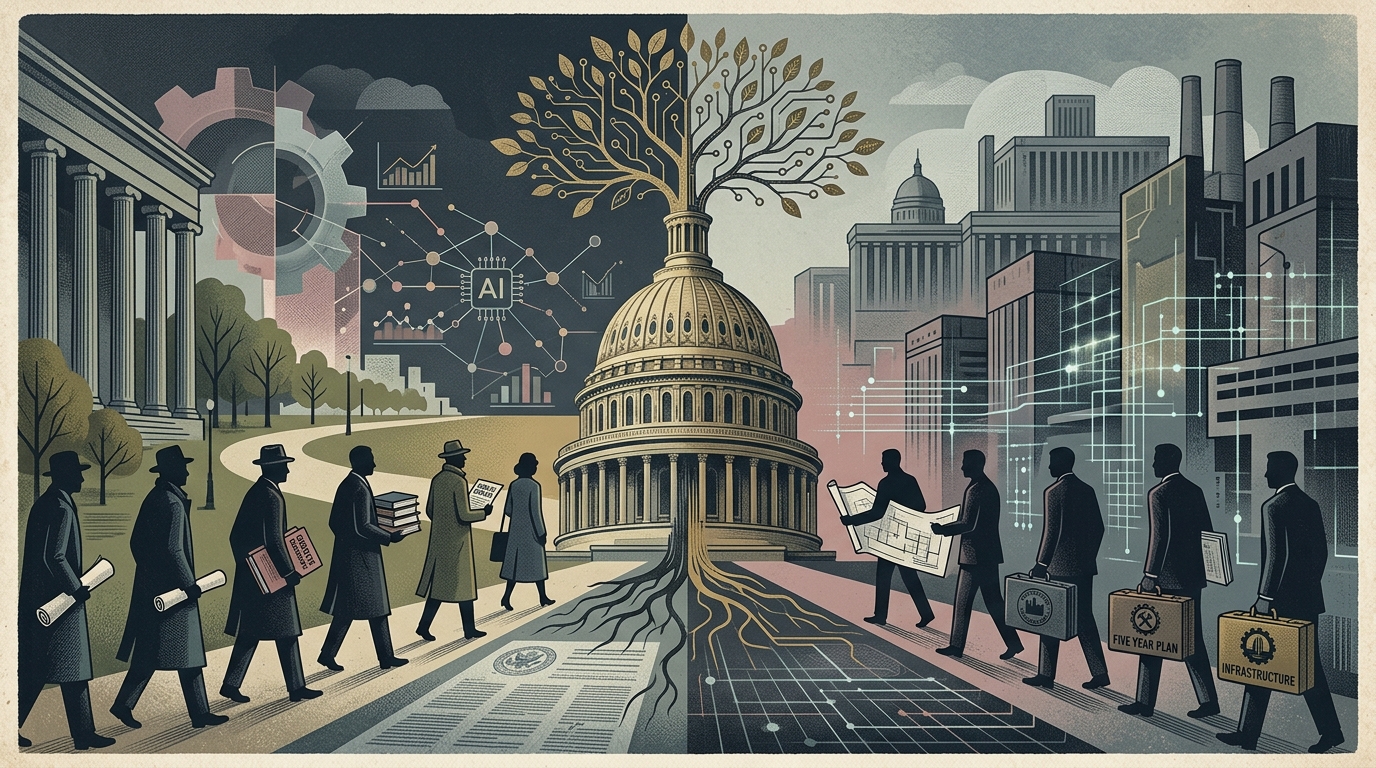
Geopolitical Implications and the 'Silicon Curtain'
DeepSeek's valuation rise to $20 billion occurs during a period of intense geopolitical instability. Washington is closely monitoring developments, as DeepSeek's success undermines the narrative that chip restrictions would delay Chinese AI by decades. Investment from Tencent and Alibaba will provide DeepSeek with the necessary capital to continue training even larger models, while giving it access to the vast amounts of data held by the two giants.
Furthermore, DeepSeek's strategy of releasing its models as open source has created a global divide. While the U.S. leans toward more closed and controlled systems for security reasons, China is using open source as a 'soft power' tool, allowing developers worldwide to build on its technology, thereby creating a dependency on the Chinese AI ecosystem.
Conclusion: A New Era for Chinese AI
Tencent and Alibaba's investment in DeepSeek is the validation of a new reality: artificial intelligence is no longer just a matter of money, but of strategic intelligence. As the valuation approaches the levels of top American labs, DeepSeek must prove it can maintain its independence while caught between two clashing corporate interests. What is certain is that the road to AI dominance now runs through Beijing, and the rules of the game are changing radically.