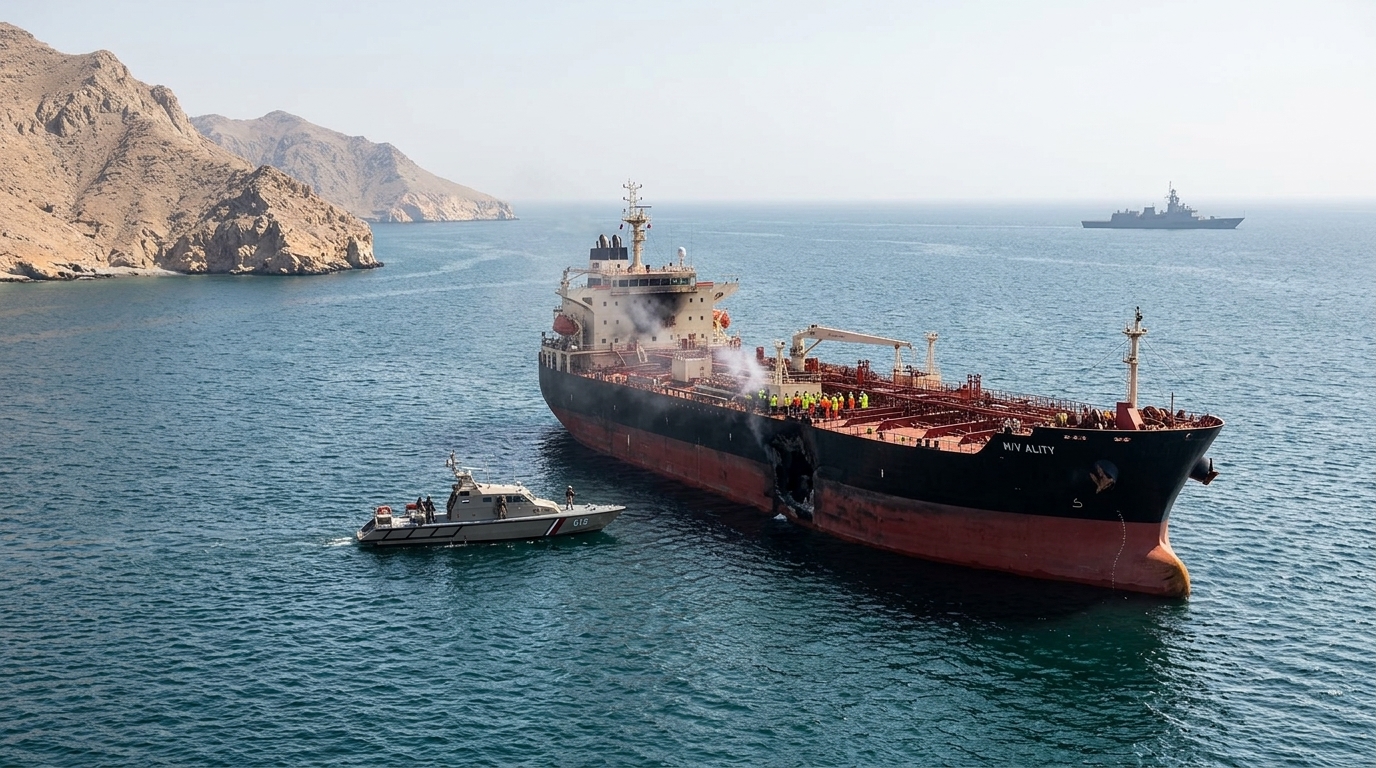
The fragile peace in the Strait of Hormuz has been shattered once again as the United Kingdom Maritime Trade Operations (UKMTO) reported an attack on a tanker off the coast of the United Arab Emirates. The incident, which occurred in the early hours of Monday, involved "unknown projectiles," raising serious questions about the identity of the perpetrators and their objectives at a time when regional stability remains on a knife-edge.
Chronicle of the Incident and Immediate Response
According to reports from the UKMTO, the vessel was struck while navigating international waters near the coast of Fujairah, one of the world's most significant bunkering hubs. Although material damage was sustained, no casualties among the crew have been reported, and the ship is reportedly continuing its journey to its next port of call under close monitoring.
This attack is not an isolated event. The Strait of Hormuz has long been a point of friction between Western powers and regional actors, primarily Iran. The use of "unknown projectiles" suggests the deployment of either Unmanned Aerial Vehicles (drones) or short-range missiles—tactics that have become hallmarks of the ongoing "shadow war" at sea over the past few years.
The Strategic Significance of the Strait of Hormuz
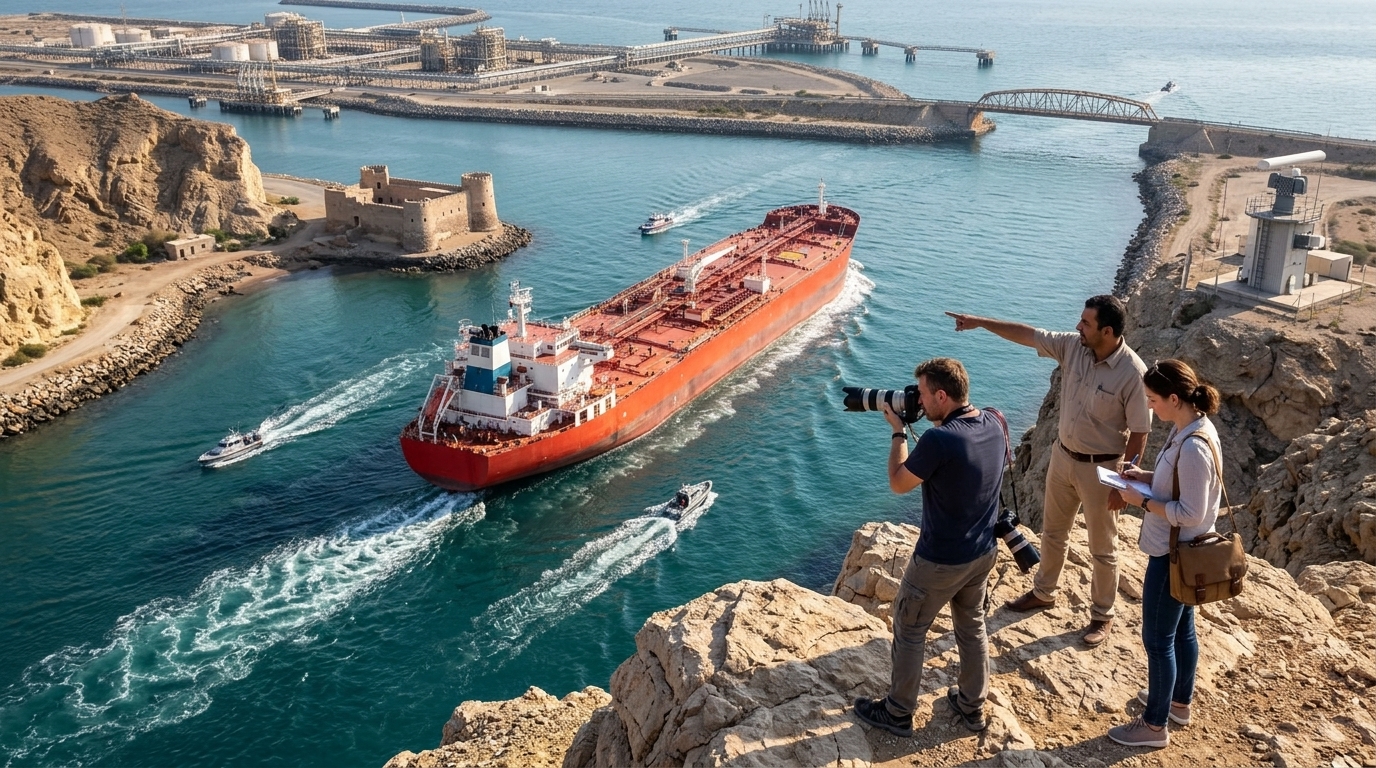
To understand the gravity of this incident, one must consider that approximately 20% of the world's daily oil consumption passes through the Strait of Hormuz. It is the only sea passage from the Persian Gulf to the open ocean for some of the world's largest oil producers, including Saudi Arabia, Kuwait, Iraq, and the UAE.
- Energy Security: Any disruption to tanker traffic translates immediately into a spike in crude oil prices on global markets.
- Risk Premiums: Shipping companies are facing a sharp increase in war risk insurance premiums, which raises transportation costs and, consequently, prices for end consumers.
- Geopolitical Leverage: Controlling or harassing navigation in the Strait remains Tehran's most potent bargaining chip against international sanctions and diplomatic pressure.
Who is Behind the Attack?
While no group or state has officially claimed responsibility, the international community's gaze is fixed on forces seeking to destabilize the region or project power. Yemen's Houthi rebels have expanded their theater of operations beyond the Red Sea, while Iranian involvement—either direct or through proxies—remains the prevailing theory among Western analysts.
"Freedom of navigation is not merely a technical issue; it is the backbone of global trade. When ships become targets, the global economy holds its breath," stated a senior maritime security official.
The timing of the attack is also critical. With Middle Eastern conflicts remaining active and diplomatic efforts for de-escalation largely stalled, these "low-cost, high-impact" strikes serve a strategy of perpetual tension. The UAE, for its part, maintains a cautious stance, attempting to preserve its role as a safe business hub while simultaneously bolstering its defense capabilities in cooperation with the US and other allies.
Impact on International Shipping
The international shipping community is watching with bated breath. Shipowners are now being forced to reassess the risks of transiting the Strait, with many considering the employment of armed guards or rerouting where possible. However, for Gulf oil, there is no viable alternative route that can accommodate the sheer volume of transport that passes through Hormuz.
In conclusion, the strike on the tanker off the UAE coast serves as a stark reminder that technological progress in AI and telecommunications cannot fully shield physical infrastructure from traditional geopolitical violence. The need for a coordinated international response to guarantee the freedom of navigation is more pressing than ever, as instability in this small stretch of water can trigger a tsunami of economic and political consequences across the globe.