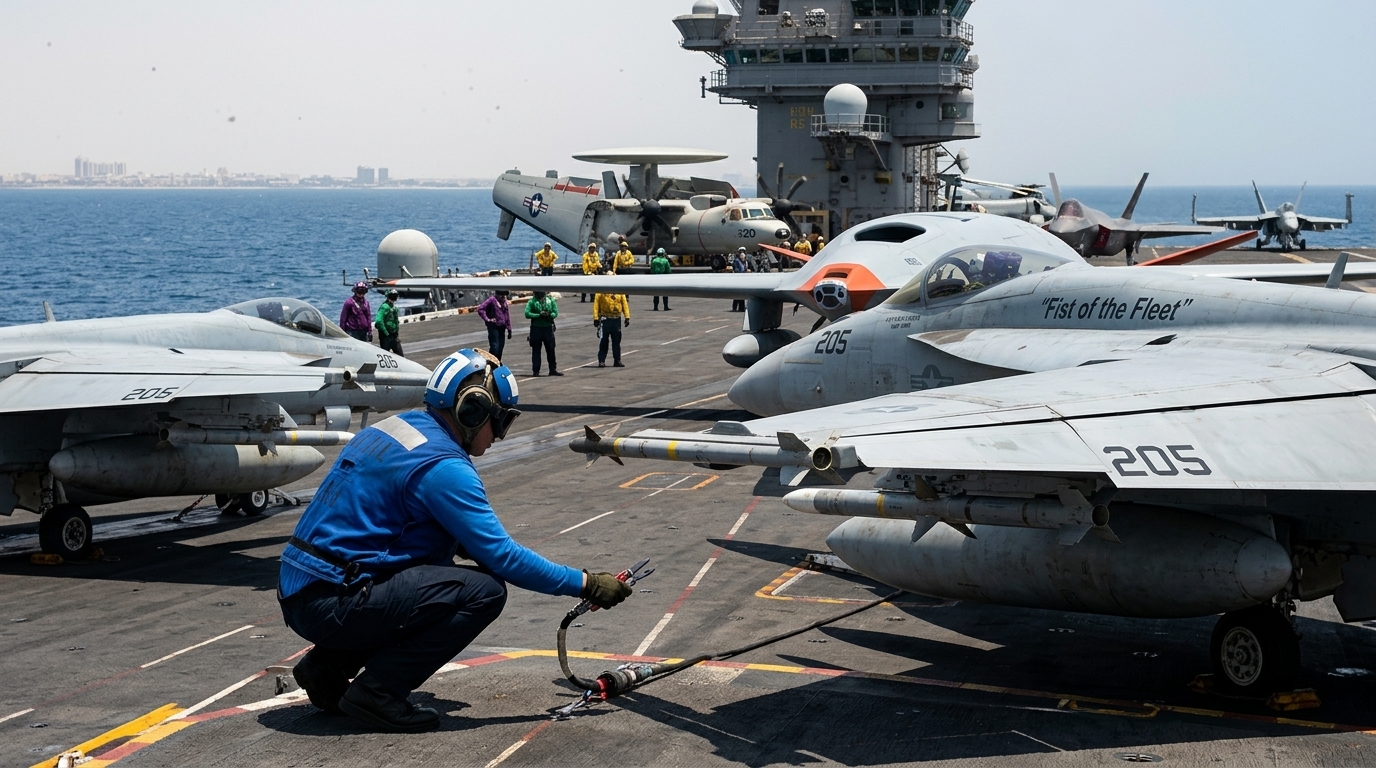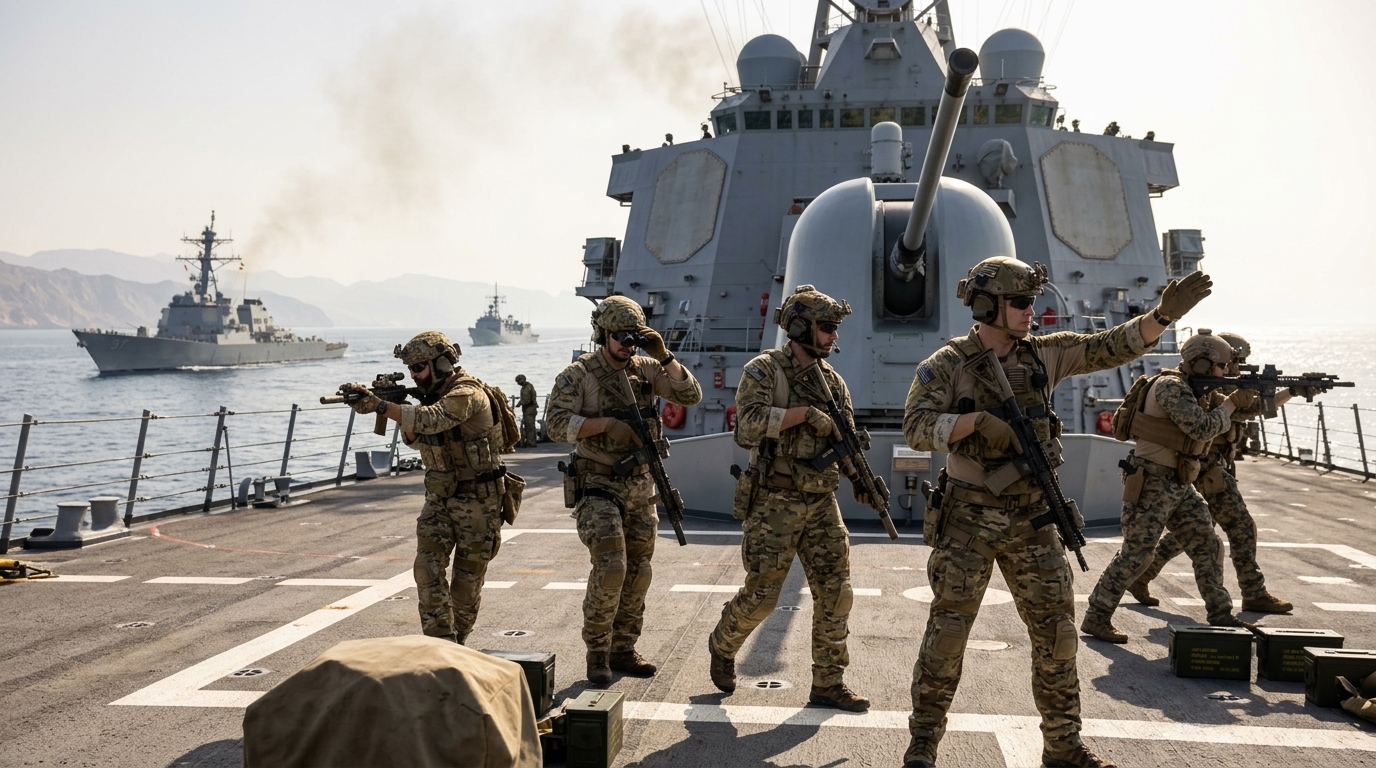
The global economy is facing one of its most profound challenges as the Strait of Hormuz, the world’s most critical energy artery, rapidly transforms from a commercial thoroughfare into an active combat zone. Sunday’s developments, which saw a U.S. destroyer open fire on a commercial vessel attempting to evade a naval blockade, mark a perilous shift from 'gunboat diplomacy' to direct military engagement. The phrase 'disabling fire' has sent a chill through international markets, signaling that the rules of engagement in the Persian Gulf have fundamentally changed.
The Moment of Escalation and Market Shock
The incident occurred when a merchant ship, allegedly carrying cargo in violation of international sanctions, ignored repeated warnings from coalition forces. The decision to use disabling fire—a kinetic action rarely seen outside of formal warfare—underscores the gravity of the current enforcement mandate. Markets reacted with immediate volatility: Brent crude futures surged over 7% within hours, while major stock indices in New York, London, and Tokyo saw significant sell-offs as investors fled to safe-haven assets like gold and government bonds.
Analysts warn that this is no longer a mere geopolitical spat; it is a structural threat to the flow of nearly 20% of the world’s oil consumption. 'We’re prepared to subject you to disabling fire,' the radio transmission warned—a phrase that now haunts trading floors globally. The uncertainty regarding whether maritime insurers will continue to cover vessels transiting the region threatens to paralyze global trade routes and cause a massive backlog in energy deliveries.
Geopolitical Stakes and the Specter of 1973
The current crisis inevitably draws comparisons to the 1973 oil embargo. However, in 2026, the global economy’s reliance on energy flows is even more intricate and digitized. Iran has repeatedly threatened to close the Strait as a counter-measure to economic sanctions, and the U.S. Navy's aggressive stance appears to be testing Tehran’s strategic patience. The involvement of other powers, particularly China—which relies heavily on Gulf oil for its industrial machine—adds a layer of complexity that could escalate a regional skirmish into a global diplomatic crisis.
- Brent crude could realistically breach the $120 per barrel mark if hostilities persist.
- War risk insurance premiums for tankers have spiked tenfold in less than 48 hours.
- Central banks are bracing for a renewed inflationary wave that could derail planned interest rate cuts.
The Military-Technological Divide
In this confrontation, high-end military technology is the primary tool of enforcement. Precision targeting systems and autonomous surveillance drones allow the Navy to maintain blockades with unprecedented granularity. Yet, as the recent use of live fire demonstrates, technology cannot mitigate the human and political risks of miscalculation. The transition from 'smart' surveillance to 'hard' kinetic power is what terrifies investors most: the realization that the situation has moved beyond the reach of diplomats and into the hands of tactical commanders on the water.
'We are not just seeing an oil price spike. We are witnessing the erosion of the principle of freedom of navigation, which is the bedrock of the globalized economy,' says a senior energy strategist.
In conclusion, the crisis in the Strait of Hormuz serves as a stark reminder of the fragility of the modern world. For the global community, the choice is now between finding a diplomatic off-ramp or bracing for a prolonged conflict that could redefine energy security for a generation. As the Navy maintains its 'disabling fire' stance, the world watches the horizon, hoping that the next transmission from the Gulf isn't the one that signals a full-scale war.