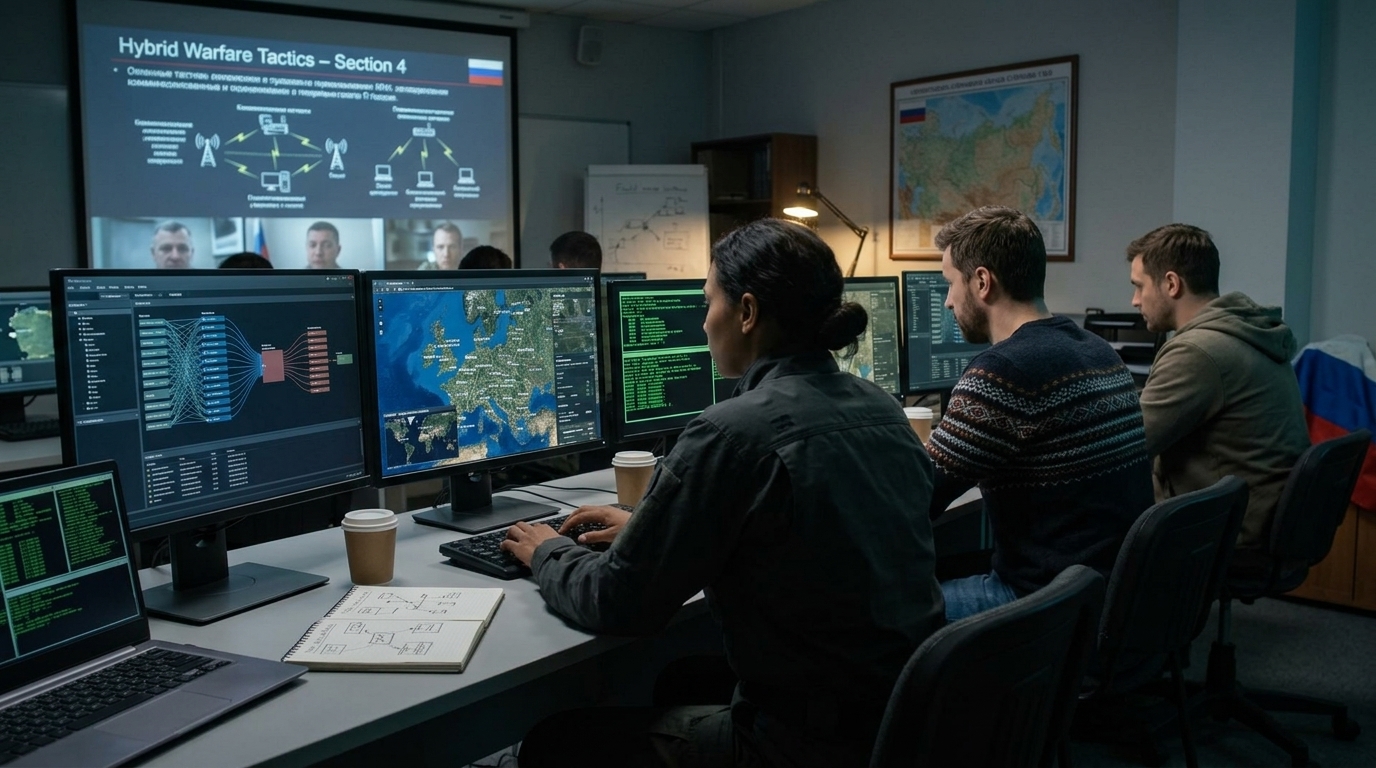
In the shadowy corridors of Russian military intelligence, far from the public eye and traditional diplomatic channels, an educational facility operates like something out of a Cold War thriller, meticulously adapted for the 21st century. A joint investigation by leading media outlets, including The Insider, Le Monde, and Der Spiegel, has exposed the existence of a "spy school" directly linked to the notorious GRU Unit 29155. This is no ordinary military academy; it is a breeding ground for operational officers specializing in what analysts call "hybrid warfare": a lethal combination of cyberattacks, psychological operations, and direct interference in Western democratic processes.
The Evolution of Unit 29155: From Poison to Pixels
Unit 29155 is well-known to Western security services. Historically, it has been linked to some of Russia’s most brazen operations in Europe, including the 2018 attempted assassination of Sergei Skripal in Salisbury and the explosions at ammunition depots in the Czech Republic. However, the new investigation reveals a significant strategic pivot. The unit now appears to be investing heavily in training operatives who can function in the digital realm with the same lethality that others display in physical sabotage.
The school, operating under strict secrecy, teaches agents how to penetrate government networks, exfiltrate sensitive data, and, crucially, how to weaponize this information to sway public opinion. The curriculum includes the use of sophisticated hacking tools, but also emphasizes "social engineering"—the art of manipulating key individuals within foreign governments or organizations to gain access or influence.
A Curriculum of Chaos
According to leaked documents and testimonies gathered by investigative journalists, the school's curriculum is multidisciplinary. Trainees don’t just learn to code; they study the political geography of Europe, the internal fractures of the European Union, and the vulnerabilities of electoral systems across various nations. A significant portion of the training is dedicated to "election interference," a process that begins months or even years before voters head to the polls.
- Cyber-espionage: Infiltrating the servers of political parties and state agencies to extract compromising material (kompromat).
- Influence Operations: Building networks of bots and fake social media profiles to disseminate disinformation and amplify fringe narratives.
- Psychological Warfare: Targeted campaigns designed to polarize societies and erode trust in democratic institutions.
- Physical Sabotage: Training in tactics that can be used to disable critical infrastructure in the event of an escalation.
The integration of Artificial Intelligence (AI) marks the new frontier for the GRU school. The investigation suggests that Russian agents are experimenting with Large Language Models (LLMs) to generate persuasive content in foreign languages, eliminating the linguistic errors that previously flagged Russian disinformation campaigns. Furthermore, deepfakes are increasingly being viewed as tools for blackmail or the character assassination of political rivals.
Geopolitical Implications and the Western Response
The exposure of this school comes at a time when Russia-West relations are at their lowest point since the Cold War. For the Kremlin, these operations provide a cost-effective way to project power without resorting to direct military confrontation with NATO. It is a war of attrition where the battlefield is the mind of the European citizen and the integrity of digital infrastructure.
"We are no longer in a state of peace or war, but in a permanent gray zone," says a senior European intelligence official involved in analyzing the findings. "The 29155 school is the factory floor for the tools that keep the West in a state of constant agitation."
The Western response remains fragmented. While sanctions have been imposed on specific individuals identified as members of the unit, countering digital threats requires a collective resilience that the EU and NATO are still struggling to build. The revelation of the school serves as a stark warning: the adversary is not just at the gates, but inside the fiber-optic cables and the screens of our devices.
Conclusion: The New Normal
The existence of such a school confirms that Russia views information as a primary weapon of war. Training agents in hacking and electoral interference is not a fleeting tactic but a long-term strategic commitment. As technology evolves, the methods of Unit 29155 will become increasingly sophisticated and harder to detect, making digital literacy and robust cyber-defense essential for the survival of democratic societies in the digital age.