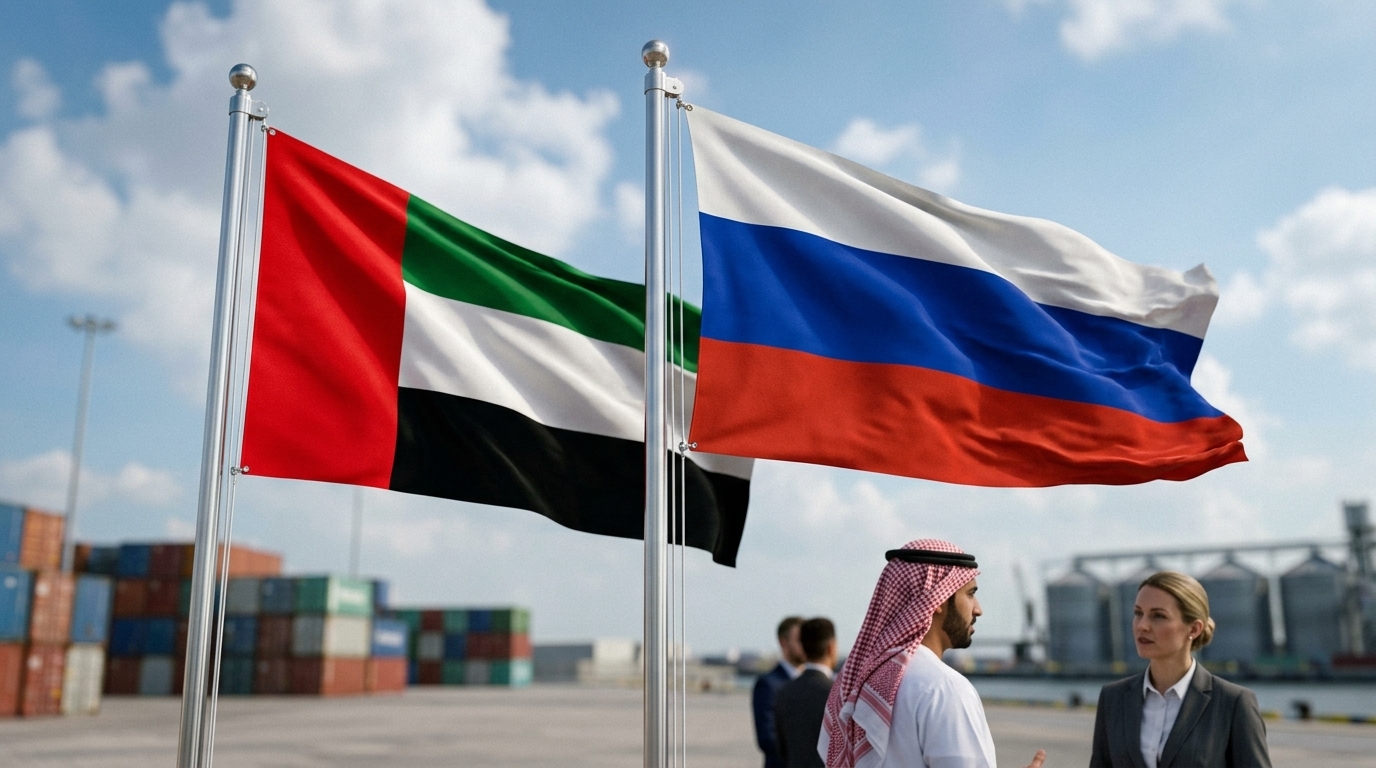
In a period of rapid geopolitical realignment, the recent rapprochement between Russia and the United Arab Emirates (UAE) in the agricultural and fertilizer sectors is more than just a bilateral trade agreement. It is a strategic maneuver aimed at building an alternative architecture for global food security, far from the influence of Western financial hubs. Today, April 29, 2026, these talks are entering a new, critical phase against the backdrop of BRICS expansion and the growing necessity for the de-dollarization of commodity trade.
The BRICS Grain Exchange: Challenging the Status Quo
At the heart of the discussions lies Russia’s proposal for the establishment of a unified grain exchange for BRICS nations. Moscow, as the world’s leading wheat exporter, seeks to end its reliance on Western commodity exchanges such as the Chicago Board of Trade (CBOT) or Euronext in Paris. The logic is straightforward: grain prices should not be dictated by speculators in countries that neither produce nor consume the relevant quantities, but by the producers and buyers themselves.
The proposed exchange would allow BRICS countries—which now include some of the world’s largest producers (Russia, Brazil) and consumers (China, India, Egypt)—to trade directly in national currencies. The UAE, with its sophisticated financial infrastructure in Dubai and Abu Dhabi, presents itself as the ideal intermediary and clearing hub for these transactions. This move is not just about pricing; it is about sanction-proofing, as an independent payment system would make food trade immune to Western diplomatic pressure.
The UAE as a Global Supply Chain Hub
For the United Arab Emirates, cooperation with Russia is part of a broader strategy to ensure its own food security and establish itself as a central player in the global supply chain. Although the country imports 90% of its food, it has invested billions in logistics infrastructure, ports, and storage technologies. The Emirates do not merely want to purchase Russian grain and fertilizers; they aim to become the transshipment point for the entire Middle East and Africa.
The Russian side views the UAE as a reliable partner maintaining a 'multidimensional foreign policy,' refusing to align fully with G7 sanctions. The supply of fertilizers is particularly critical, as Russia is the world's top fertilizer producer. Securing stable flows to the UAE, and through them to the global market, ensures that the Russian agricultural industry remains profitable and influential despite isolation attempts.
Fertilizer Diplomacy: Moscow’s 'Soft Weapon'
The use of fertilizers as a diplomatic tool is a tactic Moscow has perfected in recent years. In a world facing climate change and population growth, controlling the substances that make food production possible is as significant as controlling energy. Cooperation with the UAE allows Russia to channel these strategic products to countries in the Global South, strengthening ties with nations that feel neglected by the West.
Furthermore, the exchange of agritech expertise is part of the ongoing talks. The UAE pioneers vertical farming and water management in arid regions—technologies Russia wishes to integrate to improve its own productivity in areas with extreme climatic conditions. This reciprocity creates a deep level of interdependence that goes beyond simple commerce.
Conclusion: Toward a Multipolar Trade System
The convergence of Russia and the UAE regarding grain and fertilizers is the prelude to an era where geopolitical power will be measured in tons of wheat and units of nitrogen. The creation of a BRICS grain exchange could be the most significant change in commodity markets in decades, undermining the primacy of the dollar and Western benchmarks. As 2026 unfolds, the success of this initiative will determine whether the world moves toward a more balanced trade system or a dangerous fragmentation of global food markets.