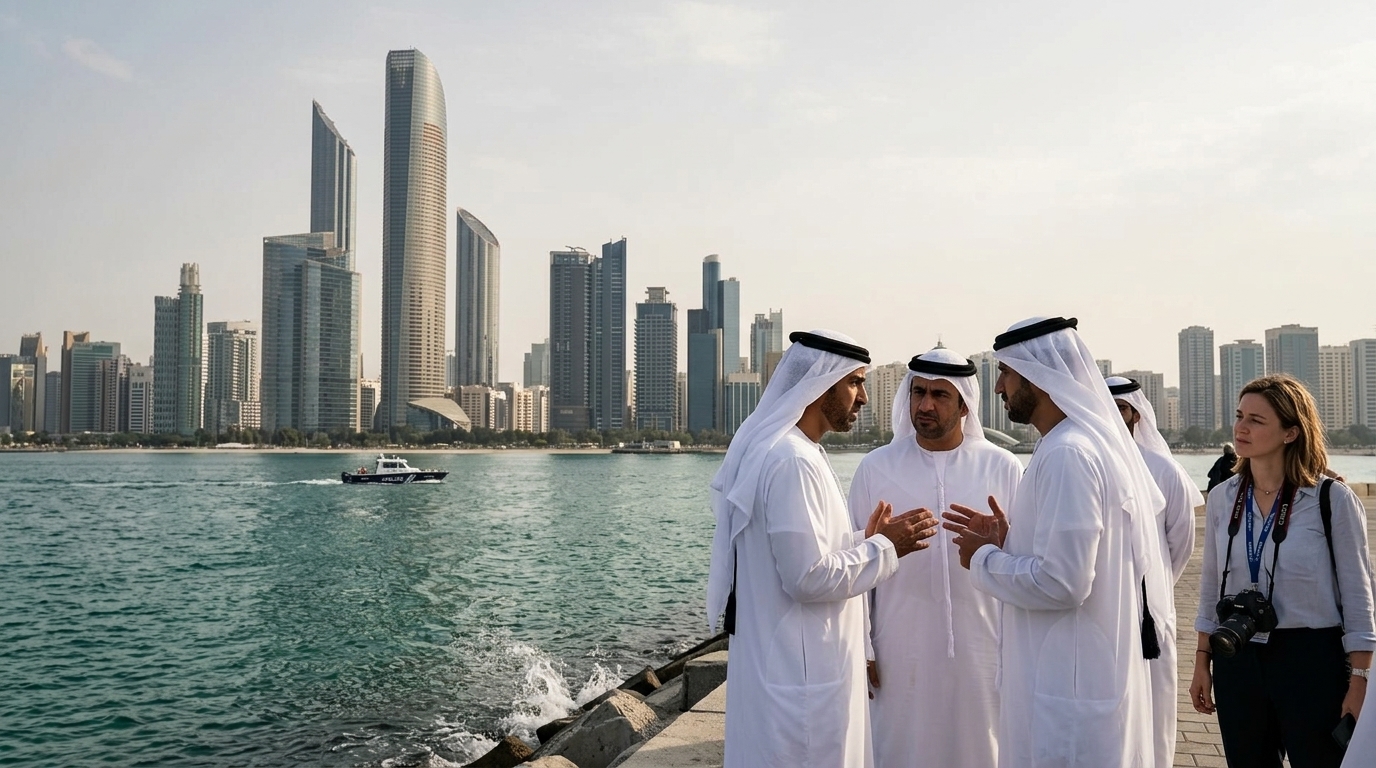
April 29, 2026, will be recorded in history as the day the global energy order changed irrevocably. The United Arab Emirates' (UAE) announcement of its permanent withdrawal from the Organization of the Petroleum Exporting Countries (OPEC) was not merely a financial decision, but a geopolitical earthquake triggered by the flames of the conflict in Iran. This move, while startling to many, represents the culmination of a decade-long divergence between Abu Dhabi and Riyadh, set against a changing world where energy, technology, and regime survival are inextricably linked.
The Iranian Conflict as a Geopolitical Catalyst
The war in Iran, which has escalated significantly in recent months, has fundamentally altered security calculations in the region. With the Strait of Hormuz becoming a theater of constant tension and oil exports threatened by sabotage and military strikes, the UAE concluded that adhering to OPEC quotas is now a hindrance to its national security. Abu Dhabi requires maximum flexibility to secure its revenues and fund its defense modernization during a period of extreme instability.
According to analysts, the Emirati leadership felt that OPEC, dominated by Saudi Arabia, failed to provide the necessary support during the crisis. Conversely, Riyadh's insistence on maintaining high prices through production cuts directly clashed with the UAE's strategy to increase its market share, aiming to monetize its vast reserves before global demand permanently wanes due to the green transition.
The Rift with Riyadh and the End of Monolithic Unity
The UAE's departure is not just the result of external pressures, but also a deep internal fracture within the Gulf bloc. The relationship between Mohamed bin Zayed (MbZ) and Mohammed bin Salman (MbS) has shifted from alliance to competition. The Emirates have invested over $150 billion through ADNOC to boost production capacity to 5 million barrels per day. Remaining in an organization that forced them to produce significantly less was becoming economically untenable.
- ADNOC is now seeking independent pricing for Murban crude.
- Diversifying the UAE economy requires massive capital that only full production capacity can provide.
- The UAE's strategic autonomy now extends to defense, moving away from collective Gulf decisions.
This decision sets a dangerous precedent. If the second-most powerful member of OPEC leaves, who is to guarantee that Kuwait or Iraq won't follow? The Emirati exit weakens the cartel's bargaining power against the US and China, rendering OPEC+ an organization led primarily by Russia and Saudi Arabia, but with significantly diminished prestige.
The Domino Effect and the New Energy Reality
The market is now wondering who is next. Kuwait, facing intense internal political pressure to increase state revenues, appears to be seriously reconsidering its position. Iraq, on the other hand, has always struggled to comply with quotas, and its need for reconstruction after years of instability pushes it in the same direction. The fear of a "price war" is now palpable, as member states compete to sell more in a market already volatile due to regional conflict.
"OPEC was a tool of the 20th century. In the 21st century, sovereignty belongs to those who control technology and the speed of production, not those who try to keep prices artificially high," says a senior official from Abu Dhabi.
The UAE's move is also linked to its pivot toward Artificial Intelligence and future technologies. By utilizing oil revenues now, without restrictions, Abu Dhabi is funding giants like G42 and MGX, aiming to become the region's technological hub, independent of black gold. The war in Iran merely accelerated a process that had already begun behind palace doors.
Conclusion: A World Without Cartels?
The UAE's exit from OPEC is the final nail in the coffin of energy diplomacy as we knew it. From now on, each state will move based on its own narrowly defined national interest, making oil price forecasts extremely difficult. Middle Eastern geopolitics is entering a phase of extreme fragmentation, where old alliances crumble in the face of the need for economic survival and technological dominance. The war in Iran was not the cause, but the spark that blew up the OPEC structure.