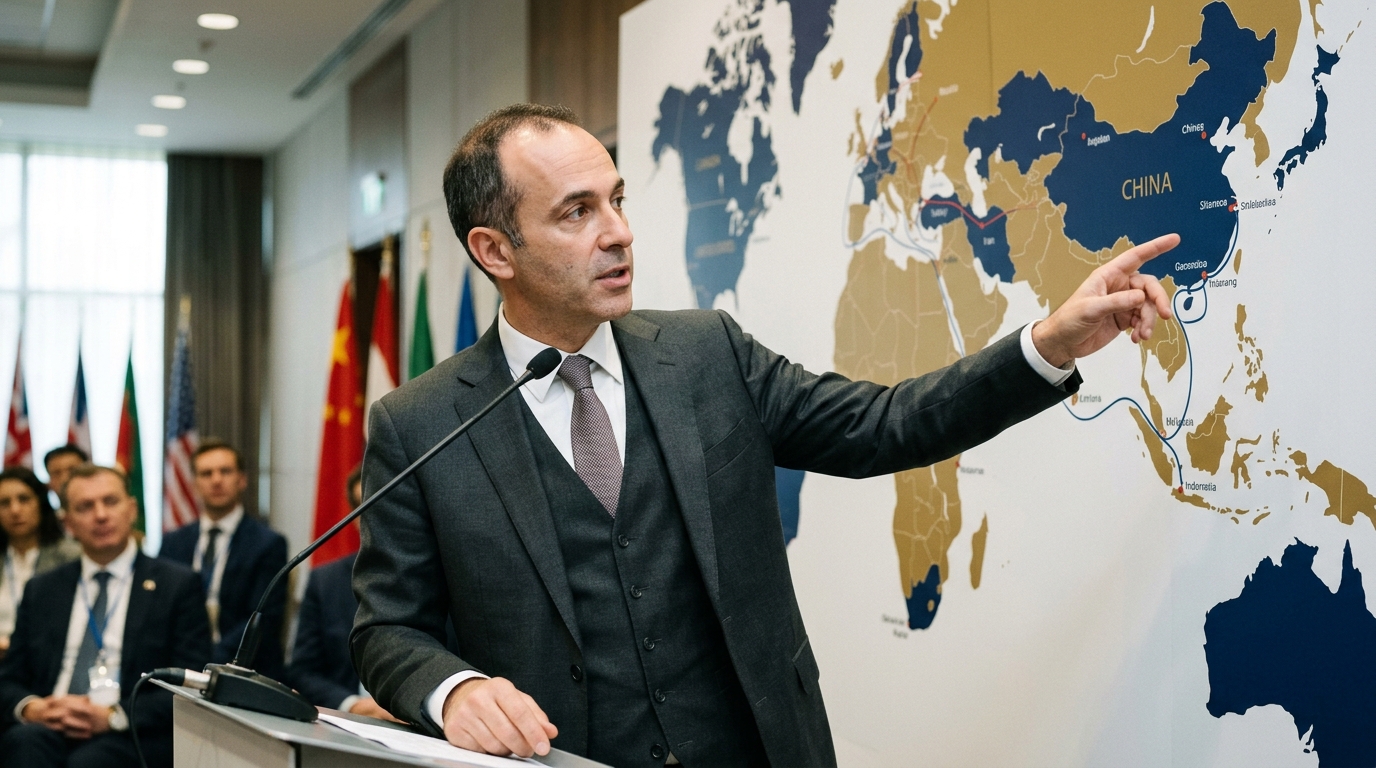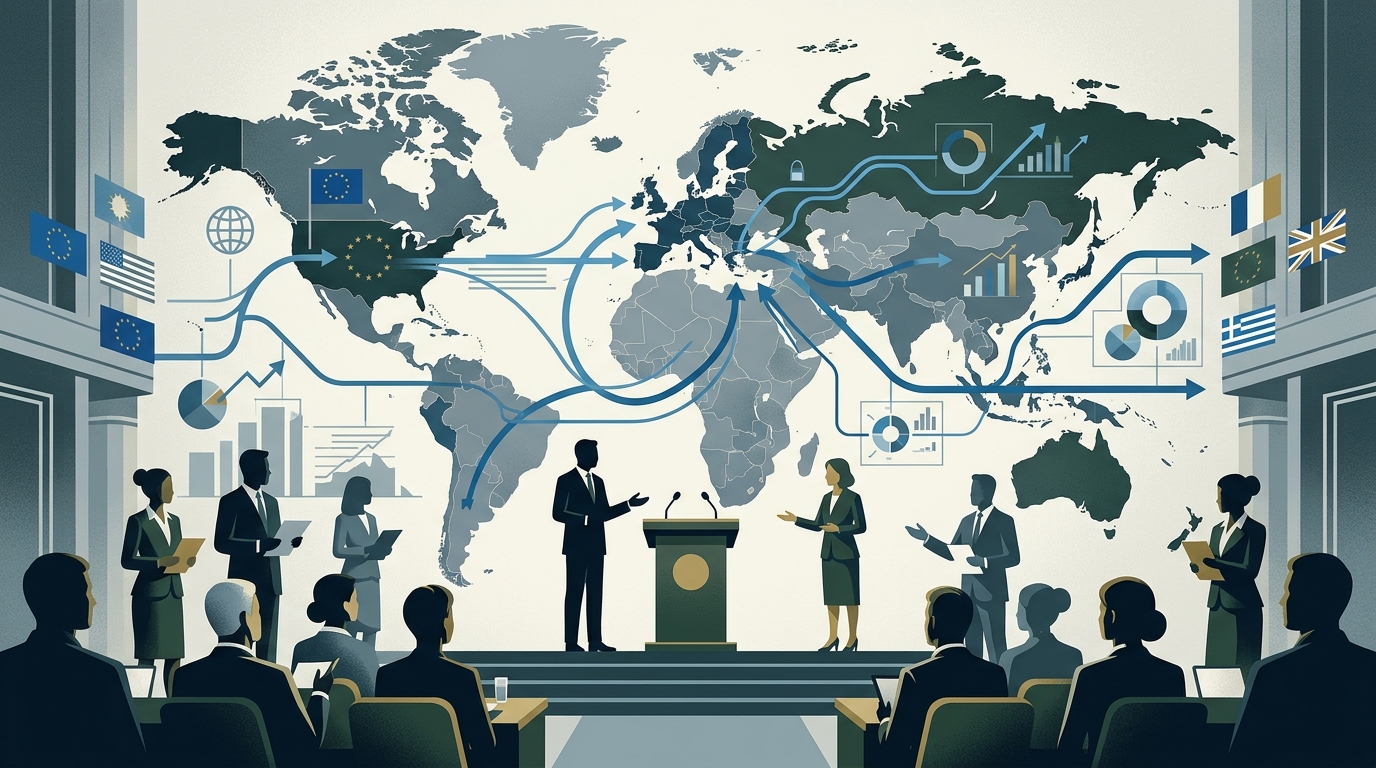
In the heart of Washington, D.C., before an audience of foreign policy and energy experts at the Atlantic Council, Stavros Papastavrou presented a vision that transcends Greece's geographical borders. His speech was not merely a presentation of national achievements but an analysis of the new geopolitical architecture of Southeastern Europe. Papastavrou introduced the term "energy realism," a concept that appears to be the new doctrine of Greek foreign policy, blending the green transition with the urgent need for energy security and source diversification.
The Vertical Corridor and Decoupling from Russia
A central point of the strategy discussed is the "Vertical Corridor." This is a system of infrastructure that allows for the transport of natural gas from South to North, reversing the traditional flow that for decades held Europe hostage to Russian pipelines. By utilizing the FSRU in Alexandroupolis and existing interconnectors, Greece is no longer just a consumer but a critical transit hub for Central European and Balkan countries, including Ukraine and Moldova.
Papastavrou emphasized that this infrastructure provides the necessary flexibility for the European Union. In an era where geopolitical instability is the rule rather than the exception, the ability to import Liquefied Natural Gas (LNG) from the US and the Eastern Mediterranean through Greek ports serves as a guarantee of stability. "Energy realism" here means recognizing that natural gas will remain the "bridge fuel" for years to come, alongside the rapid development of renewable energy sources.
Electrical Interconnections: Connecting Continents
Beyond natural gas, the Greek strategy focuses heavily on electrical interconnections. The GREGY project (Greece-Egypt interconnection) and the Great Sea Interconnector (Cyprus-Greece-Israel) are flagship projects aimed at transforming Greece into an exporter of green energy. The idea is simple yet revolutionary: solar and wind energy produced in Africa and the Middle East will be able to power Europe's industrial centers via Greek territory.
This approach changes the balance of power in the Eastern Mediterranean. Greece emerges as a reliable partner for the US, promoting stability in a region that is often volatile. US participation in the 3+1 format (Greece, Cyprus, Israel + USA) strengthens this dynamic, providing the necessary political and diplomatic cover for large-scale, high-risk infrastructure projects.
Geopolitical Significance and the US Role
Papastavrou did not fail to mention the Greece-US strategic relationship, which is at its highest point in decades. Greece is no longer asking for help; it is offering solutions. The country's transformation into an energy gateway aligns perfectly with American interests in limiting the influence of authoritarian regimes on the European energy market. The presence of US investment in Greek energy infrastructure is a vote of confidence in the Greek economy and the country's stability.
According to the analysis at the Atlantic Council, Greece serves as the West's "safe harbor" in the region. In a fragmenting world, building these "bridges" is the only way to ensure prosperity. Greece, having left the economic crisis behind, is now claiming a leading role in shaping European energy policy, prioritizing realism over ideology.
- Greece as a critical hub for US LNG exports to Europe.
- The importance of the Vertical Corridor for the energy security of the Balkans.
- Electrical interconnections as a means of transporting green energy from Africa.
- The strategic deepening of the Greece-US relationship through energy projects.
In conclusion, Papastavrou's intervention highlighted that energy is not just an economic metric but the preeminent tool of foreign policy in the 21st century. Greece seems to have learned this lesson and is moving swiftly to secure its place on the new global map.