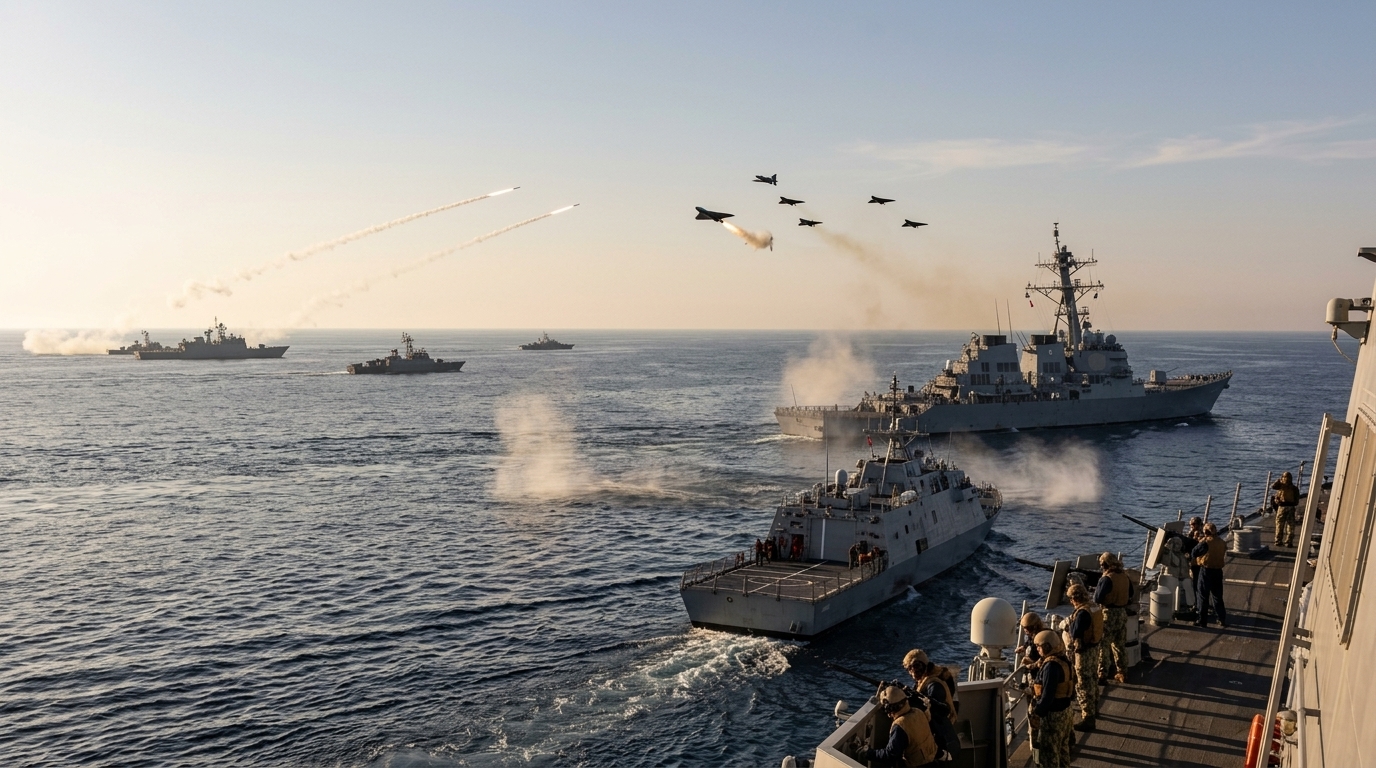
In the shadowy theater of global geopolitics, North Korea is demonstrating a disturbing capacity for adaptation. While the international community remains focused on sanctions and isolation, the Pyongyang regime appears to have found a potent new ally in its quest for military dominance: Artificial Intelligence (AI). Recent reports and intelligence analyses indicate that the country is now integrating machine learning algorithms and advanced AI systems into its ballistic and cruise missiles, giving birth to a new generation of "smart" weapons that threaten to upend the status quo on the Korean Peninsula and beyond.
The Technological Leap: From Brute Force to Precision
For decades, North Korea’s strategy relied on the sheer volume and destructive power of its missile arsenal. However, the introduction of AI marks a pivot toward precision and survivability. These new strategies focus on three core pillars: autonomous guidance, the evasion of sophisticated missile defense systems, and real-time decision-making optimization.
Cruise missiles, which fly at low altitudes and follow unpredictable paths, benefit most from AI integration. By utilizing terrain-contour matching and target recognition systems based on neural networks, these missiles can correct their flight paths without relying on external GPS signals, which are susceptible to jamming. This makes Pyongyang’s weaponry exceptionally difficult to track and intercept by existing defense infrastructures like THAAD or the Patriot missile systems.
Cyber Espionage as a Catalyst
One of the most pressing questions is how a nation under such stringent global isolation managed to acquire the necessary high-tech expertise. The answer lies in the digital domain. North Korea has developed one of the world’s most effective armies of state-sponsored hackers, who target not just financial assets but also intellectual property. Security analysts suggest that the regime has successfully exfiltrated vast amounts of data from Western universities, research institutions, and defense contractors.
Furthermore, AI allows North Korea to maximize the efficiency of its limited resources. AI-driven simulations and modeling reduce the need for costly and detectable physical tests, allowing Kim Jong Un’s scientists to refine their designs in the digital shadows. This "digital acceleration" has propelled the country’s missile program to a level of sophistication that many experts deemed impossible only half a decade ago.
Geopolitical Implications and the Risk of Accidental Escalation
The integration of AI into nuclear and conventional weapons systems introduces a volatile new variable: the speed of escalation. When decisions regarding a missile’s trajectory or target selection are made by algorithms in milliseconds, the window for human intervention and traditional diplomacy narrows dangerously. There is a growing fear that an algorithmic error or a misinterpretation of sensor data by an autonomous system could trigger an unintended conflict.
In Seoul and Tokyo, the concern is palpable. South Korea has already begun investing in its own "anti-AI" systems to neutralize North Korean threats, essentially sparking a new arms race in the region. While China and Russia officially support denuclearization, they seem reluctant to pressure Pyongyang specifically on AI integration, as this technology has become an inextricable part of modern warfare globally.
"Artificial intelligence is no longer a future threat to international security; it is the present danger redefining the power of nations we once considered isolated."
In conclusion, North Korea is not merely building missiles; it is constructing a comprehensive, intelligent ecosystem of deterrence. The international community is forced to confront a challenge that transcends traditional weaponry: the challenge of "algorithmic warfare." The need for new international frameworks to regulate military AI is more urgent than ever, though in the case of Pyongyang, the window for such regulation may have already closed.