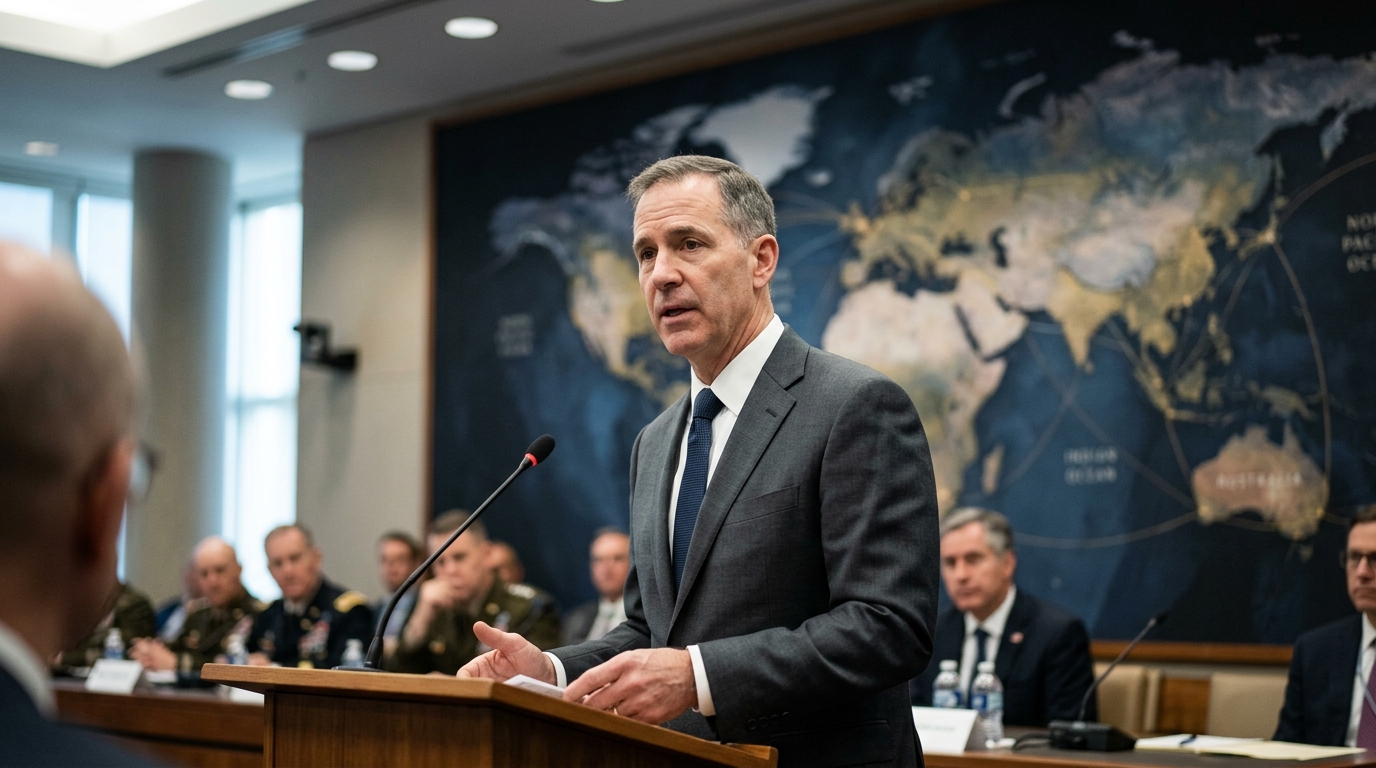
In an era where geopolitical balances in the Middle East resemble a tightrope walk, the revelations of Robert Gates, former Director of the CIA and former US Secretary of Defense, shed light on the deep strategic rifts that have separated Washington and Jerusalem for over a decade. Speaking on CBS's “Face the Nation,” Gates recounted a pivotal meeting he had with Benjamin Netanyahu in July 2009, during which he warned the Israeli leader that a military strike against Iran's nuclear facilities would be a “huge strategic mistake.”
The Philosophy of 'Knowledge' vs. 'Infrastructure'
Gates' core argument, which remains strikingly relevant even today in May 2026, did not concern Israel's tactical capability to hit its targets, but rather the long-term efficacy of such an action. According to Gates, bombs can destroy centrifuges and concrete bunkers, but they cannot eliminate “knowledge.” Iran, having developed its nuclear fuel cycle expertise over decades, could simply rebuild its program—likely deeper underground and with renewed ideological vigor.
Gates emphasized to Netanyahu that an attack might delay the program by perhaps a year or two, but the political and military costs would be disproportionate. The primary American concern was that such a strike would unify the Iranian populace around a regime that, under different circumstances, was facing significant internal dissent. “The moment you attack a country, internal fissures vanish and nationalism takes over,” seems to have been the crux of Gates' message.
Geopolitical Consequences and the Risk of Regional Conflagration
Gates' analysis extended far beyond the technicalities of nuclear enrichment. He focused on the broader implications for regional stability. An Israeli strike, conducted without full US backing and participation, would open a “Pandora’s box.” Gates warned of the high probability of retaliation through Iran’s regional proxies, such as Hezbollah in Lebanon and Hamas in Gaza, creating a multi-front conflict that would drain immense resources and result in thousands of casualties.
Furthermore, the former CIA chief pointed to the risks for the global economy. A conflict in the Persian Gulf could lead to the closure of the Strait of Hormuz, triggering an energy crisis that would paralyze the West. For the Obama administration then—and for subsequent administrations—diplomacy and sanctions were viewed, despite their flaws, as a more controlled path compared to the volatile uncertainty of open warfare.
The Lasting Friction Between Netanyahu and Washington
This revelation highlights the enduring persistence of Benjamin Netanyahu regarding the necessity of a “military option.” The Israeli Prime Minister has built much of his political identity on the promise that he will never allow Iran to achieve nuclear weapons capability, viewing it as an existential threat to the Jewish state. The pushback against this stance by a figure of Gates’ stature underscores the gap between Israel’s tactical approach and the United States’ broader strategic framework.
Today, as Iran stands closer than ever to the enrichment levels required for a weapon, Gates’ words echo as either a prophecy or a warning that went partially unheeded. History suggests that military solutions to political and scientific problems are often temporary. As Gates noted, a true solution requires a shift in the regime's behavior or internal transformation—outcomes that no amount of precision-guided munitions can guarantee.
Lessons for the Future
Looking back at the 2009 meeting teaches us that geopolitics is not a game of immediate gratification. Decisions made in closed rooms in Jerusalem or Washington have repercussions that span decades. Robert Gates, representing the voice of realism and institutional memory, reminds us that war must be the absolute last resort—not just because it is morally fraught, but because it often fails to achieve its ultimate strategic objective.
- Knowledge cannot be eradicated by airstrikes alone.
- Nationalism acts as a glue for authoritarian regimes under external threat.
- The regional consequences of a preemptive strike are unpredictable and potentially catastrophic.
- The US-Israel disagreement on Iran is structural, transcending individual leadership styles.