The global AI chessboard is undergoing one of the most dramatic realignments in modern history. For years, Chinese AI startup founders operated in a "grey zone," exploiting loopholes in US export controls to gain access to the critical computing power needed to train Large Language Models (LLMs). However, recent reports from Table.Briefings and latest moves by Washington indicate that this "back door" is closing for good, leaving China's tech elite in a state of strategic suffocation.
The "Side Door" Strategy and Its Collapse
Until recently, a Chinese entrepreneur could establish a subsidiary in Singapore, Dubai, or even California, thereby securing access to Nvidia's H100 processors or cloud services from Amazon and Microsoft. This practice allowed companies like DeepSeek or Lee Kai-fu’s 01.AI to remain competitive against OpenAI and Google despite sanctions. Washington, recognizing this leak, has introduced stricter "Know Your Customer" (KYC) rules for cloud providers, forcing them to verify the end-use of their resources and the identity of those renting compute power.
The pressure is not merely regulatory but geopolitical. The US is exerting intense diplomatic pressure on Middle Eastern nations, which served as key transshipment hubs for technology. Microsoft's recent investment in the UAE-based G42, which came with a commitment from G42 to divest from Chinese hardware, is a prime example of this new reality. The blockade is now holistic, targeting not just hardware but software and hosting infrastructure as well.
The Domestic Pivot: Huawei and the Quest for Self-Reliance
Faced with the closure of international pathways, Chinese founders are forced to turn to domestic production. Huawei, with its Ascend series of chips, has emerged as the "national champion" tasked with filling the void left by Nvidia. While the performance of Chinese chips has improved significantly, they remain one or two steps behind the cutting edge in terms of energy efficiency and interconnect speed—crucial factors for training models with trillions of parameters.
- Limited access to EUV photolithography for manufacturing chips below 7nm.
- Increased training costs due to the need for more, less efficient chips.
- Isolation from the global open-source ecosystem and research collaborations.
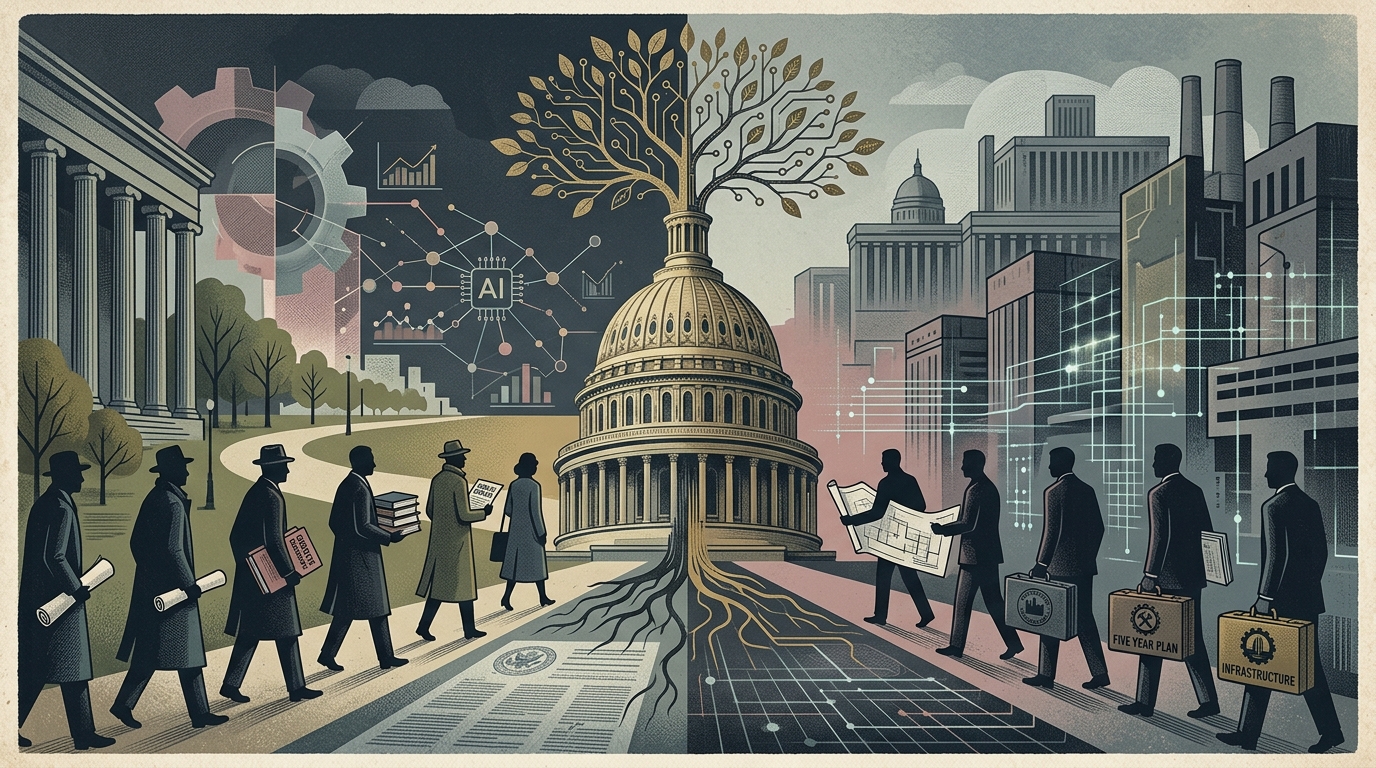
This inward turn is creating a "schism" in the internet and AI landscape. On one side, we have the Western ecosystem based on the free flow of capital and processors; on the other, a Chinese ecosystem developing under siege, fostering highly creative solutions to optimize algorithms on constrained hardware.
The Talent Dilemma and the Great Brain Drain
Perhaps the most severe impact of this situation is the brain drain. Many top Chinese AI researchers, trained at American universities and formerly employed by the likes of Meta or Google, face a harsh dilemma: return to China to work with limited resources or stay in the West, severed from their homeland. Washington is even considering restrictions on Chinese nationals accessing advanced AI models via APIs, which could fully isolate the country's research community.
"This is no longer a trade war; it is a battle for the very sovereignty of intelligence," says a technology analyst in Beijing.
In conclusion, the closing of the "back doors" marks the end of the era of globalized technology. Chinese founders must now prove whether innovation can flourish within a cage, or if the technological Cold War will lead to a permanent lag for the world's second-largest economy in the field that will define the 21st century.