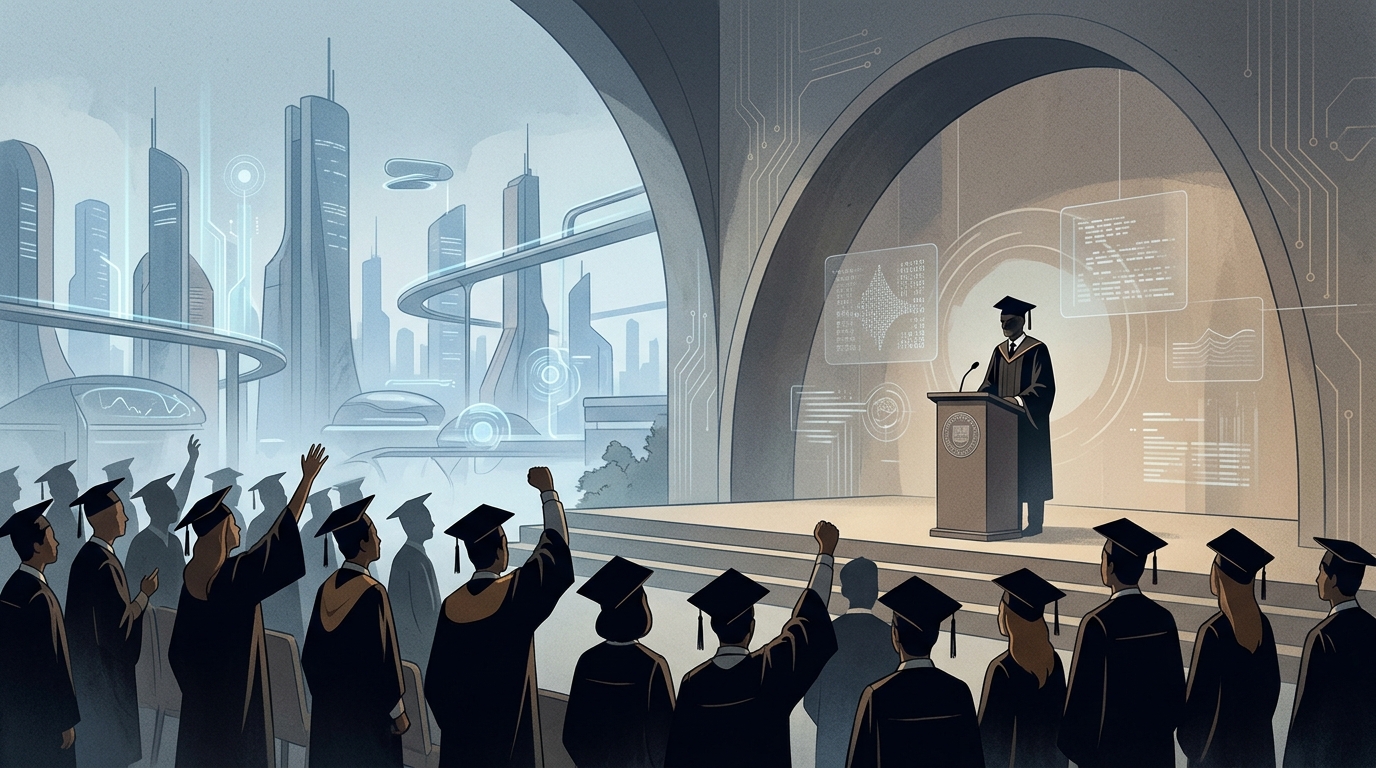
In an era where Artificial Intelligence (AI) promises to reshape every facet of human endeavor, the reaction of the younger generation toward the architects of this change is becoming increasingly volatile. The recent commencement speech by Eric Schmidt, former CEO of Google and one of Silicon Valley’s most influential figures, at the University of Arizona, transformed from a routine graduation ceremony into a battlefield of social and political friction.
As Schmidt took the stage to extol the limitless potential of AI, he wasn't met with the customary polite applause. Instead, he faced a wave of boos. This reaction was not an isolated incident. It reflects a deep-seated distrust among Gen Z toward tech elites who promote automation while amassing unfathomable wealth, leaving the global workforce in a state of perpetual precariousness.
A Clash of Visions: Silicon Valley vs. Reality
Eric Schmidt, for years the "face" of Google, represents a school of thought that views technological progress as an inevitable and universally positive force. However, for the students graduating in 2026, AI is not just a tool for creativity; it is an existential threat to the careers they are just beginning. The boos were largely triggered by Schmidt’s previous comments regarding productivity and remote work, as well as his support for development models that prioritize speed over ethics.
According to analysts, students perceive that the "AI revolution" heralded by Schmidt might not include jobs for them. The automation of entry-level positions in fields like software engineering, legal research, and content creation has fostered a climate of fear. "We are told to innovate, but at the same time, they are building machines that make us redundant before we even start," said one graduating student.
The Question of Ethics and Corporate Responsibility
Another point of contention is Schmidt's stance on intellectual property and competition. In recent high-profile remarks, he suggested that startups should focus on growth and "steal" content if necessary, letting lawyers clean up the mess later. This "move fast and break things" approach seems to have soured for a generation demanding greater transparency and social accountability.
- His dismissal of remote work as a reason for Google losing ground to OpenAI.
- His involvement in AI-driven defense projects that raise significant ethical questions.
- The extreme concentration of power within a handful of tech conglomerates.
"Technology is not neutral. It is the result of the choices made by the people who control it. And today, students are questioning those choices," noted a sociology professor at the university.
The Future of Work: An Open Wound
The heckling of Schmidt serves as a warning sign for the political and economic establishment. As we move into the latter half of the 2020s, the social contract between employer and employee appears to be crumbling under the weight of algorithms. Students are not demanding less technology; they are demanding technology that serves humanity rather than just shareholders.
The challenge for the coming years is the creation of a safety net for workers displaced by AI. Reskilling is no longer a panacea when the pace of change outstrips human adaptability. Structural changes, such as robot taxes or universal basic income, are becoming urgent topics—discussions that Schmidt and his peers often sidestep in favor of techno-optimism.
In conclusion, the Arizona incident is the tip of the iceberg. Silicon Valley must understand that the era of blind trust is over. Progress without social consensus is a recipe for conflict, and the new generation is ready to fight for its place in a world that seems determined to move on without them.