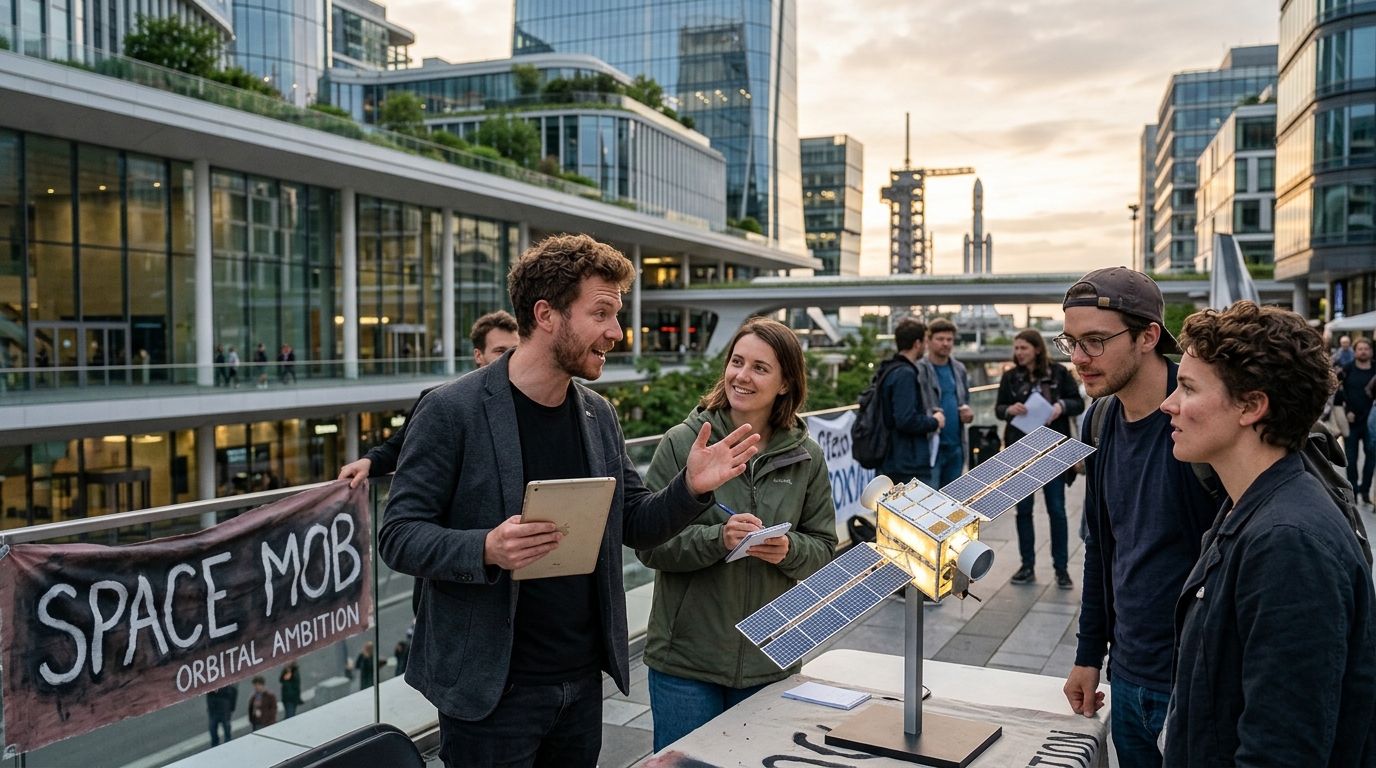
In the modern financial ecosystem, one rarely encounters a convergence of technical complexity and grassroots enthusiasm as intense as that surrounding AST SpaceMobile. The company, which promises to build the first and only space-based cellular broadband network operating directly to everyday smartphones, has cultivated more than just a shareholder base; it has sparked a movement. The self-styled 'SpaceMob,' an army of retail investors, has transformed the analysis of orbital mechanics and FCC filings into a form of digital activism.
The Technological Promise: A Cell Tower in the Sky
The core thesis of AST SpaceMobile is simple yet revolutionary: the elimination of global connectivity 'dead zones.' While SpaceX’s Starlink requires a specialized terminal, AST aims to connect directly to the phone already in your pocket. This is achieved through their BlueBird satellites, which feature the largest commercial communications arrays ever deployed in Low Earth Orbit (LEO). These arrays function as 'cell towers in space,' enabling the transmission of 4G and 5G signals to regions where terrestrial infrastructure is physically impossible or economically unfeasible.
For the SpaceMob, this technological edge is the 'holy grail' of the investment. The due diligence (DD) circulating on platforms like Reddit and X (formerly Twitter) is not limited to simple price charts. Instead, it involves granular calculations of satellite link budgets, spectral efficiency, and the strategic implications of partnerships with giants like AT&T, Verizon, and Google. This deep technical literacy distinguishes the SpaceMob from the typical 'meme stock' crowds of years past.
The Psychology of the SpaceMob: Conviction vs. Skepticism
Why does such fierce loyalty exist? The answer lies in the clash between the retail base and institutional skeptics. For years, AST SpaceMobile was a prime target for short sellers who deemed the project a 'vaporware' fantasy. The SpaceMob saw this skepticism as an opportunity. By meticulously dissecting every regulatory filing, the community built a counter-narrative that was eventually validated by successful satellite deployments and massive capital injections from industry leaders.
The community functions as a decentralized research firm. When the company faces delays—par for the course in the space industry—the SpaceMob does not panic. Instead, they analyze the causes, from weather patterns at Cape Canaveral to bureaucratic shifts within the FCC. This resilience has created a psychological 'floor' for the stock, where panic selling is replaced by strategic accumulation by high-conviction holders who view the company through a multi-decade lens.
Competition and the Geopolitical Stakes
At the heart of the discussion is inevitably Elon Musk and SpaceX. While SpaceX dominates the launch market, its direct-to-cell approach (via the T-Mobile partnership) is viewed by many SpaceMob analysts as technically limited compared to AST’s massive phased arrays. AST SpaceMobile, having secured critical spectrum rights globally and forming alliances with nearly 50 mobile network operators, appears to hold a strategic moat that transcends mere launch capabilities.
Furthermore, the importance of AST for US national security and global connectivity cannot be overstated. In a world where internet access is increasingly viewed as a fundamental human right, the ability of a single network to provide connectivity to billions without requiring new hardware is a geopolitical tool of immense power. The SpaceMob understands this, betting not just on a company, but on the next iteration of global infrastructure.
Conclusion: The Future of Retail Investing
The saga of AST SpaceMobile and the SpaceMob serves as a masterclass in how information and technology can democratize high-stakes investing. This is no longer about blind gambling; it is about a conscious choice to back a technology capable of reshaping human connectivity. As we move through 2026, with the network beginning to show signs of commercial maturity, the SpaceMob feels more than just vindicated—they feel like active participants in the history of space exploration.