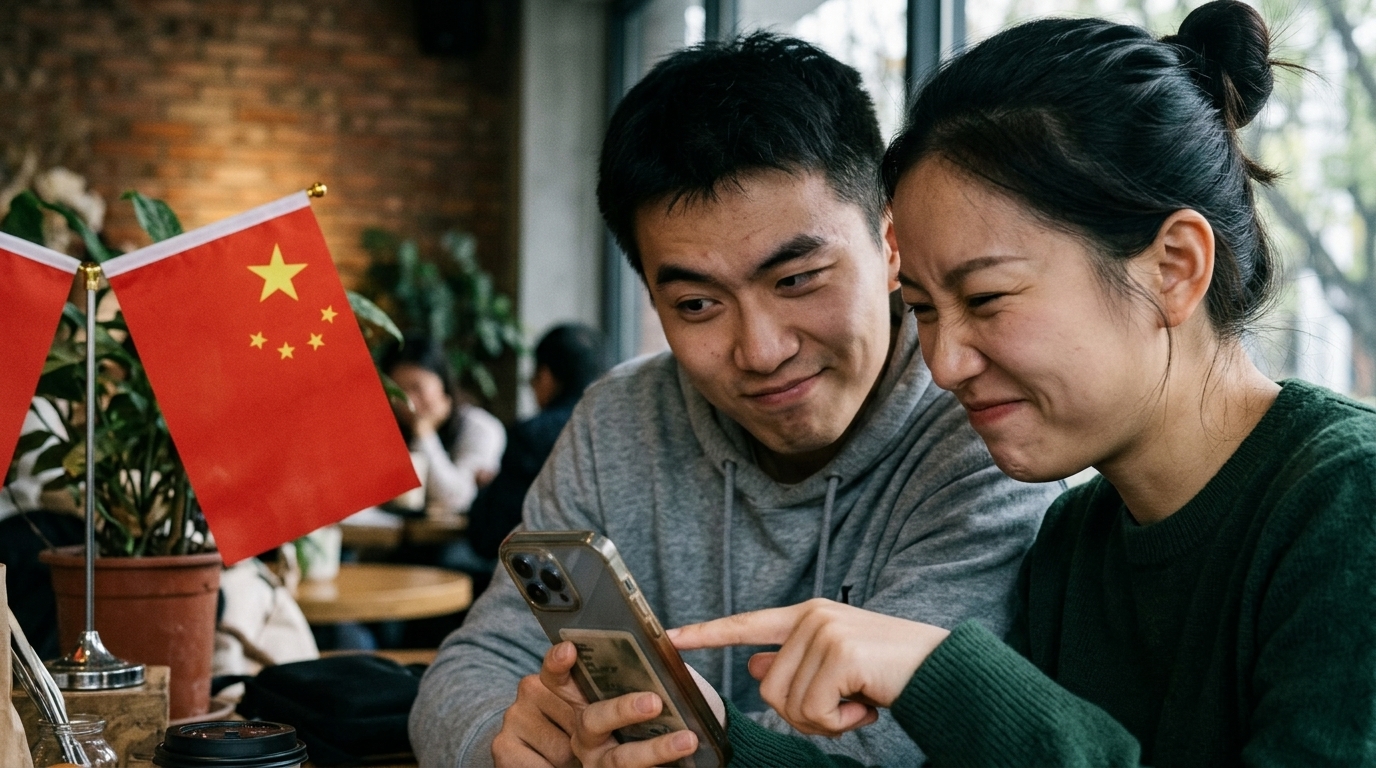
In the high-stakes world of artificial intelligence, OpenAI’s ChatGPT is often viewed as the gold standard. However, in the vast and nuanced market of China, the world’s most famous chatbot is facing a unique hurdle: linguistic mockery. Despite its technical prowess, the way ChatGPT constructs its responses in Mandarin has become a subject of ridicule on social media platforms like Weibo and Xiaohongshu. Users describe its language as 'souless,' 'excessively polite,' and, most damningly, 'translationese.'
The 'Translationese' Phenomenon
The primary grievance among Chinese users centers on what linguists call 'translationese.' This refers to a style of speech that, while grammatically correct, follows the structural and syntactical logic of English rather than the natural flow of Mandarin. For instance, the overuse of passive voice or the redundant repetition of pronouns—common in English but rare in daily Chinese conversation—makes ChatGPT sound like a foreigner trying too hard to pass as a native speaker while failing to grasp the language's rhythm.
Users point out that the model frequently employs phrases like 'As an AI language model...' or 'It is important to remember that...', which sound foreign and detached in Chinese. This 'Westernized' approach to thought structure creates a sense of cultural alienation. The Chinese language is inherently rich in idioms (chengyu), historical metaphors, and context-dependent nuances that ChatGPT often misses or misapplies, leading to a sterile user experience.
Politeness as a Barrier to Authenticity
Another point of contention is the model’s excessive, almost subservient politeness. In Chinese culture, communication is often direct or governed by very specific codes of social hierarchy. ChatGPT’s attempt to remain neutral and 'safe' results in what users call 'feihua' (hollow words or nonsense).
'It sounds like a bureaucrat talking for hours without saying anything of substance,'one Weibo user remarked, reflecting a broader sentiment that OpenAI’s AI lacks the necessary 'wit' and authenticity to engage Chinese netizens.
This behavior is not accidental. OpenAI’s models are trained with rigorous safety and ethical filters reflecting Western values. When these parameters are ported directly into a Chinese context, the result is an AI that appears 'afraid' to take a stance or use humor. Chinese humor, often self-deprecating or based on intricate wordplay, is something the model struggles to decode, leading to interactions that feel clinical rather than conversational.
A Golden Opportunity for Local Rivals
This linguistic and cultural gap provides a massive opening for Chinese tech giants. Companies like Baidu with its Ernie Bot, Alibaba with Tongyi Qianwen, and Kai-Fu Lee’s startup 01.AI, are betting heavily on 'localization.' Their models are trained on massive datasets from the Chinese internet, WeChat, and Weibo, allowing them to understand the slang, memes, and cultural touchstones that ChatGPT ignores.
- Cultural Relevance: Local models can compose poetry in classical Chinese styles with much higher fidelity.
- Contextual Awareness: They better understand Chinese social norms, from business etiquette to complex family dynamics.
- Navigating Constraints: While censorship is a hurdle for free expression, local models are 'hardwired' to navigate Beijing’s red lines more gracefully than ChatGPT, which often triggers awkward refusals or errors when hitting sensitive topics.
In conclusion, the situation in China demonstrates that artificial intelligence is not merely a matter of raw computing power, but of cultural intelligence. To truly capture a global market, an AI must do more than process data; it must 'feel' the language of its users. As long as ChatGPT continues to speak like a translated manual, Chinese users will continue to view it as a sophisticated, yet fundamentally alien, curiosity.