At the dawn of the third decade of the 21st century, the act of shopping is transforming from a conscious social and economic activity into a silent, automated background function. As Artificial Intelligence (AI) systems become increasingly adept at predicting our needs—from the milk in our fridge to the next pair of shoes that fits our style—we face a paradox: we gain time, but what exactly do we lose in return?
The Sacrifice of Serendipity and the Disappearance of Discovery
For centuries, the marketplace (the 'agora' in its original sense) was a space of unexpected encounters. Whether it was a stall in a village square or the aisles of a modern department store, shopping involved an element of serendipity. Artificial Intelligence, through recommendation algorithms, aims to eliminate precisely this element. Algorithms are designed to show us what we already like or what we are statistically likely to buy.
This creates a 'consumption bubble.' When AI takes the reins, our exposure to new styles, different cultures, or innovative products is drastically reduced. If the system knows you always buy minimalist furniture, it will never suggest an eccentric piece that might have shifted your aesthetic. We lose, therefore, the opportunity to evolve as consumers and, by extension, as personalities through contact with the unknown.
The Illusion of Choice and the Erosion of Agency
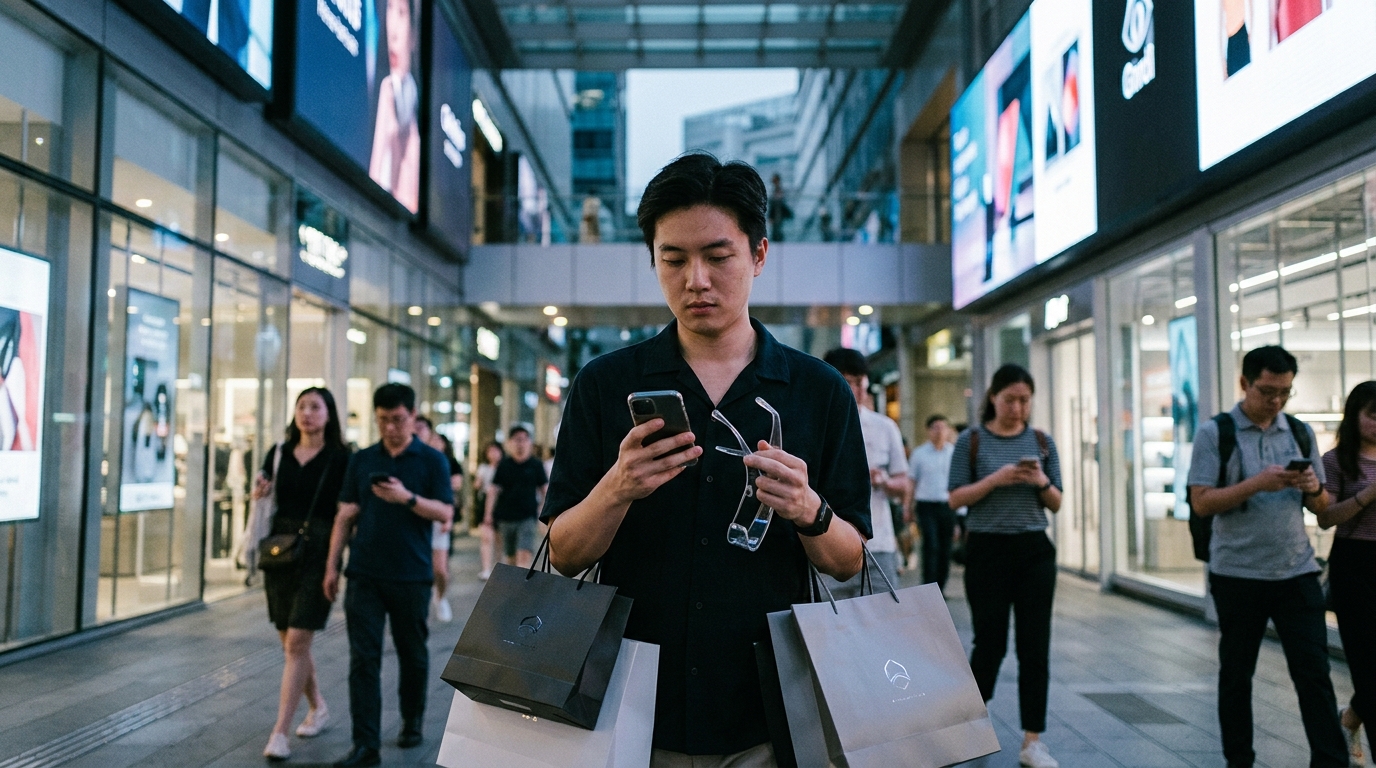
One of the most concerning aspects of AI integration in shopping is the gradual erosion of human agency. The convenience of 'One-Click' or, even more so, 'Auto-Replenishment,' turns us from active decision-makers into passive approvers of algorithmic commands. When AI decides which brand of detergent arrives at our doorstep, we stop comparing prices, quality, or the ethical stance of the producing company.
"Convenience is the most potent drug of the digital age. It persuades us to surrender control of our choices in exchange for a few minutes of free time, which we usually consume behind another screen."
This shift has profound implications for our economic literacy. Younger generations, growing up in an environment where shopping simply 'happens,' may lose the ability to critically assess the value of things. Consumption becomes detached from effort and choice, making us more vulnerable to manipulated demand.
The Dark Side of Prediction: Data and Manipulation
AI doesn't just predict our needs; it often shapes them. Behavioral prediction models collect thousands of data points—from the time we spend looking at a photo on Instagram to biometric data from our smartwatches. This allows companies to implement 'dynamic pricing' or send promotional messages at moments when we are psychologically most vulnerable.
- Dynamic Pricing: The price of a product can change based on how desperately we need it, according to our data.
- Psychological Targeting: AI can perceive if we are sad or tired and suggest 'comfort buying' solutions.
- Monopolistic Dominance: Platforms that control the AI (Amazon, Google) promote their own products, stifling competition.
In this environment, the consumer is no longer king, but the product. Privacy is sacrificed at the altar of speed, and our personal identity is transformed into a set of vectors in a multi-dimensional data space, ready for exploitation by the next advertising algorithm.
Social Disconnection: The End of Commerce as a Relationship
Finally, we must not overlook the social dimension. Shopping has always been a form of social interaction. A conversation with a local bookseller, advice from an experienced clothier, or even just being among other people in a market strengthens the social fabric. The fully automated AI experience is lonely and sterile.
As physical retail spaces decline, we lose community meeting points. AI can bring us the product faster, but it cannot offer the human touch or the sense of belonging that accompanies the local market. The challenge for the future is not to reject technology, but to find ways to integrate it without losing our humanity, our critical thinking, and the joy of choosing our own path in the world of material goods.