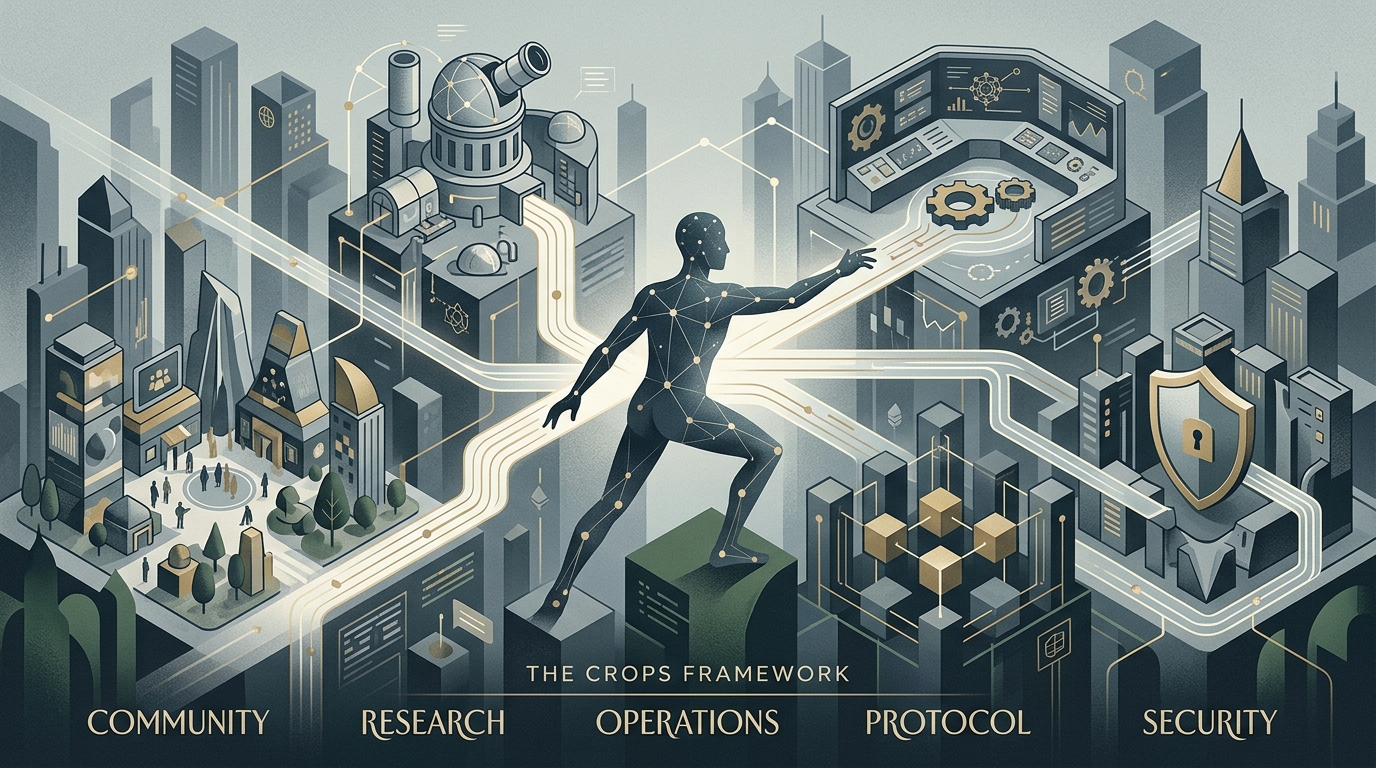
In a move that signals the end of an era and the beginning of a more mature phase for the world's second-largest cryptocurrency, Ethereum co-founder Vitalik Buterin has unveiled a radically revised vision for the Ethereum Foundation (EF). This new strategy, encapsulated in the acronym "CROPS," is not merely a technical roadmap but a profound organizational pivot aimed at diminishing the Foundation's central influence and empowering the broader ecosystem.
The Philosophy of Strategic Shrinkage
For years, the Ethereum Foundation has acted as the network's de facto central planner—funding research, organizing major conferences, and serving as the primary arbiter of protocol development. However, Buterin now argues that for Ethereum to fulfill its destiny as a truly decentralized global computer, the Foundation itself must become leaner and less essential. The goal is to transition from being the "engine room" to a supportive steward, offloading responsibilities to diverse ecosystem actors such as Layer 2 development teams and independent research institutes.
This shift is timely. Ethereum is currently facing dual pressures: intense competition from alternative Layer 1 networks promising higher throughput, and regulatory bodies worldwide scrutinizing the level of centralized control held by founding entities. By voluntarily "shrinking," the EF seeks to immunize the network against claims of centralization and foster a more resilient, multi-polar governance structure.
Decoding the CROPS Framework
The "CROPS" framework serves as the new operational compass for the Foundation. Each letter represents a pillar where the EF will maintain focus, while delegating other tasks to the community:
- Community: Shifting focus from central event planning to empowering local grassroots movements and global developer education.
- Research: Maintaining the EF's role as a lighthouse for high-level theoretical research (e.g., zero-knowledge proofs and lattice-based cryptography) while letting external teams handle implementation.
- Operations: Streamlining internal processes to ensure maximum transparency and efficiency in how the Foundation's treasury is deployed.
- Protocol: Ensuring the long-term stability and security of Layer 1, focusing on milestones like "The Verge" (statelessness) and "The Purge" (reducing technical debt).
- Social/Sustainability: Promoting Ethereum as a "public good" and developing sustainable funding models that don't rely solely on the EF's treasury.
"The Ethereum Foundation should not be the government of Ethereum. It should be one of many gardeners tending to the ecosystem," Buterin remarked in a recent community discussion.
A New Fiscal Policy and ETH Sales
One of the most contentious issues involving the Foundation has been its periodic sale of ETH to fund its operations. These liquidations often triggered market anxiety, with investors interpreting them as a lack of confidence in the asset's price. In his latest update, Buterin addressed these concerns directly, stating that the EF will drastically reduce its selling frequency and volume.
Instead of acting as the sole financier for the network's development, the Foundation is championing "Ethereum Alignment." This concept encourages profitable ecosystem players—particularly successful Layer 2 networks like Optimism, Arbitrum, and Base—to take up the mantle of funding public infrastructure. By distributing the financial burden, the EF reduces its market impact and ensures that those profiting from the network's success are also reinvesting in its core maintenance.
Challenges and the Road Ahead
Transitioning to the CROPS model is not without its perils. A less centralized Foundation could lead to ecosystem fragmentation, where competing interests pull the protocol in divergent directions. Furthermore, relying on the altruism or "alignment" of corporate-backed Layer 2 entities might prove risky during prolonged market downturns when budgets are slashed.
Nevertheless, Buterin’s move is being hailed by many as an act of political foresight. In an era where tech giants are increasingly centralized, Ethereum is doubling down on the difficult path of decentralization. If successful, this pivot will prove that Ethereum can thrive without a central authority or an "enlightened leader," bringing it closer to the original cypherpunk ethos of a self-sustaining, permissionless digital society.