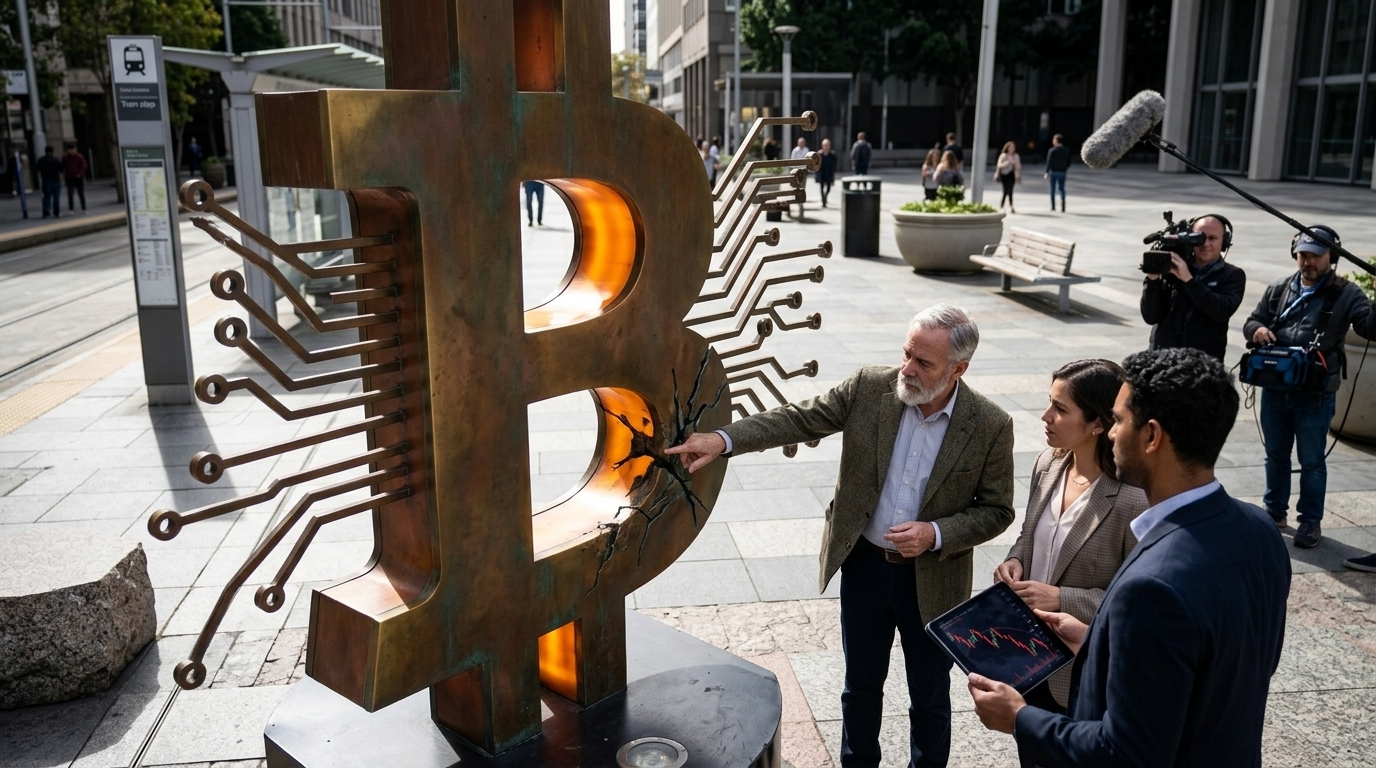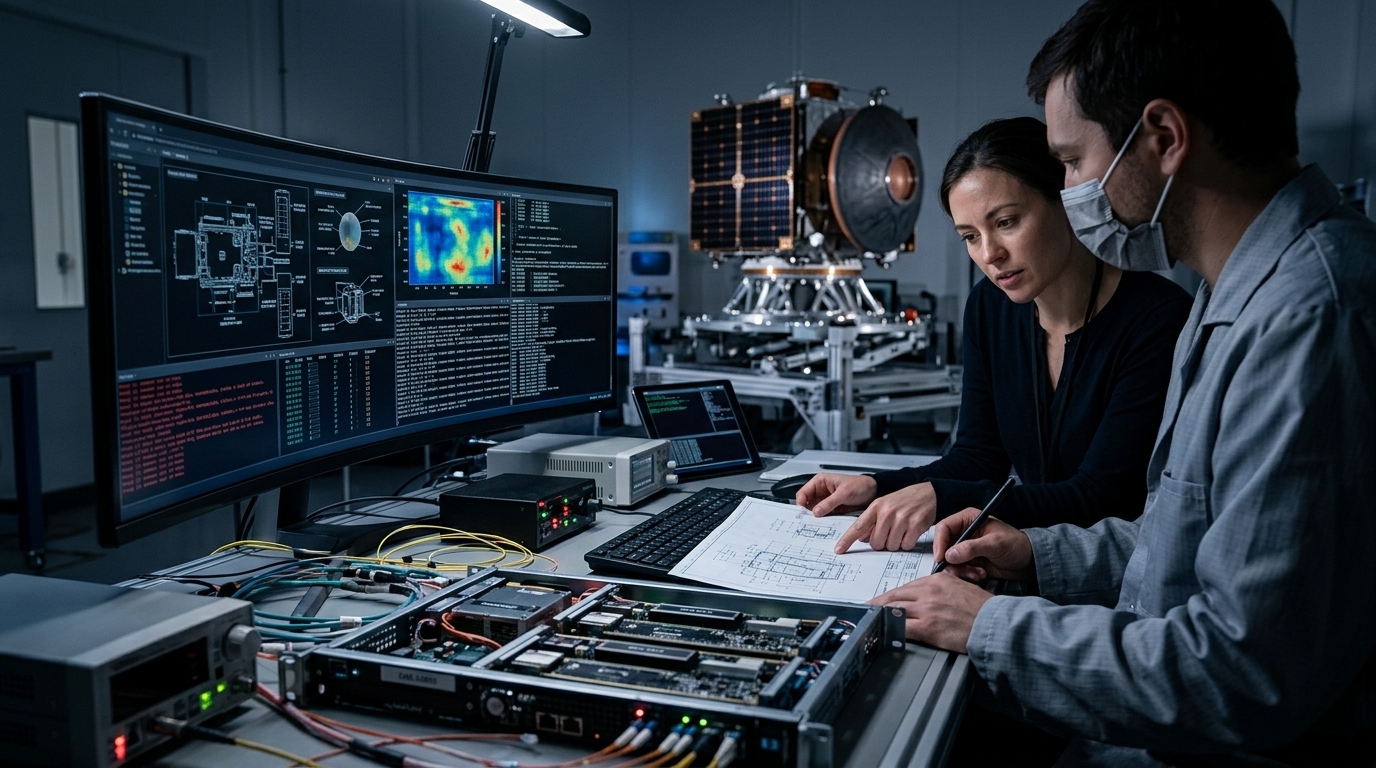
The concept seemed flawless in investor pitch decks: thousands of microsatellites equipped with high-performance AI processors, powered by limitless solar energy and cooled by the freezing vacuum of space. However, as we reach mid-2026, SpaceX appears to be recalibrating its trajectory. Despite initial hype about moving AI compute workloads away from Earth's strained environment, the harsh realities of physics and orbital economics are forcing Elon Musk’s company to admit that the "Space Cloud" might remain a prohibitively expensive dream.
The Thermodynamic Paradox: Cooling in a Vacuum
One of the primary arguments for orbital data centers was the low temperature of space. Theoretically, the lack of atmosphere should facilitate the cooling of chips that consume massive amounts of power to train Large Language Models (LLMs). In practice, the opposite is true. Space is a near-perfect insulator. On Earth, data centers utilize air or water to dissipate heat via convection. In the vacuum of space, the only mechanism for heat rejection is radiation.
SpaceX engineers have discovered that cooling an enterprise-grade AI server—such as an Nvidia H100 equivalent—in orbit requires massive radiator surfaces. These arrays drastically increase the weight and volume of the satellite, negating the launch cost advantages provided by the Starship launch system. Without effective thermal management, AI processors suffer from severe thermal throttling or catastrophic failure within hours, rendering the entire infrastructure economically unviable.
The Threat of Cosmic Radiation
Another critical issue that was initially downplayed is the impact of ionizing radiation on sensitive AI chip circuitry. While traditional telecommunications satellites use "radiation-hardened" components, these are typically several generations behind the cutting-edge GPUs required for AI. Attempting to harden the latest AI accelerators would require lead shielding or exotic materials that would make the satellites too heavy to launch in the required quantities.
Furthermore, Single Event Upsets (SEUs)—momentary glitches caused by subatomic particle strikes—can corrupt AI training data. In a field where precision is paramount, the potential for "AI hallucinations" triggered by cosmic rays is a developer's nightmare. SpaceX now acknowledges that the maintenance and replacement cycle for these units—potentially every 2-3 years due to radiation degradation—creates a logistics model that simply doesn't scale.
Kessler Syndrome and Orbital Ethics
Beyond technical hurdles, there is a significant ethical and environmental dimension. Adding tens of thousands of additional satellites for data processing exponentially increases the risk of collisions in Low Earth Orbit (LEO). The infamous "Kessler Syndrome," where a single collision triggers a chain reaction of debris, could render orbit inaccessible for generations.
- Increased risk to the International Space Station and future crewed missions.
- Light pollution obstructing terrestrial astronomical observations.
- The massive carbon footprint of the thousands of launches required to maintain such a constellation.
Facing pressure from international regulators and the scientific community, SpaceX is signaling a strategic retreat. Recent statements from company executives suggesting that "Earth remains the best place for heavy compute loads" indicate a pivot toward more terrestrial solutions, such as data centers on floating platforms or in regions with natural geothermal cooling.
"Space is hard, but thermodynamics is unforgiving. You cannot defeat the laws of physics with marketing alone," says a former SpaceX senior thermal engineer.
In conclusion, while the idea of a space-based AI cloud offered a compelling narrative for the future, SpaceX is being forced to return to Earth. AI requires immense power and efficient heat management—two things that space, despite its vastness, cannot provide easily or cheaply. The future of AI will likely be decided on the ground, with space relegated to supporting roles in telecommunications and niche edge-data processing.