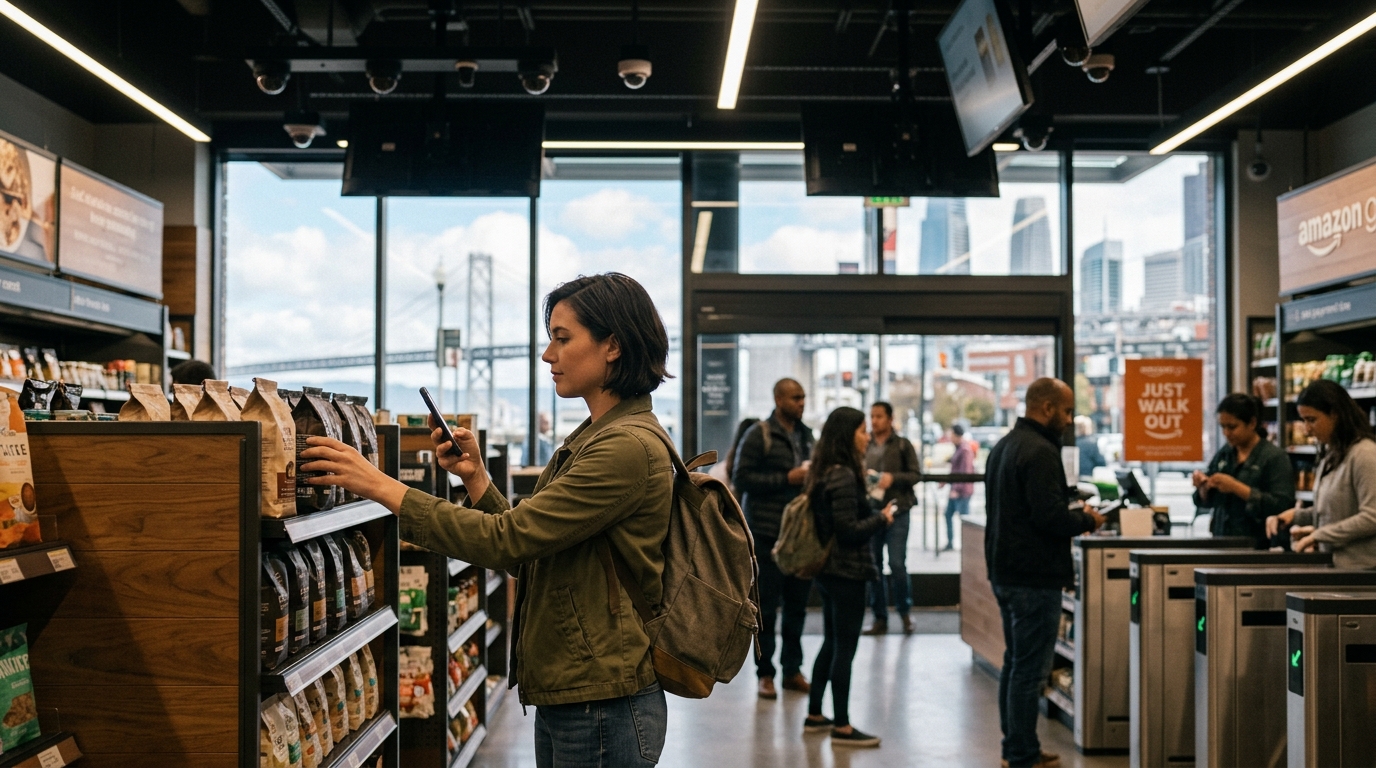
In the heart of San Francisco, a city that in recent years has become the battlefield between technological utopia and urban decay, a new breed of retail store is promising to change the way we shop forever. There are no cashiers, no lines, and most importantly, no human employees visible to the public. Operation is based entirely on Artificial Intelligence, utilizing a network of advanced cameras and sensors that track every customer movement with surgical precision.
The Technology Behind the 'Invisible' Transaction
The system powering these stores is not merely an upgrade to traditional security setups. It is a sophisticated ecosystem of Computer Vision and Deep Learning. As soon as a customer enters the store by scanning a mobile app, the AI creates a digital twin of their presence. Every item picked off the shelf is automatically recognized via algorithms trained on millions of product images, while weight sensors on the shelves confirm the selection.
The complexity of the process is staggering. The system must distinguish whether a customer simply looked at a product and put it back, or if they placed it in their bag. It also has to handle the "social dynamics" of the store – for instance, if a parent hands a soda to their child, the system must know who to charge. This "friction," which in traditional retail translates to waiting at the checkout, disappears entirely here. The customer simply walks out, and the receipt arrives on their phone minutes later.
Social and Labor Implications
While the convenience is undeniable, the rise of AI-powered stores in San Francisco brings serious questions about the future of work to the forefront. The retail sector is one of the largest employers globally. Full automation threatens millions of low-skilled jobs. Proponents of the technology argue that jobs aren't being lost but shifted to sectors like system maintenance and inventory management, yet the reality for the average worker remains uncertain.
- Elimination of traditional cashier and sales clerk roles.
- Need for new skills in data management and technical support.
- Potential reduction in operating costs for businesses, possibly leading to lower prices.
- Risk of social isolation as human interaction is phased out of the shopping experience.
Furthermore, San Francisco has been grappling with significant issues of retail theft and petty crime. AI stores are being marketed as a solution to this problem, as customer identification at the entrance and continuous tracking make theft nearly impossible. However, this raises the question: are we turning public shopping spaces into zones of total surveillance?
Privacy: The Price of Convenience
Perhaps the biggest hurdle in the expansion of this technology is data privacy. For such a store to function, it must collect a massive volume of biometric and behavioral data. The AI knows how long you stood in front of a specific product, which labels you read, and even your emotional response (via facial expression analysis in some cases) to pricing.
"You aren't just buying milk; you are selling your behavioral patterns to an algorithm that will use them to sell you more in the future," note digital privacy analysts.
The challenge for regulators in 2026 is to find the balance between innovation and civil rights. As San Francisco becomes the laboratory for the future of global commerce, the rest of the world watches with bated breath, wondering if "convenience" is worth the loss of our anonymity.