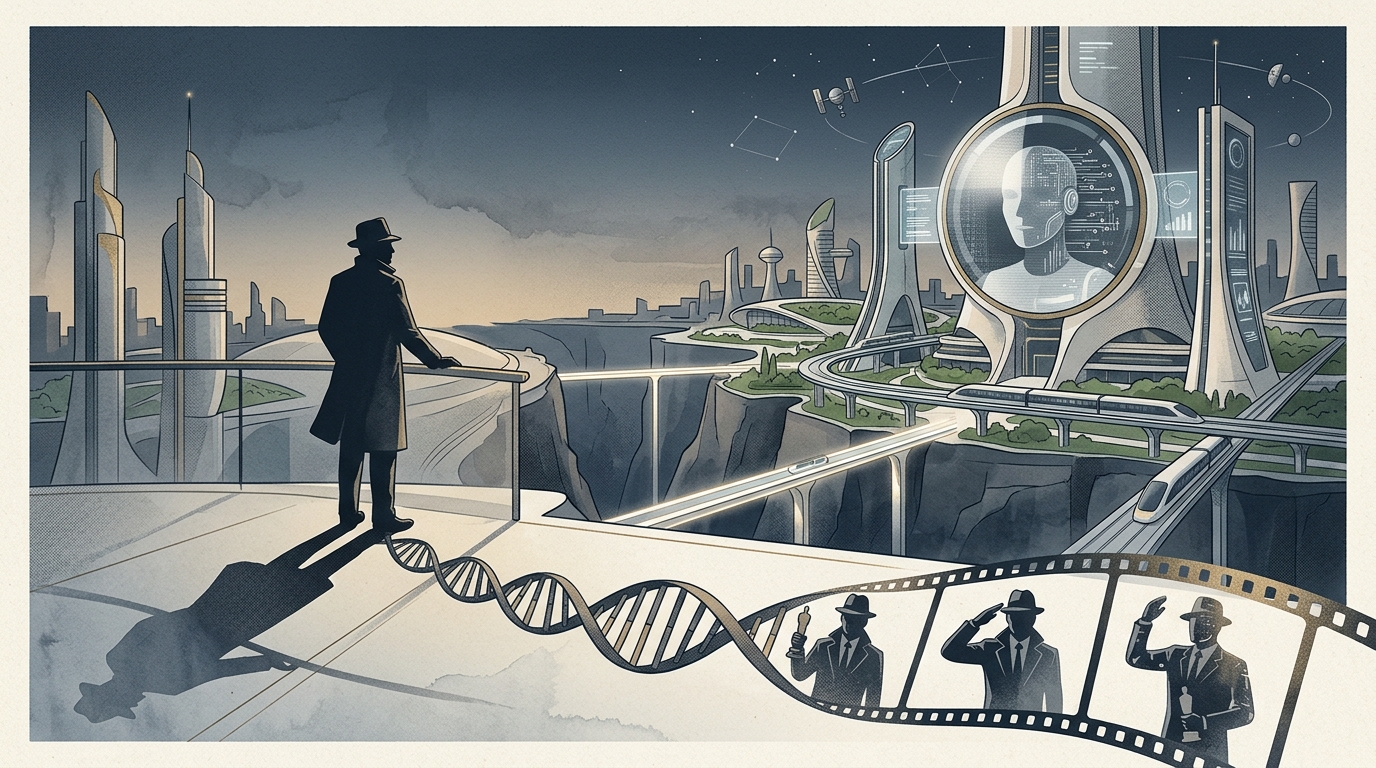
As we navigate the summer of 2026, the landscape of higher education bears little resemblance to the pre-AI era. Recent global discourse, catalyzed by developments in emerging economies like Vietnam, highlights a universal truth: the university as a mere institution for information transfer is dead. Artificial Intelligence (AI) is no longer an exotic tool for a handful of students; it is the fundamental infrastructure upon which knowledge is built, forcing academic institutions to reinvent themselves or fade into obsolescence.
The Assessment Crisis and the 'Death' of the Traditional Essay
For decades, written assignments and open-book exams were the gold standard of academic evaluation. Today, with Large Language Models (LLMs) producing high-level essays in seconds, traditional assessment has collapsed. Universities find themselves in a perpetual arms race with AI detectors, which often prove inaccurate, fostering a climate of suspicion between faculty and students.
However, the solution lies not in prohibition but in integration. Many pioneering institutions are shifting toward oral examinations, live presentations, and "process-based assessment" rather than focusing solely on the final output. Students are no longer graded on what they wrote, but on how they used AI to reach a conclusion, how they verified their sources, and how they critically analyzed the algorithm's suggestions. This shift requires a radical change in the mindset of educators, many of whom are being asked to teach skills they themselves do not fully possess.
Redefining the Curriculum: AI as a Collaborator, Not a Tool
The question dominating university senates is: "What should we teach when information is ubiquitous and free?" The answer appears to lean toward so-called "human-centric" skills. Critical thinking, ethical decision-making, emotional intelligence, and interdisciplinary synthesis are becoming the new prerequisites. In Vietnam, for instance, technical universities are integrating philosophy and tech ethics courses from the first year, recognizing that a programmer who doesn't understand the social implications of their code is a liability.
Furthermore, AI enables personalized learning at scale. "Intelligent teaching assistants" can adapt the pace of delivery to each student's needs, offering 24/7 support. This liberates professors from the burden of standardized instruction, allowing them to take on the roles of mentor and researcher, focusing on deeper discussions and guiding original research.
Social Inequality and the Geopolitics of Knowledge
One of the most concerning aspects of this transition is the digital divide. While wealthy Western universities and certain emerging hubs in Asia invest billions in AI infrastructure, many institutions in the Global South are being left behind. Access to the most sophisticated AI models often requires expensive subscriptions and powerful hardware, creating a new form of academic inequality. If AI becomes the sole gateway to higher education, those without the means will be excluded from the 21st-century knowledge economy.
"Higher education is not at risk from Artificial Intelligence, but from its own rigidity. If we insist on teaching students to become inferior versions of algorithms, we are condemning them to irrelevance," notes a leading academic.
The geopolitical dimension is also evident. Countries like Vietnam are using AI as a "leapfrogging" mechanism to overcome traditional educational deficits and prepare a workforce that will attract foreign investment in high tech. Education is transforming into a central pillar of national security and economic sovereignty.
Conclusion: The University of 2030
The university of the future will not be a place where students go to "learn" things, but a place where they go to "become" something. The emphasis is shifting from degree acquisition to competency mastery. Lifelong learning is no longer a slogan but a necessity, as knowledge acquired in the first year of study may be obsolete by graduation. Higher education must become more flexible, offering micro-credentials and continuous retraining. In this new ecosystem, success will not be measured by how much a graduate knows, but by how effectively they can collaborate with the machine to solve problems that the machine alone cannot even conceptualize.