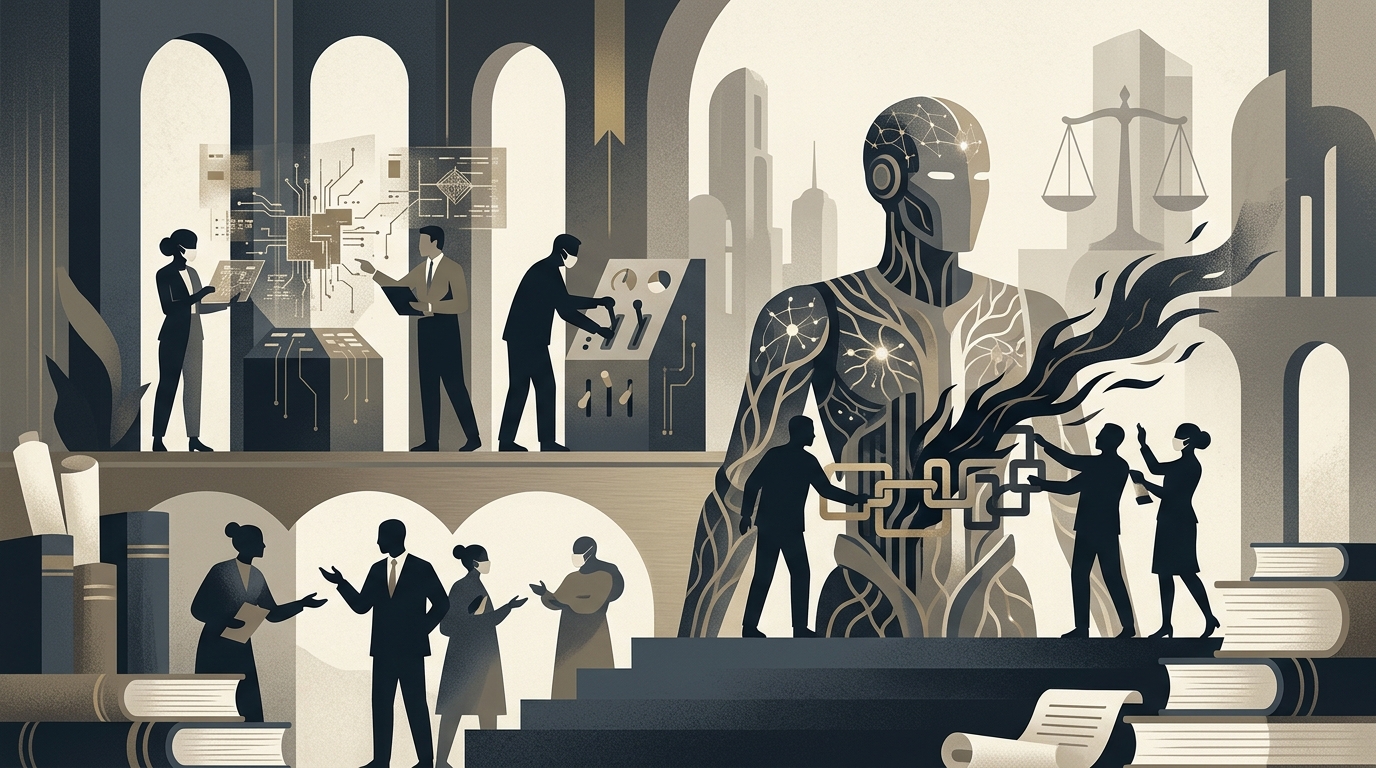
In the rapidly shifting landscape of educational technology, Artificial Intelligence (AI) is no longer just a productivity tool; it has become a gatekeeper of knowledge and critical inquiry. Recent expert analyses, sparked by the meteoric rise of Eastern models like China's DeepSeek, raise a fundamental question: Why do Western AI models—such as OpenAI’s GPT, Anthropic’s Claude, and Google’s Gemini—remain the preferred choice for education? The answer lies beyond mere parameters and tokens, rooted instead in pedagogical values and cultural architecture.
The Pedagogy of Inquiry and the Socratic Method
The primary distinction, according to educational experts, is the approach to the learning process itself. Western models are trained in an environment that prizes 'critical reflection.' At the heart of Western education lies the Socratic method: a dialogue-based approach where truth is uncovered through logical cross-examination. Models like Claude 3.5 or GPT-4o are increasingly designed not to provide a flat answer, but to act as a tutor that guides the student through the reasoning process.
Conversely, many Eastern models, despite their technical efficiency and speed, tend to be more utilitarian. They focus on delivering the correct information with maximum precision, often stripping away the nuance required for developing higher-order thinking skills. In the classroom of 2026, the goal is not rote memorization but the ability to evaluate information—a domain where Western logic currently holds a significant advantage.
The Filter of Censorship vs. Academic Freedom
One of the most contentious issues is political and social censorship. Models developed in authoritarian environments are subject to strict content regulations. When a student inquires about historical events, sociological theories, or political science, an AI that has been 'trained to be silent' on certain topics poses a direct threat to academic integrity.
Experts argue that education necessitates exposure to multiple perspectives. While Western models are not free from their own biases, they operate within a framework where transparency and pluralism are institutionalized values. For a student in Malaysia or Europe, using a tool that avoids 'sensitive' topics due to state mandates drastically limits their intellectual horizon. Education is, by definition, an act of liberation, and the AI supporting it must reflect that freedom.
Cultural Complexity and Linguistic Nuance
Another critical factor is the quality and diversity of training data. Western models have access to a vast corpus of global literature, scientific journals, and open-source archives spanning centuries of human thought. This allows them to better understand the 'context' of a query. In education, context is everything. A question about literature requires more than a summary; it requires an understanding of the social conditions of the era.
Furthermore, the ability of Western models to handle language in a way that mimics human dialogue is currently superior. Education is built on communication. If an AI cannot grasp humor, irony, or the subtext of a student’s question, the pedagogical relationship falters. Western AI labs have invested billions into 'alignment'—ensuring models reflect human values—making them more empathetic and effective digital mentors.
The Future: A Global Challenge
Despite current Western dominance, the debate is far from over. The rise of models like DeepSeek proves that the technical gap is narrowing. However, education is not a race to see who can solve an equation the fastest. It is the process of shaping minds. As long as Western models remain anchored in the principles of the Enlightenment, critical analysis, and the free flow of ideas, they will remain the gold standard for educational systems that aim to produce thinking citizens rather than mere task-executors.
- Critical thinking outweighs simple information retrieval.
- The absence of state-mandated censorship ensures academic integrity.
- Alignment with pedagogical methods (Socratic method) is a key differentiator.
- Data richness allows for a deeper understanding of historical and social context.