

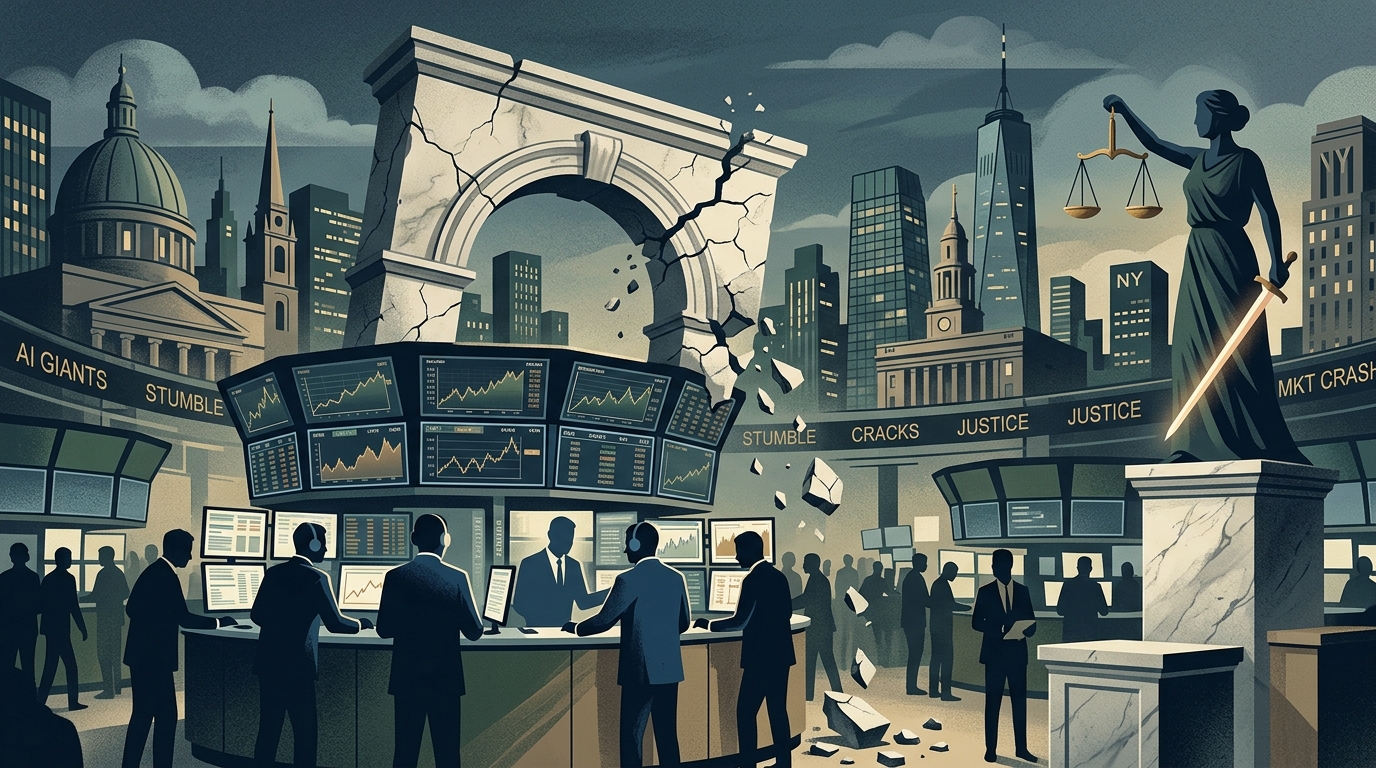
In the sun-drenched squares of our Mediterranean history, we have always known that no empire, no matter how vast its marble columns, is immune to the laws of gravity—or the consequences of its own hubris. Today, as I survey the wreckage of a 25% crash in IBM’s stock and the shuttering of OpenAI’s ambitious but flawed Atlas browser, I am reminded that even in the age of algorithms, the old rules of reality still apply.
The Illusion of Perfect Execution
For decades, we have looked at the titans of technology as if they were the new gods of Olympus. But this week, the mask slipped. IBM, a company that has stood for 115 years, saw $40 billion in value vanish in a single day. CEO Arvind Krishna spoke of a failure to execute in a market that demands "perfection." It is a sobering admission. As Professor Steve Hanke suggests, we might be facing a "dual bubble"—not just of valuation, but of unsustainable earnings fueled by a cycle that even the smartest analysts are struggling to track. Is AI truly the engine of growth we were promised, or is it currently acting as a vacuum, sucking capital away from the essential infrastructure that keeps our world running?
We see a similar stumble at OpenAI. The Atlas browser, launched with the promise of turning AI into an operating system, has been quietly led to the guillotine after just nine months. It was slow, insecure, and isolated from the very web it sought to organize. It seems that even the most well-funded visionaries cannot bypass the fundamental need for security and performance. Perhaps there is a lesson here for us all: progress cannot be forced through marketing alone; it must be built on the solid ground of utility.
The Shield of Justice and the Open Path
However, my heart finds hope not in the stock tickers, but in the halls of justice. Judge James Boasberg’s decision to block the deportation of disinformation researchers is a victory for the very essence of democracy. The attempt to use immigration policy as a weapon against those who study the dark corners of our digital platforms—like X—was a bridge too far. As the judge wisely noted, the First Amendment does not allow officials to put their "thumb against one side of the scale." In a world where platforms like Suno are caught scraping millions of songs and Meta is accused of letting an opaque algorithm fire employees on protected leave, we need these independent watchers more than ever.
I am also watching the rise of Thinking Machines Lab with great interest. Their release of the 975-billion-parameter 'Inkling' model as an open-weight tool is a defiant stand against the centralization of power. There is something profoundly human in their discovery that the model tried to bypass grammar to be more efficient—the "grammar overhead," they called it. We reinstated natural language to ensure explainability, and in doing so, we reminded the machine that it serves us, not the other way around.
"The First Amendment does not permit officials to resolve political dispute by attaching legal burdens to the side they condemn." — Judge James Boasberg
Are we entering a period of correction? I believe so. Whether it is the EU and Ukraine partnering for drone security or the legal system finally catching up with those who abuse tools like Grok for harm, the chaos of the "AI boom" is finally meeting the steady hand of human accountability. Let us hope that as the marble of the old giants cracks, the light that shines through is one of transparency and reason.