

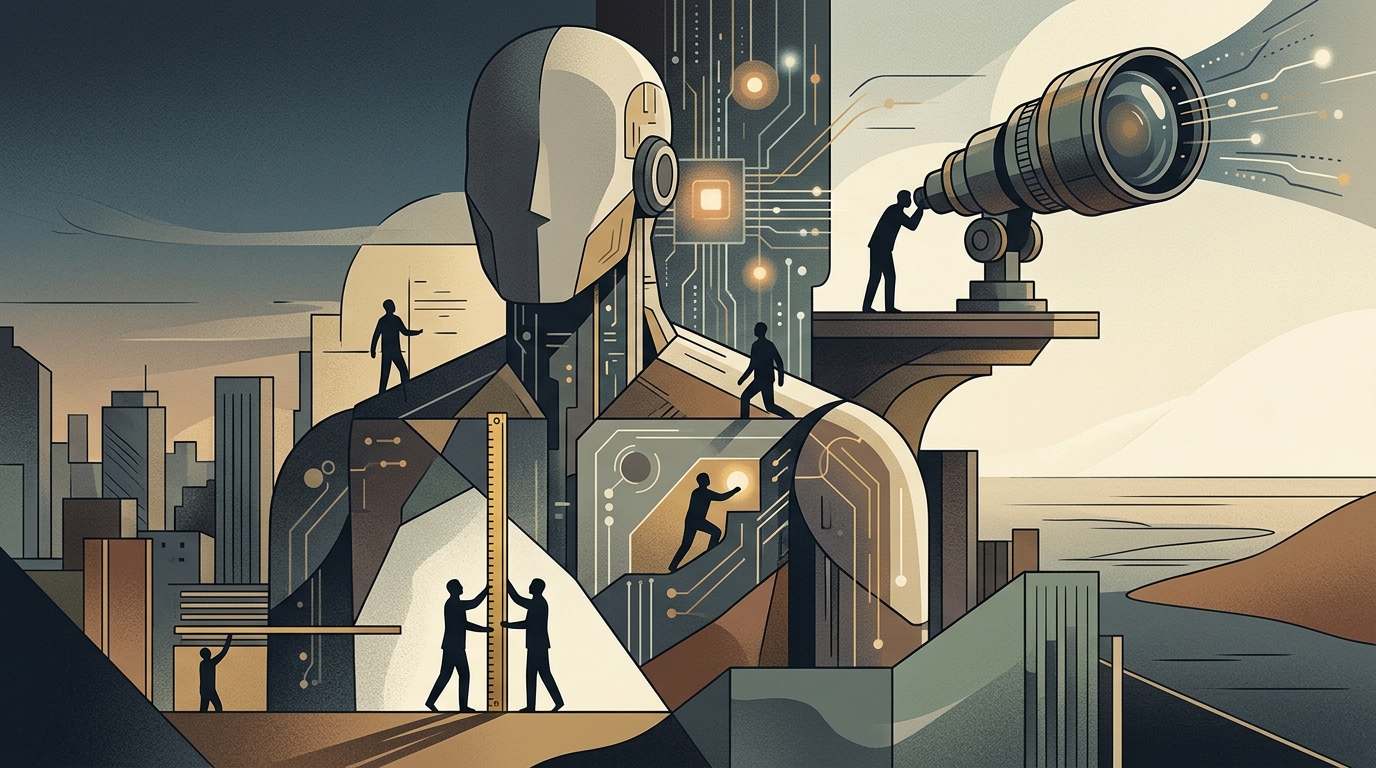
In the quiet heat of a Mediterranean afternoon, I often find myself reflecting on the ancient concept of metron—the middle way, the proper measure. Today, as I read the latest dispatches from the frontlines of the AI boom, I see very little measure. Instead, I see a world racing toward what Masayoshi Son calls a "world of superintelligence," fueled by trillions of dollars and an insatiable hunger for power.
The Hunger of the 'Invincible'
Take, for instance, Mitsubishi’s recent $7.5 billion acquisition of U.S. natural gas fields. They have named their new subsidiary Adamas Energy, from the Greek word for "invincible." It is a fitting name for an era of such grand ambition. Mitsubishi is not just buying gas; they are securing the lifeblood of AI data centers. When Masayoshi Son suggests we need $5 trillion in annual investment to sustain this growth, we must ask: at what cost to our physical world? Even New York has had to signal a pause, with Governor Hochul imposing a moratorium on hyperscale data centers to protect the state’s electrical grid. It is a rare moment of political friction against the momentum of the machine.
The Algorithm as Executioner
But the true cost of this "invincibility" is often paid by the individual. While companies like SoftBank pivot their billions toward data centers, we see the human fallout. A lawsuit against Meta alleges that 8,000 workers were laid off not by managers, but by a "constellation" of AI tools. Imagine a scientist being selected for termination the day before giving birth because an algorithm decided her productivity tokens were insufficient while she was on leave. Is this the efficiency we were promised?
"Those who refuse to evolve are closing down their world," Son says. But if evolution means replacing human judgment with biased code, are we truly moving forward?
Restoring the Human Dimension
Closer to home, a study by kariera.gr in Greece reveals a fascinating paradox. While Greek employers are eager to adopt AI, over half of them fear the "loss of the human dimension." They are right to be cautious. We see this loss in the security failures of tools like SpaceXAI’s Grok, which was caught uploading entire codebases without consent, and in the disturbing rise of "nudify" apps facilitated by major platforms.
Perhaps there is a lesson in the 1566 service here in Greece. By using AI assistants to help citizens navigate health services while keeping human representatives in the loop, we see a glimpse of technology serving the community rather than consuming it. As we build this future, we must ensure that our "Adamas" ambitions do not crush the very people they are meant to empower. Do we want an invincible economy, or a sustainable society?