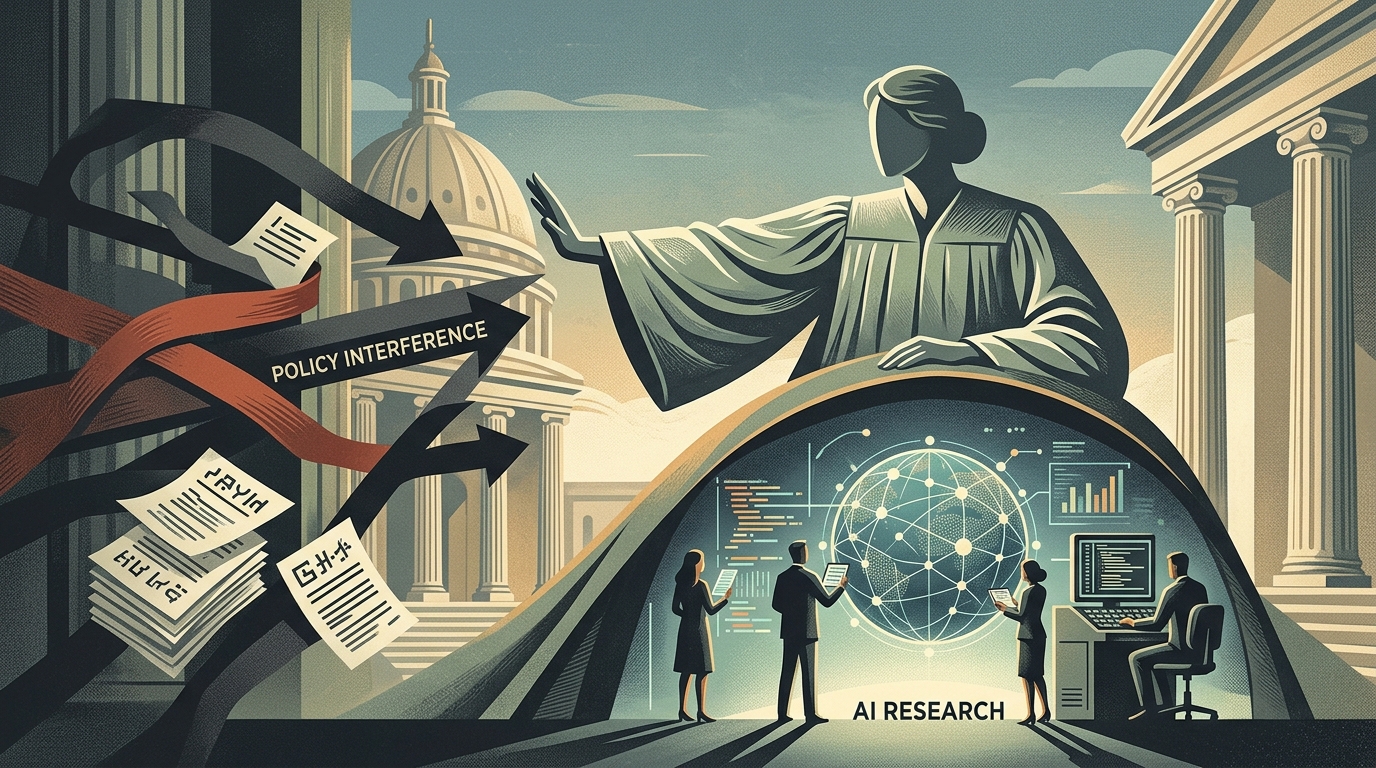
In the delicate architecture of a functioning democracy, the independence of those who scrutinize the digital agora is paramount. A recent ruling by US District Judge James Boasberg, issuing a preliminary injunction against a State Department visa-revocation policy, serves as a critical case study in the governance of information. The policy, which targeted non-US citizens engaged in misinformation research, fact-checking, and content moderation, represents a concerning intersection of immigration enforcement and the suppression of academic inquiry.
The Perils of Viewpoint-Based Enforcement
The core of the legal dispute lies in the principle of viewpoint neutrality. The Coalition for Independent Technology Research (CITR) successfully argued that the administration’s policy was less about national security and more about silencing critics. Judge Boasberg’s observation—that the State Department failed to establish a link between these researchers and foreign adversaries—highlights a dangerous precedent where executive power is used to penalize specific professional stances. In my analysis, when the state puts its "enforcement thumb against one side of the scale," it destabilizes the very foundations of transparent governance.
"The First Amendment does not permit officials to resolve [political] dispute by attaching legal burdens to the side they condemn," Boasberg wrote.
This judicial intervention is not merely a matter of administrative law; it is a defense of the democratic right to investigate the mechanisms of influence. By targeting researchers who have criticized major social media platforms, the policy appeared to align state power with the commercial and political interests of tech billionaires, a dynamic that threatens the objectivity required for effective platform regulation and content moderation.
Institutional Safeguards for the Digital Agora
To prevent such overreach in the future, governance frameworks must explicitly decouple professional research from political retribution. The judge’s warning that the policy had "no clear stopping point" suggests that without clear legal boundaries, any professional in the trust and safety field could be subject to state-sanctioned precarity. For the European perspective, this serves as a reminder that the regulation of disinformation and online safety must be grounded in robust legal protections for those who provide the data and analysis upon which policy is built. Independent research into online risks, including antisemitism and systemic disinformation, must remain a protected pillar of civil society, shielded from the shifting winds of executive temperament.