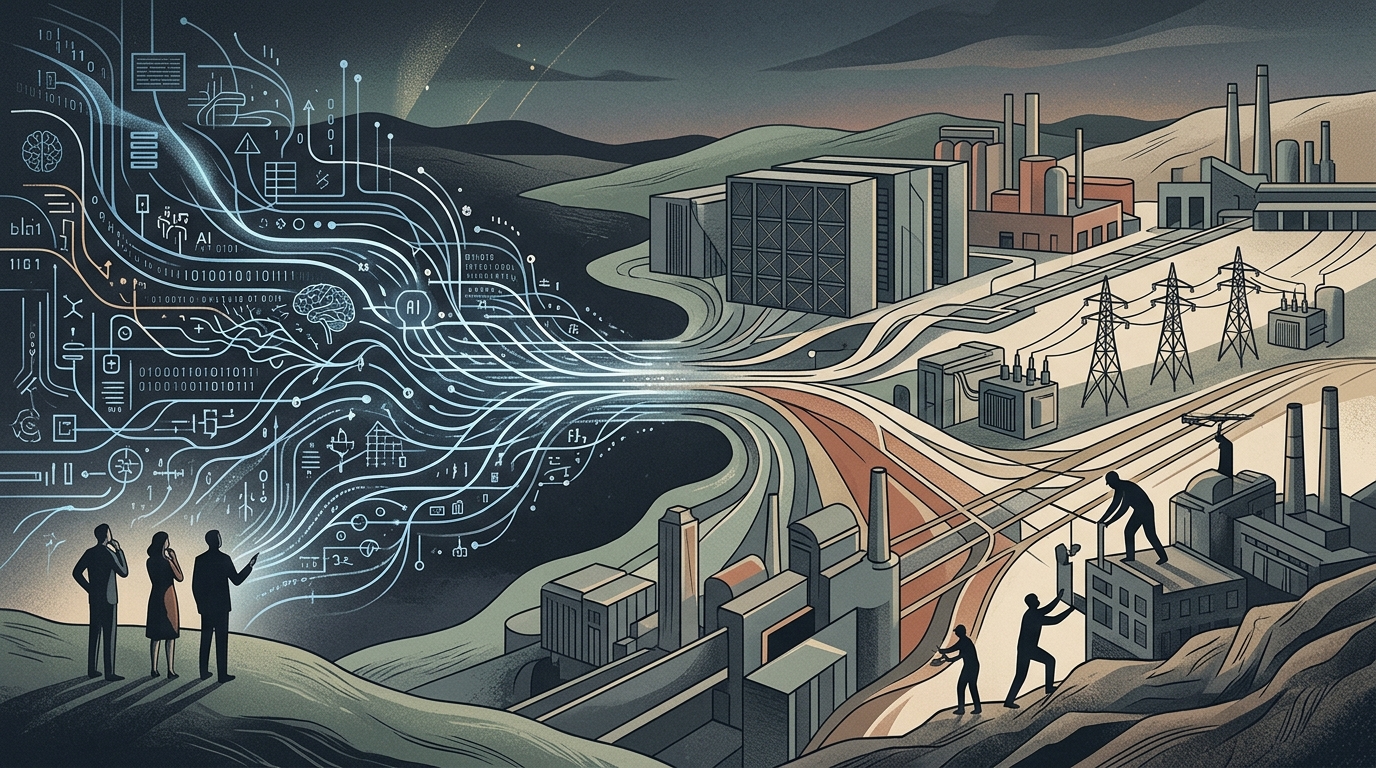

As of July 14, 2026, the global AI market is undergoing a fundamental re-architecting. The narrative has moved beyond the 'brain' of AI—the GPU—toward the 'nervous system' of memory and the practical application of these tools in the research laboratories of the world's largest consumer groups. We are witnessing a transition from infrastructure build-out to measurable operational profitability.
The Memory Backbone: Micron’s Strategic High Ground
The economic story of the quarter is the resolution of the memory bottleneck. Micron Technology has committed a staggering $250 billion to memory infrastructure, a move that signals a structural shift in global capital expenditure. This investment aims to shatter the 'memory wall'—the speed constraint on data movement between processors and memory—that has previously limited Large Language Models. By integrating more closely with the hardware stack, memory providers are moving from cyclical component suppliers to mission-critical infrastructure partners.
"In the AI era, memory is no longer a commodity; it is the strategic high ground of the semiconductor supply chain."
For the savvy investor, the focus is shifting from chip designers to infrastructure partners who solve data throughput constraints. This shift is further emphasized by the move toward physical hardware, as seen in OpenAI's acquisition of the AI hardware startup 'io' in 2025. The next frontier of return on investment lies in physical devices and the efficiency of the data highways they rely on.
Operational ROI: Accelerating the Consumer Goods Sector
Beyond the silicon, AI is delivering tangible returns in the research labs of L’Oréal and Mondelez. L’Oréal reports that AI tools allow for product development cycles up to four times faster than traditional methods, exemplified by the Elvive Collagen Lifter shampoo developed using skincare insights. In the food sector, Mondelez utilizes AI to refine recipes, reporting that 60% of AI-assisted formulations performed better across nutritional, sustainability, and cost criteria. These advancements allow companies to react faster to supply chain disruptions and reduce raw material consumption during testing phases.
Market Sentiment and Corporate Rivalry
The public markets are bracing for a historic collision between SpaceXAI and OpenAI. Following SpaceX's record-setting IPO in June, OpenAI has filed confidentially for its own public offering. This rivalry between Elon Musk and Sam Altman has escalated into a race for capital dominance, punctuated by the release of competing models Grok 4.5 and GPT-5.6 Sol. However, legal risks remain a critical factor; Apple’s 41-page lawsuit against OpenAI, alleging a 'pattern of theft' and the hiring of approximately 400 former Apple employees, adds a 'legal discount' to valuations as the market weighs innovation against systemic corporate risk.