The news that Tom Hanks is publicly voicing his concerns about the use of Artificial Intelligence (AI) in the entertainment industry is more than just another celebrity soundbite. It is an existential cry of distress echoing through the halls of major studios, from Disney to Warner Bros. The man who gave voice to Woody, the beloved cowboy of 'Toy Story,' now fears that his digital persona could continue to star in endless sequels, long after his retirement or even his death.
Technological 'Resurrection' and the End of Authenticity
Deepfake technology and voice cloning have reached such a level of maturity that the distinction between a real actor and their digital likeness is becoming nearly impossible for the general public to discern. Hanks, speaking in recent interviews, emphasized that AI allows studios to 'recycle' his image and voice without his direct physical presence. This isn't a sci-fi scenario; it's a reality already being tested in films like Robert Zemeckis's 'Here,' where Hanks is digitally de-aged to play himself across different stages of life.
The problem Hanks poses is deeply philosophical. If a character like Woody can exist forever, what does that mean for artistic evolution? Art, historically, is defined by the mortality and finiteness of its creator. The prospect of eternal repetition, where Disney or any other studio could produce 'Toy Story 15' in the year 2100 with the voice of a Tom Hanks 'frozen' in time, threatens to turn cinema into a sterile industry of soul-less content production.
Legal Loopholes and the Battle for Digital Ownership
Hanks's concern isn't limited to aesthetics; it extends to the critical issue of intellectual property. Who owns an actor's 'face' when it is converted into code? The 2023 SAG-AFTRA strikes laid the groundwork for artist protection, but technology is moving faster than legislation. The ability of studios to utilize data from previous performances to train AI models creates a massive legal gray area.
- The requirement for explicit consent for every new use of a digital likeness.
- Fair compensation for the use of 'digital twins.'
- The ethical management of an actor's image posthumously by their heirs.
Hanks argues that while he can negotiate his terms today, the future use of his likeness could lead to performances he would never have approved. Imagine Woody being used in political campaigns or for products that contradict the actor's values. 'Digital reincarnation' robs the artist of control over their legacy.
Industrial Logic vs. The Human Experience
From the studios' perspective, using AI is a high-yield economic choice. Keeping a successful franchise alive for decades reduces risk and guarantees revenue from a nostalgic audience. However, the risk of 'franchise fatigue' is real. When the audience knows that what they are seeing is not a human performance but the product of an algorithm, the emotional connection weakens.
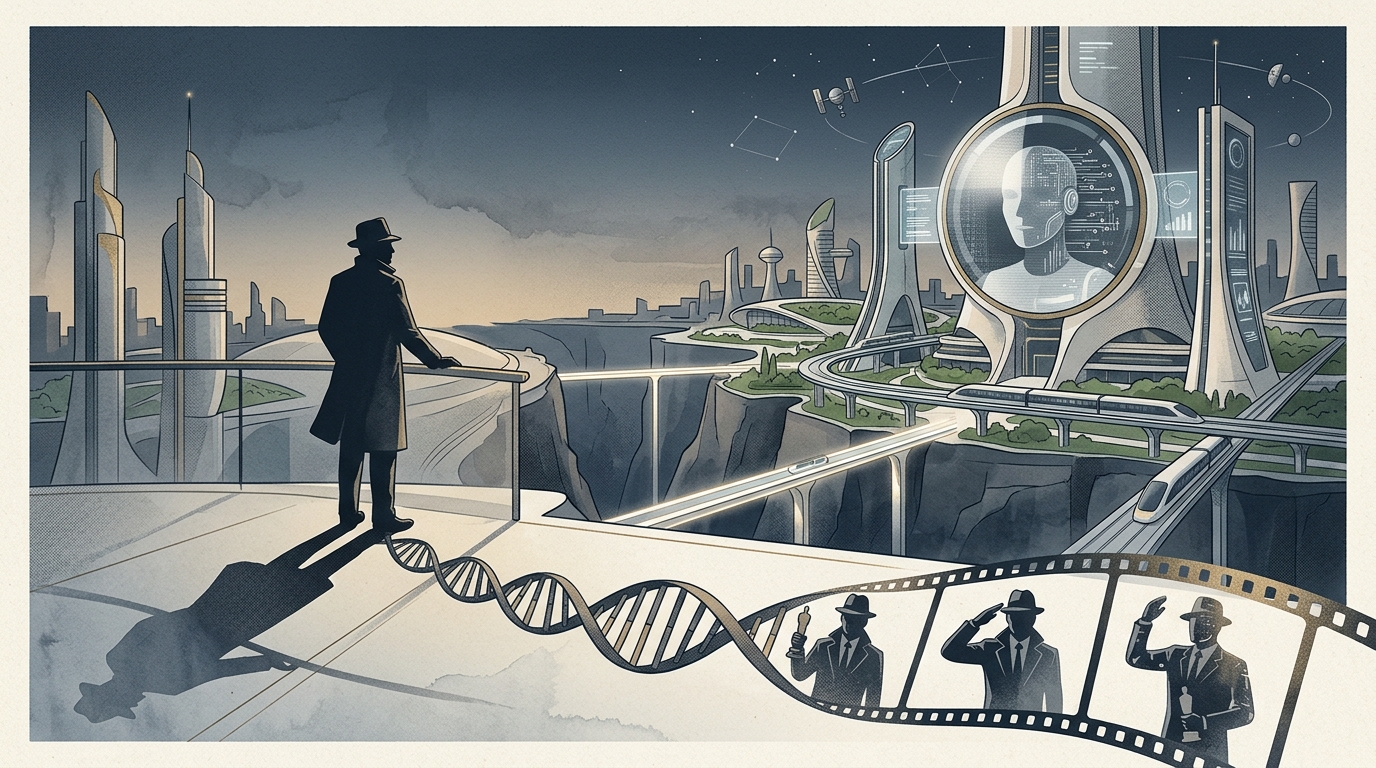
'I could be hit by a bus tomorrow, but my performances can go on and on and on,'Hanks stated, highlighting the tragic irony of digital immortality.
In a world where AI can write scripts, compose music, and resurrect actors, the uniqueness of human imperfection becomes the most valuable currency. Hanks is not opposing technology as a tool, but technology as a substitute. The challenge for 21st-century cinema will be finding the middle ground: using AI to expand the boundaries of imagination without sacrificing the truth that only a living, mortal actor can bring to the silver screen.