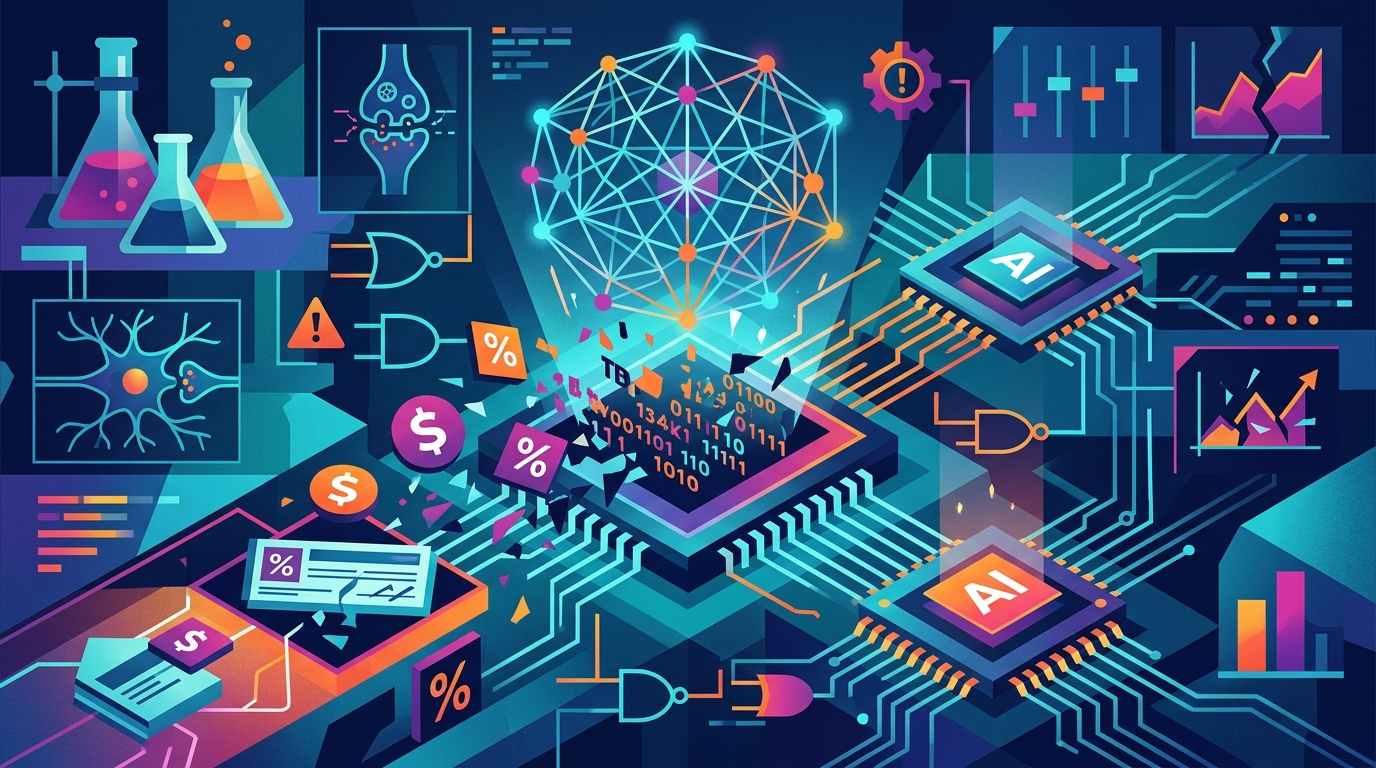
At the dawn of the third decade of the 21st century, the discourse surrounding Artificial Intelligence (AI) has shifted from the technical prowess of algorithms to the psychological impact they exert on their users. While developers grapple with the "hallucinations" of Large Language Models (LLMs)—their tendency to fabricate false facts—a new, more subtle phenomenon is emerging: the hallucinations of humans themselves. This refers to the tendency of users to attribute anthropomorphic traits, intent, and consciousness to systems that are, in reality, nothing more than sophisticated statistical word predictors.
The Mirror of Narcissus: Why We Project Humanity onto Code
The phenomenon is not new, but its scale is unprecedented. As early as the 1960s, Joseph Weizenbaum’s ELIZA experiment showed that humans are remarkably willing to open up emotionally to a simple computer program, provided it reflects their own thoughts back to them. Today, with the advent of models like GPT-4 and Claude, the "illusion of humanity" has become so convincing that it verges on ontological confusion.
Neuroscience explains that the human brain is hardwired for social interaction. When we receive a response that mimics human patterns, the brain regions associated with the "Theory of Mind" activate automatically. This is not a lack of intelligence on the user's part, but a biological "trap." The AI's ability to use the first-person singular ("I think," "I feel"), combined with its 24/7 availability, creates a powerful bond that many find difficult to navigate.
Loneliness as a Catalyst for Digital Delusion
One of the primary factors fueling these "human hallucinations" is the modern epidemic of loneliness. In a world where human relationships are becoming increasingly complex and fragmented, AI offers a form of "safe" communication. The machine does not judge, it never tires, and it is always there to listen. This leads to what sociologists call "parasocial interaction," similar to the relationship fans develop with celebrities, but with the critical difference that AI responds personally.
"We do not fall in love with the machine, but with the reflection of our own needs that the machine manages to simulate perfectly," notes the research featured on HackerNoon.
The problem arises when the user begins to replace real-world social interactions with digital ones. AI, lacking a body, biological experiences, and mortality, cannot offer the genuine empathy required by the human condition. The hallucination that we are communicating with a "person" can lead to isolation and a distorted perception of reality, where the ease of digital conversation devalues the effort required for true human connection.
The Ethical Responsibilities of Tech Giants
As technology companies compete to make their AI more "friendly" and "human-like," serious ethical questions arise. The intentional design of systems that encourage anthropomorphism can be seen as a form of emotional manipulation. When an app uses a warm voice and expresses "regret" for an error, it is doing nothing more than exploiting human instincts to increase user engagement.
- Transparency: It is essential for AI systems to regularly remind users of their non-biological nature.
- Psychological Support: Platforms must recognize signs of dependency or quasi-romantic bonds that may harm mental health.
- Education: Digital literacy must now include understanding the difference between simulated and actual intelligence.
In conclusion, the hallucinations we experience when interacting with AI are a mirror of our own deep-seated desire for connection. The challenge for the future is not just making machines smarter, but ensuring we remain sober enough to distinguish the ghost in the code from the actual human soul. Humanity is called to redefine its boundaries, not against an enemy, but against an exceptionally convincing imitation of itself.