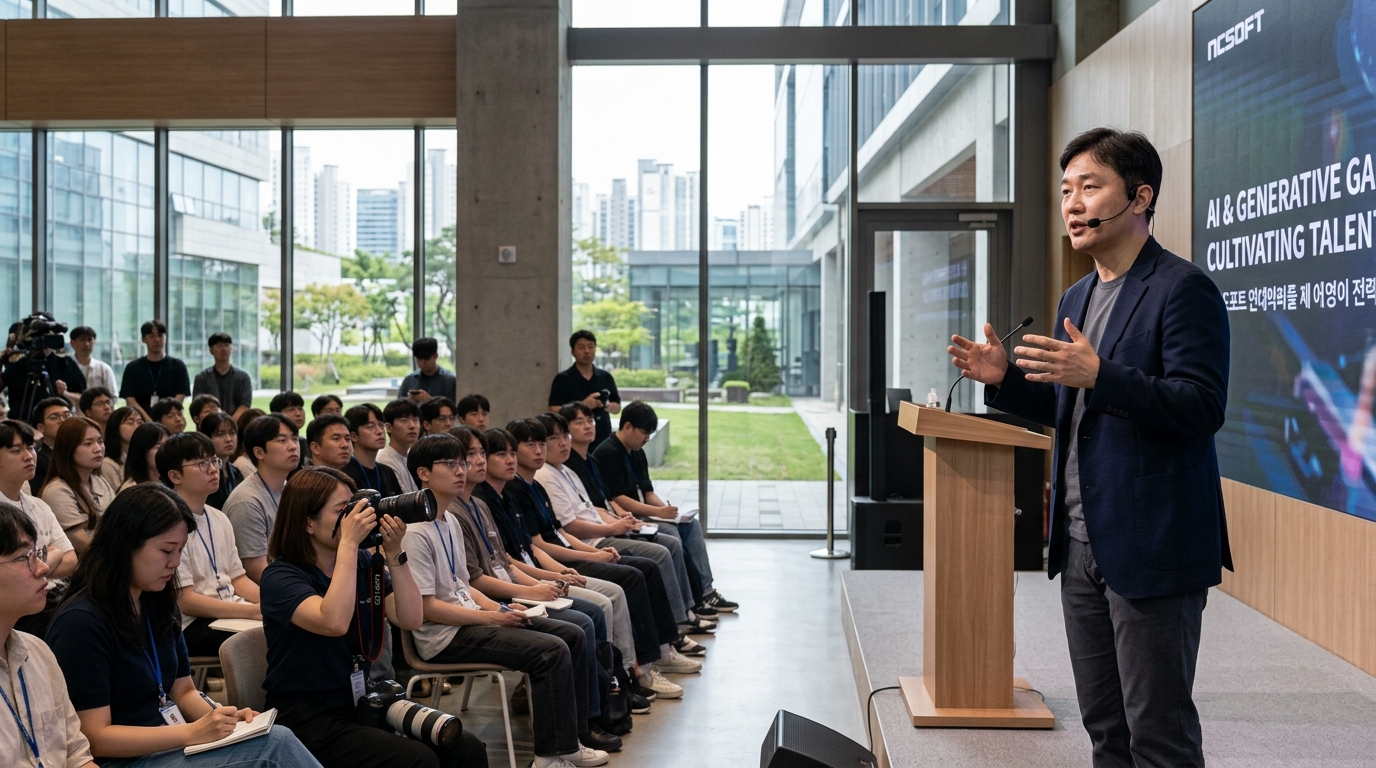
In the high-octane tech landscape of Seoul, gaming titan NCSoft is charting a provocative new course. The company's recent announcement to utilize generative artificial intelligence (AI) as a primary vehicle for cultivating young talent is more than a corporate initiative; it is a profound thesis on the future of digital labor and creativity. In an industry historically defined by grueling learning curves in coding and digital artistry, NCSoft is introducing a new variable: AI as a catalyst for human potential.
The VARCO Ecosystem: Democratizing Game Design
NCSoft’s foray into AI is anchored by its proprietary large language model (LLM), VARCO (Vast and Real-time Classifier and Optimizer). Unlike many competitors who rely on third-party APIs from Silicon Valley, NCSoft has opted for technological sovereignty. VARCO is a specialized suite of tools designed specifically for the complexities of game development—capable of generating high-fidelity assets, complex dialogue trees, and even functional code snippets. By deploying this platform in talent cultivation, NCSoft aims to lower the "barrier to entry" for aspiring developers.
The pedagogical shift is stark. Traditionally, a junior developer would spend years mastering the minutiae of syntax and engine-specific quirks. Under NCSoft’s new model, generative AI handles the heavy lifting of repetitive tasks, allowing young creators to focus on high-level conceptualization, narrative depth, and strategic game mechanics. This transforms the student from a specialized cog in the machine into a creative director of an AI-driven production pipeline.
Economic Imperatives and the Global Competitive Edge
The timing of this pivot is no coincidence. The South Korean gaming industry faces a dual threat: skyrocketing R&D costs for AAA titles and aggressive competition from Chinese studios. To maintain its global standing, efficiency is paramount. By training young talent to work alongside AI, NCSoft seeks to compress the development cycle of major titles—potentially reducing a standard five-year project to just three. This is not merely about speed; it is about the economic viability of the medium in an era of hyper-inflationary production costs.
- Significant reduction in asset creation costs through AI automation.
- Empowerment of small, agile teams to produce high-quality content.
- Creation of a specialized workforce fluent in AI-human collaboration.
- Strategic positioning of South Korea as an AI-first gaming hub.
However, the strategy is not without its critics. Labor advocates and industry purists question whether this reliance on AI will lead to a "de-skilling" of the workforce. If a junior developer never learns to code from scratch, can they truly troubleshoot a complex system when the AI fails? NCSoft counters this by arguing that the nature of "skill" is evolving. In their view, the ability to architect a world using AI is a more valuable skill in 2026 than manual asset placement.
From Coder to Orchestrator: The New Professional Identity
As we look toward 2027, the very definition of a "game developer" is being rewritten. NCSoft’s initiative suggests that prompt engineering and AI management will become as fundamental as knowledge of C++ or the Unreal Engine. The ability to articulate creative vision through structured prompts is becoming the new literacy. NCSoft is effectively building a nursery for creators who view AI not as a threat to their jobs, but as an extension of their cognitive and artistic capacity.
"Generative AI is the canvas, not the painter. Our goal is to provide the youth with the most advanced brushes ever created," noted a senior researcher at NC AI during a recent press briefing.
In conclusion, NCSoft’s move serves as a blueprint for the global industry. While Western studios often grapple with the ethical and legal quagmires of AI-generated content, South Korea is leaning into the technology as a matter of national and economic survival. The gamble is clear: if successful, NCSoft will produce a new generation of creators capable of building vast, immersive worlds with unprecedented efficiency, setting the pace for the global entertainment industry for years to come.