At the Shoreline Amphitheatre, under the California sun, the atmosphere during this year's Google I/O felt like more than just a corporate product launch. It was a revelation ceremony for the next chapter of human civilization. When Demis Hassabis, the co-founder of DeepMind and now the architect of Google’s AI strategy, took the stage, he didn't just talk about code and compute. He used a phrase that sent shivers through the tech community: we are at the “foothills of the singularity.”
The Return of the Singularity to Public Discourse
The concept of the "Technological Singularity" was once confined to the pages of science fiction novels and the theories of Ray Kurzweil. It is defined as the point where technological growth becomes uncontrollable and irreversible, resulting in unfathomable changes to human civilization, primarily due to the emergence of a superintelligence that surpasses human capabilities. The fact that Hassabis, a man known for his composure and scientific rigor, chose this metaphor signals a radical shift in Google’s rhetoric.
For years, Google tried to downplay fears of "god-like AI," focusing on practical tools like search and photo organization. However, pressure from OpenAI and the rapid evolution of Gemini models have forced the tech giant to admit the reality: they are no longer just building tools, but an entity approaching Artificial General Intelligence (AGI).
Project Astra: The Agent that Sees and Hears
The central evidence for Hassabis’ claim was Project Astra. This is Google’s vision for a “universal AI agent” that can process information in real-time, remember where you left your keys via your phone camera, and understand the context of a conversation without latency. Astra is not just a chatbot; it is Google’s attempt to give AI a “body” and “senses” within the digital world.
Multimodality is the key here. Gemini 1.5 Pro, with its massive context window of 2 million tokens, allows the system to “read” entire libraries or “watch” hours of video in seconds. This ability to process vast amounts of data is what brings AI closer to human perception, or at least a simulation of it that is practically indistinguishable from reality.
The Ethics of the Foothills and Google’s Responsibility
However, climbing the “foothills” carries risks. Hassabis emphasized that this is a “profound moment for humanity,” but the word “profound” carries a double meaning: promise and threat. Google insists on its "Bold and Responsible" mantra, but many wonder if these two concepts can coexist in a free market hungry for dominance.
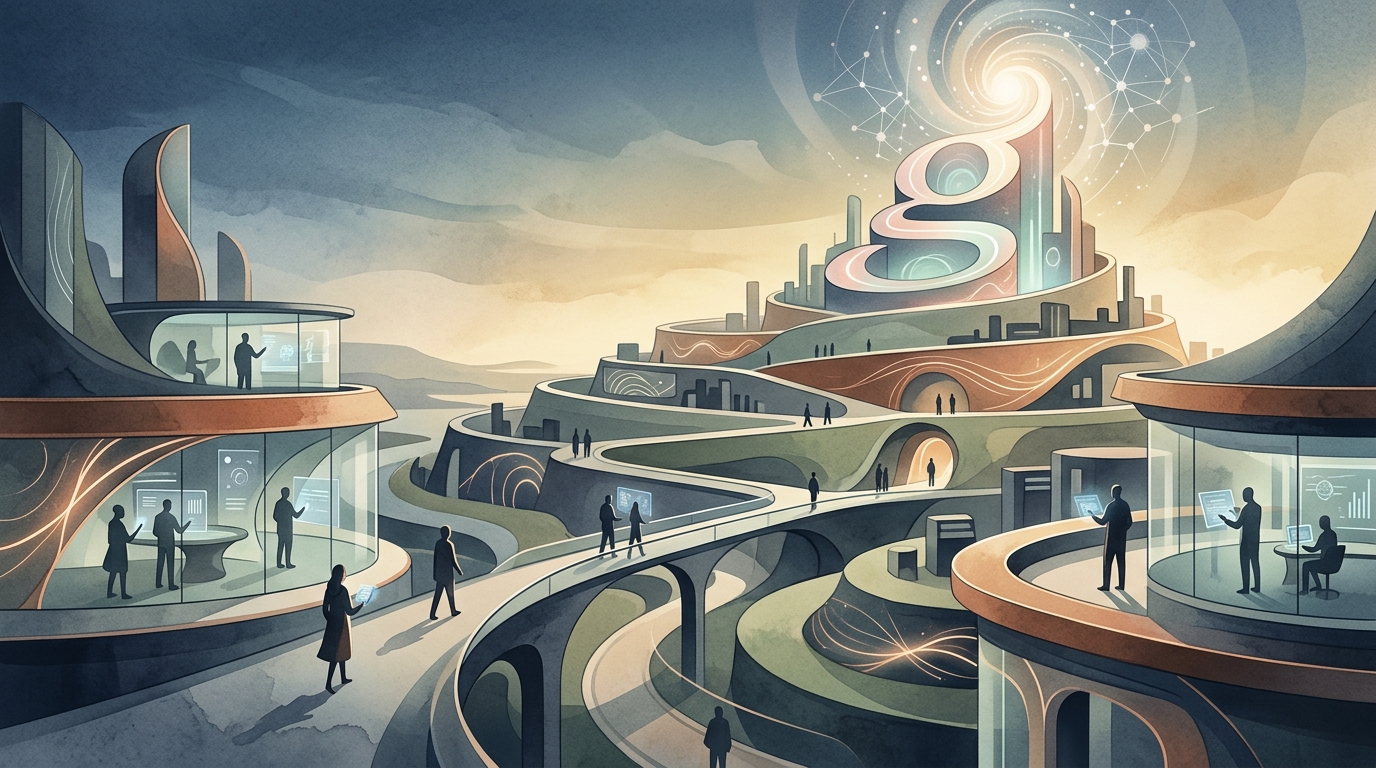
The criticism focuses on the concentration of power. If Google is the first to reach the summit of the singularity mountain, who will control the rules of this new world? The promise that AGI will benefit “the entire world” often sounds like a platitude covering the needs of shareholders. Nevertheless, DeepMind’s contributions to science—from protein folding prediction (AlphaFold) to energy consumption optimization—give Hassabis a credibility that other industry leaders lack.
The End of the Beginning
As we head through 2026, the conversation about AI has shifted from "if" to "when." Hassabis’ announcements were not just technical specifications but a preparation of the public for a new existential state. If we are indeed at the foothills, then the climb ahead will require more than just algorithms: it will require a new social consensus on what it means to be human in a world where intelligence is no longer an exclusively human privilege.