China is not just building structures; it is constructing a new narrative for itself and the world. At a dizzying pace—one new museum every 1.5 days—Beijing has launched an unprecedented cultural counter-offensive. This "museum boom" is not merely an attempt to preserve antiquities, but a strategic geopolitical move where history serves as the ultimate tool of soft power.
The Strategy of the "Great Rejuvenation"
For decades, China’s cultural heritage lived in the shadow of its economic rise. Today, under the leadership of Xi Jinping, the "Great Rejuvenation of the Chinese Nation" passes through museum halls. The state is investing billions to repatriate treasures looted during the "Century of Humiliation" and to house history in architectural masterpieces that rival the Louvre and the British Museum.
The approach is holistic. New museums are not confined to megacities like Beijing and Shanghai. Provincial towns are being transformed into cultural hubs, using museums as engines for economic development and tourism. History here is not static; it is a living organism carefully curated to bolster national pride and offer an alternative to Western cultural hegemony.
Digital Technology and AI in the Service of Memory
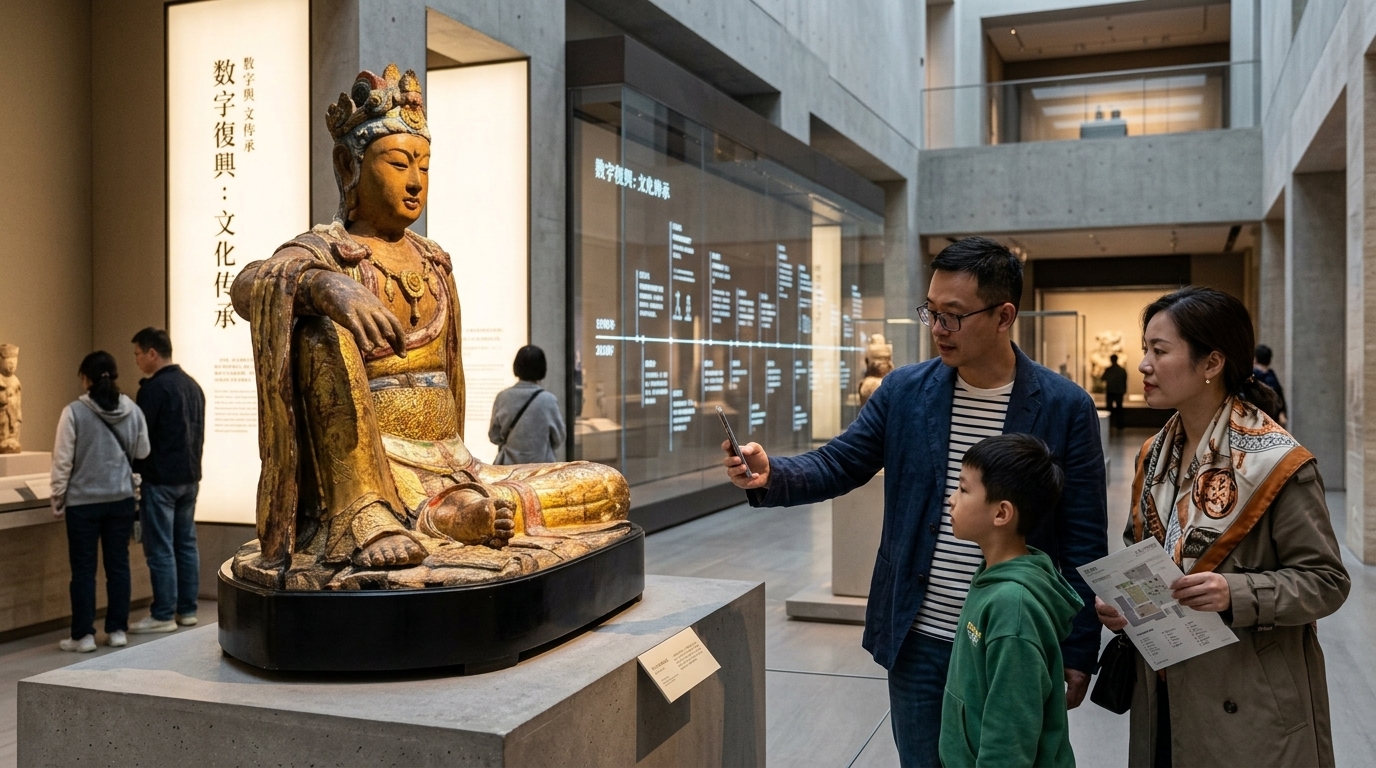
What sets the Chinese museum experience apart is the integration of cutting-edge technology. China is not afraid to "modernize" antiquity. In museums like Sanxingdui, Artificial Intelligence is used to digitally reconstruct 3,000-year-old bronze artifacts, while Augmented Reality (AR) allows visitors to watch ancient cities rise before their eyes.
- Digital Conservation: High-resolution 3D scanning creates "digital twins" of fragile artifacts.
- Interactive Learning: AI applications answer visitor questions by simulating historical figures.
- Smart Museums: Systems analyze visitor flow in real-time to optimize experience and security.
This technological superiority is not just about spectacle. It is a way to make history accessible to China’s Generation Z, a demographic that demands speed, interaction, and a digital aesthetic. Museums are evolving from "storage facilities for objects" into "experience centers."
The Politics of History: Between Education and Propaganda
Naturally, this rapid development raises questions about the objectivity of historical narratives. In Chinese museums, history is often presented through a lens that emphasizes the continuity of Chinese civilization and the central role of the state.
"The museum in China is not a neutral space, but a temple of national identity,"analysts note. The selection of exhibits and the style of presentation underscore the message that today’s prosperity is the natural culmination of five millennia of evolution.
Furthermore, the rise of private museums adds a new dimension. Wealthy collectors and major corporations are creating their own spaces, often in partnership with the state, blending art with real estate. This creates a hybrid model of cultural production where profit and national mission go hand in hand.
The Future: Exporting a Cultural Model
China’s ambitions do not end at its borders. Through the "Belt and Road Initiative," it funds and constructs museums in Africa, Central Asia, and Southeast Asia. This is a form of "museum diplomacy" aimed at building bonds through shared cultural appreciation. As the West debates the return of the Parthenon Marbles or the Benin Bronzes, China positions itself as a partner that not only respects history but provides the technical expertise to showcase it. The question remains: Who will write the history of the 21st century? At this rate, the answer may already be housed in one of the thousands of new museums sprouting across the Chinese heartland.