As the world watches the rapid evolution of large language models with a mix of awe and trepidation, a quiet but radical revolution is unfolding in Asian classrooms. While Western debates often stall at banning ChatGPT to prevent plagiarism, nations like South Korea, Singapore, and China are embracing Artificial Intelligence (AI) as the cornerstone of their 21st-century educational systems. This is not merely about adopting new tools; it is a structural shift toward "personalized learning at scale"—a long-held promise of pedagogical science that remained unattainable without the power of algorithms.
The South Korean Experiment: AI Textbooks for the Masses
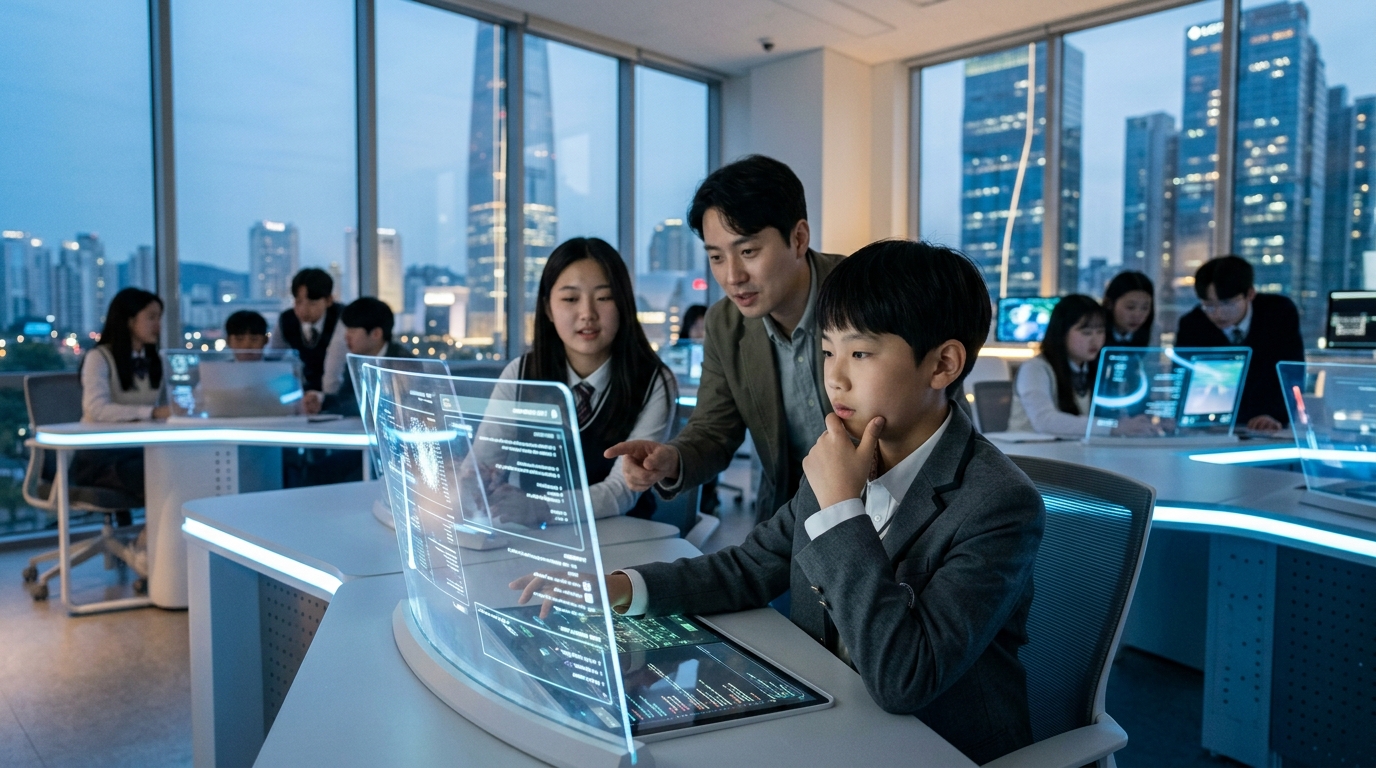
South Korea, a nation that historically invests heavily in education, has announced the world's most ambitious plan: the nationwide roll-out of AI-powered digital textbooks by 2025-2026. These "smart" books are far more than digital PDFs. They are dynamic platforms that analyze student performance in real-time. If a student struggles with a specific mathematical concept, the system detects it instantly and adjusts the difficulty level, offering tailored explanations or supplementary videos.
The government in Seoul argues that this move will reduce the country's reliance on "Hagwons" (private cram schools), which drain family budgets and subject students to immense psychological pressure. However, the transition is not without friction. Many parents express concerns about "digital fatigue" and excessive screen time, while educators fear they may be relegated to being "data managers" rather than mentors and pedagogues.
Singapore: The Teacher as Coach, AI as Co-pilot
In Singapore, the approach is notably holistic. The Ministry of Education has developed the "Adaptive Learning AI" system, integrated directly into the national curriculum. The goal is not to replace the teacher but to liberate them from repetitive administrative and grading tasks. By allowing AI to handle the technical feedback, teachers can focus on socio-emotional development and fostering critical thinking skills.
Reports indicate that Singaporean students are using AI assistants to receive immediate feedback on essay drafts or to visualize complex physics problems. This model creates a new classroom dynamic where learning becomes more autonomous. Singapore is betting that early exposure to AI will grant its citizens a competitive edge in a global labor market where "algorithmic literacy" will soon be as fundamental as reading and writing.
Ethical Dilemmas and the Surveillance Trap
Despite the enthusiasm, the integration of AI in education raises profound ethical questions, particularly in countries with stricter central oversight, such as China. The use of facial recognition cameras and sensors to track student concentration levels has sparked international outcry. Is education a process of liberation, or a process of optimizing human capital for economic output?
Critics argue that over-reliance on data could lead to a new form of determinism, where a child's future is predicted and constrained by an algorithm before they even reach adolescence. Furthermore, there is the persistent threat of the "digital divide." While affluent Asian metropolises sprint into the AI era, rural regions risk falling further behind, lacking both the necessary infrastructure and the specialized training for teachers.
Global Implications: Will the West Keep Up?
The Asian experience demonstrates that AI in education is no longer a futuristic concept—it is a present-day reality shaping a new generation. Europe and North America must now decide whether to follow this hyper-technological path or develop an alternative framework that prioritizes privacy and human-centric interaction. What is certain is that "Generation AI" is already in the making, and their way of learning will dictate how the world functions for decades to come. The classroom has become the new front line of geopolitical competition.