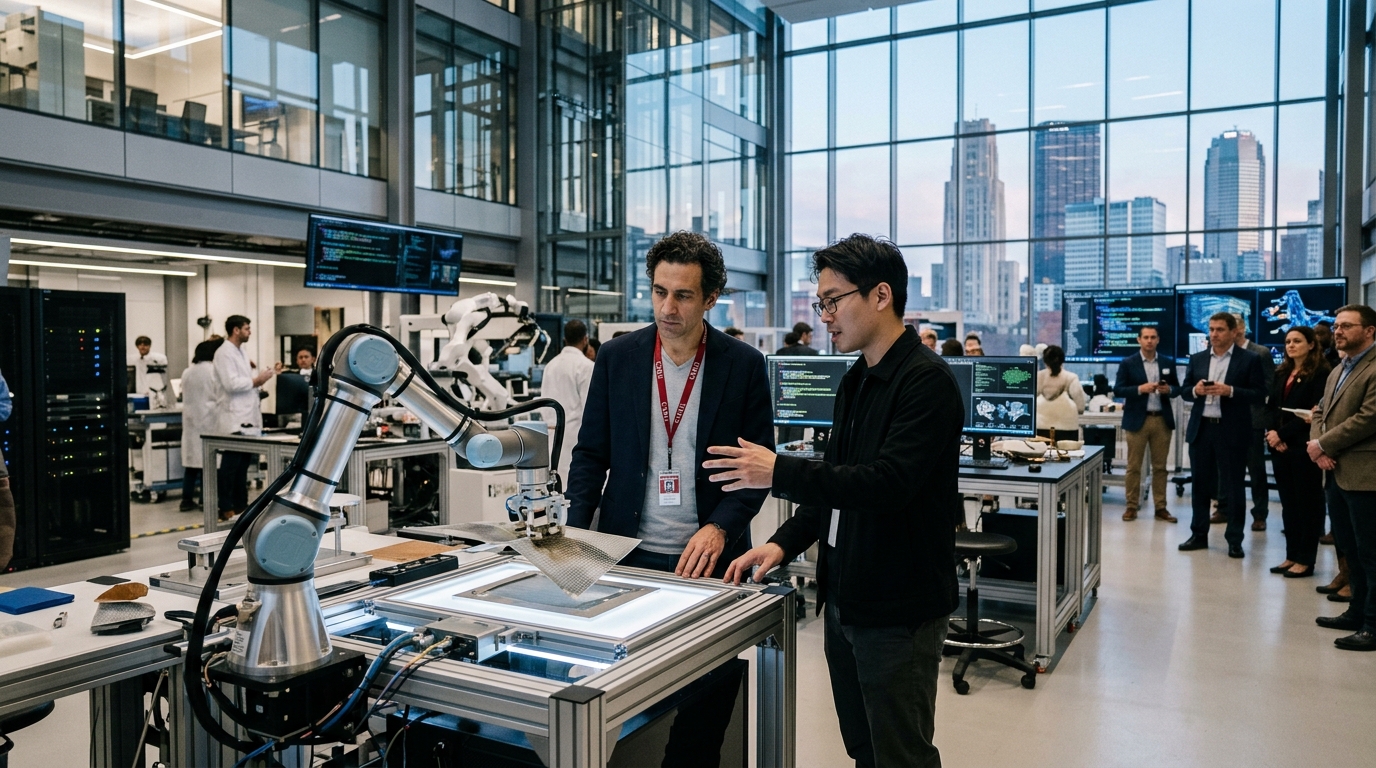
The era where artificial intelligence was confined within the narrow limits of a screen or a chat interface is drawing to a close. Carnegie Mellon University (CMU), a global leader in computer science and robotics, has announced the launch of the Physical AI Research Institute (PAIR). This strategic move aims to bridge the gap between digital intelligence and physical action, creating systems that can not only "think" and "speak" but also interact with the material world in an autonomous and safe manner.
The Transition from Digital to Physical
For decades, progress in artificial intelligence focused on information processing. From early chess-playing systems to today's Large Language Models (LLMs), AI was essentially a "brain in a vat." Physical AI changes this paradigm. It involves embedding intelligence into physical bodies—robots, autonomous vehicles, smart infrastructure—that must navigate the uncertain and often chaotic laws of physics.
The PAIR Institute is not being founded in a vacuum. CMU has a long tradition in robotics, having established the world's first Robotics Institute in 1979. However, this new initiative recognizes that traditional robotics, which relied on strictly programmed commands, is no longer sufficient. The next generation of machines requires "Robotics Foundation Models," which will allow robots to learn from experience, adapt to new environments, and perform tasks they have never encountered before.
The Three Pillars of PAIR
The Institute's strategy is based on three central pillars that will define the future of industry and daily life:
- Learning and Adaptation: Developing algorithms that allow machines to understand the physics of the world through visual and sensory data, reducing the need for manual programming.
- Safety and Reliability: In the digital world, an AI error leads to a wrong answer. In the physical world, an error can cause injury or destruction. PAIR focuses on creating systems with guaranteed safety protocols.
- Human-Centric Collaboration: Designing robots that can work side-by-side with humans, understanding their intentions and providing assistance in fields such as healthcare and manufacturing.
"We are not just trying to build better robots. We are trying to redefine how intelligence can manifest in the physical world to solve humanity's most pressing problems," university officials stated.
Social and Economic Impact
The founding of the Institute comes at a critical moment for the global economy. With labor shortages in sectors like supply chain and agriculture, the need for intelligent automation is more urgent than ever. Physical AI promises to revolutionize production lines, making them more flexible and capable of producing customized products at a low cost.
Furthermore, its application in medicine, through robotic surgeons with enhanced perception, or in disaster response, where autonomous drones can search hazardous areas, demonstrates the breadth of its potential. However, the challenge remains the "Sim-to-Real gap." Robots often perform excellently in controlled labs but fail on a muddy road or in a crowded hospital. PAIR aims to solve precisely this problem through deep research into materials and sensors.
The Future of Research
The PAIR Institute will serve as a hub for collaboration between academia, government, and the private sector. With funding expected to attract technology giants, CMU aspires to make Pittsburgh the global capital of Physical AI. The challenge is immense, as it requires the convergence of diverse sciences: from mechanical engineering and materials science to psychology and ethics. The success of PAIR will be judged not only by publications in scientific journals but by how soon we see these technologies improving our quality of life outside the lab.