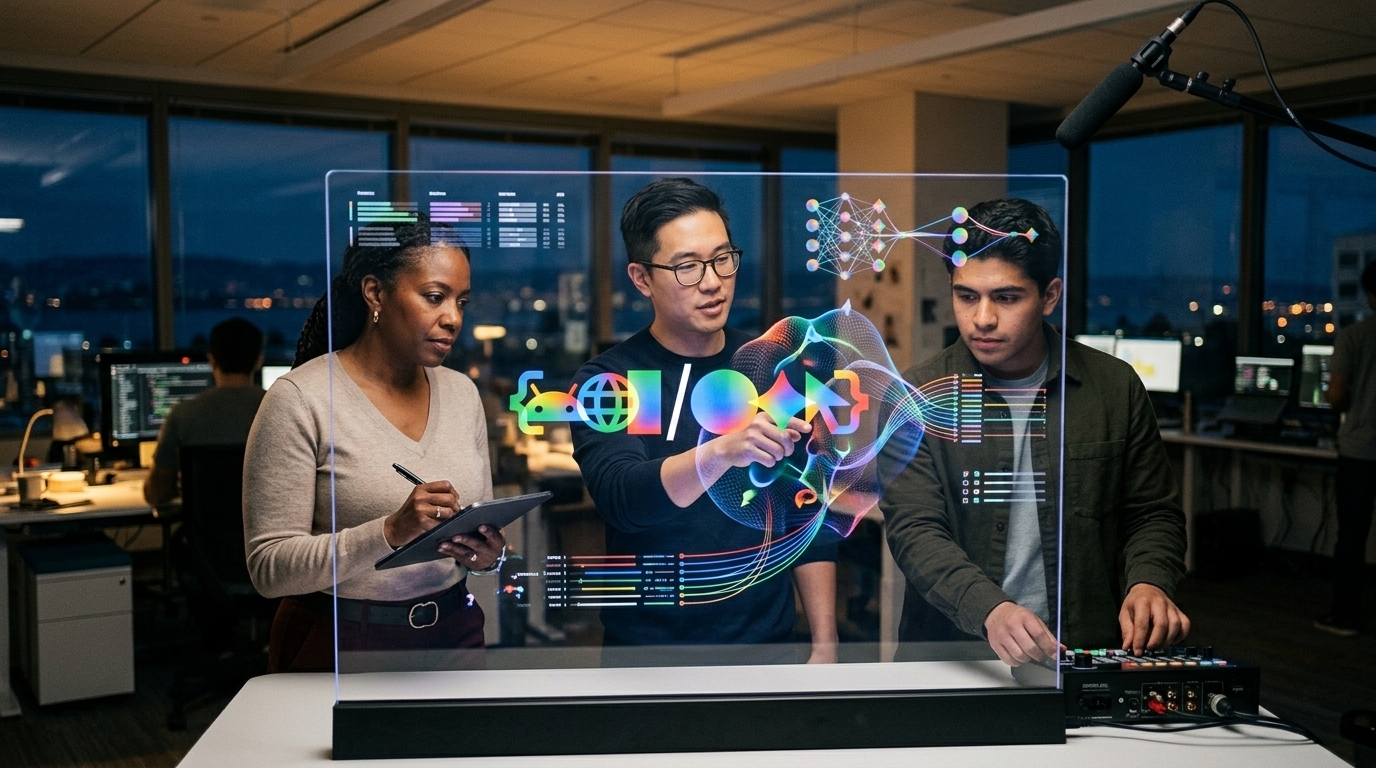
The era when a university degree was enough to guarantee a stable thirty-year career path is officially over. Today, in 2026, the labor market is undergoing a transformation unlike anything we have seen since the Industrial Revolution. At the heart of this change is not just basic computer literacy, but "AI Literacy." It is no longer a skill reserved for programmers or data scientists; it is the new "invisible degree" required of lawyers, graphic designers, accountants, and marketing managers alike.
What does AI Literacy actually mean?
The term AI Literacy goes beyond the simple ability to "talk" to a chatbot like ChatGPT or Claude. It involves a deep understanding of how generative models work, how to evaluate the validity of their outputs, and, most importantly, how to integrate these tools into daily workflows to maximize productivity. According to recent studies, professionals possessing these skills are not just 25% faster at their tasks, but also produce higher-quality work, as AI acts as a "power multiplier" for their creativity.
For the modern professional, this literacy is divided into three levels: technical understanding (how the algorithm functions), strategic application (which tool is right for which task), and ethical judgment (identifying biases and protecting data). Without these three elements, a worker risks becoming obsolete—not because they will be replaced by a machine, but because they will be replaced by another human who knows how to operate the machine.
The Challenge for Education and the Global Market
Globally, the challenge is immense. Educational systems often lag behind, offering knowledge that is outdated by the time it is acquired. This has led to the rise of "parallel education," where workers turn to international platforms and micro-certifications to prove their worth. Fortune Greece notes that AI literacy is the "key" to bridging the productivity gap. Companies are now actively looking for an "AI mindset" in candidates. They no longer ask just "what do you know?" but "how can you learn to use new tools to solve problems?"
“AI will not take your job. A person using AI will take your job.”
This phrase, which has become the mantra of the modern labor market, underscores the need for lifelong learning. This shift from formal credentials to dynamic skills is reshaping HR departments, which now value adaptability as a worker's most important asset. However, this transition is not without friction. Many established professionals feel overwhelmed by the pace of change, leading to a phenomenon known as "AI anxiety."
The Risk of a New Social Divide
Despite the opportunities, the danger is clear: the creation of a two-tier labor market. On one side, there will be "AI-augmented" professionals enjoying high salaries and flexibility. On the other, those who lacked access or time to retrain will be pushed into low-wage roles that have not yet been automated. Governments and corporations have a responsibility to ensure that AI education is accessible to everyone, regardless of age or original field of study. AI Literacy should not be a privilege for the few, but a basic right for survival in the new digital economy.
Conclusion: The Strategy for Success
To successfully navigate this new environment, a paradigm shift is required. The professional of 2026 must invest at least 10% of their time in experimenting with new AI tools. Curiosity is now more important than specialization. The "degree" of the future is not a piece of paper on the wall, but a constantly updated toolkit of skills that allows the human to remain the "conductor" in an orchestra of algorithms. The goal is not to compete with the machine, but to master the symbiosis that defines the new era of work.