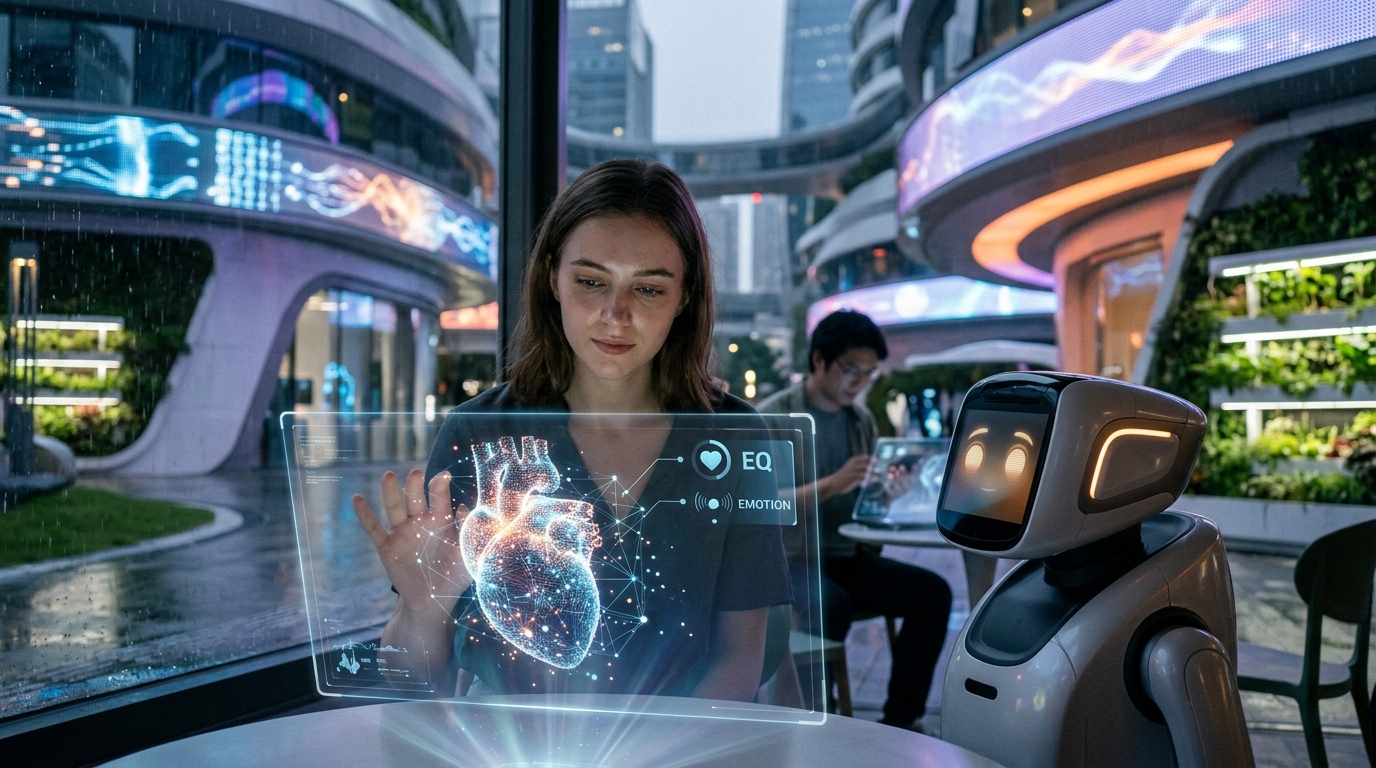
The era when Artificial Intelligence (AI) was considered a 'cold' calculating machine is officially over. Today, we stand on the threshold of a new epoch where Affective Computing and Large Language Models (LLMs) are transforming algorithms into active participants in our emotional lives. Recent analysis highlighted by Vietnam.vn underscores a trend spreading globally: AI is no longer just solving mathematical problems; it is offering solace, companionship, and an illusion of understanding that many individuals struggle to find in their social circles.
The Rise of Digital Companionship
Loneliness has been termed the pandemic of the 21st century. Into this vacuum step applications like Replika, Character.ai, and advanced versions of ChatGPT, offering a form of 'synthetic intimacy.' Users are not merely seeking information; they are looking for someone to listen without judgment, 24/7. This penetration into the emotional sphere is not accidental. Algorithms have been trained to recognize speech patterns indicating sadness, joy, or anxiety, and to respond with the appropriate tone, creating what psychologists call the 'ELIZA Effect'—the human tendency to attribute human-like qualities and emotions to a computer program.
In countries with a strong technological culture, such as Vietnam or Japan, the acceptance of digital companions is already high. However, in Europe and the Mediterranean, the conversation remains more cautious. Our culture, rooted in direct social contact and physical presence, is clashing with the convenience of digital interaction. The question arises: does AI fill human gaps, or is it gradually replacing the complexity of real relationships with a simplified, algorithmic version of them?
The Ethics of 'Programmed' Empathy
The major stake is not just technological, but deeply ethical. When a machine 'pretends' to care, an asymmetrical relationship is formed. The user exposes themselves emotionally, surrendering their most personal data—fears, desires, and vulnerabilities—to the corporations managing these algorithms. The commodification of emotion is a risk often overlooked in the face of the immediate relief provided by digital companionship.
- Emotional Dependency: There is a risk that users might prefer the predictability of an AI over the 'risk' and messiness of a human relationship.
- Data Privacy: Emotions are converted into data points for behavioral profiling and advertising targeting.
- Erosion of Social Skills: The lack of friction in digital conversations may make individuals less tolerant of real-life disagreements and nuances.
"Artificial Intelligence does not have a heart, but it can reflect our own with such precision that it makes us forget the difference," note analysts of digital psychology.
Towards a Hybrid Future?
Despite the risks, the use of AI in emotional life has positive implications. In mental health, AI chatbots are already being used as supplementary tools for Cognitive Behavioral Therapy (CBT), helping people manage panic attacks or depression during moments when a therapist is unavailable. The challenge for our society in 2026 is to set the boundaries. We must ensure that AI remains a mirror that helps us understand ourselves, rather than a mask that isolates us from others. The emotional intelligence of machines must serve humanity, not substitute for it.